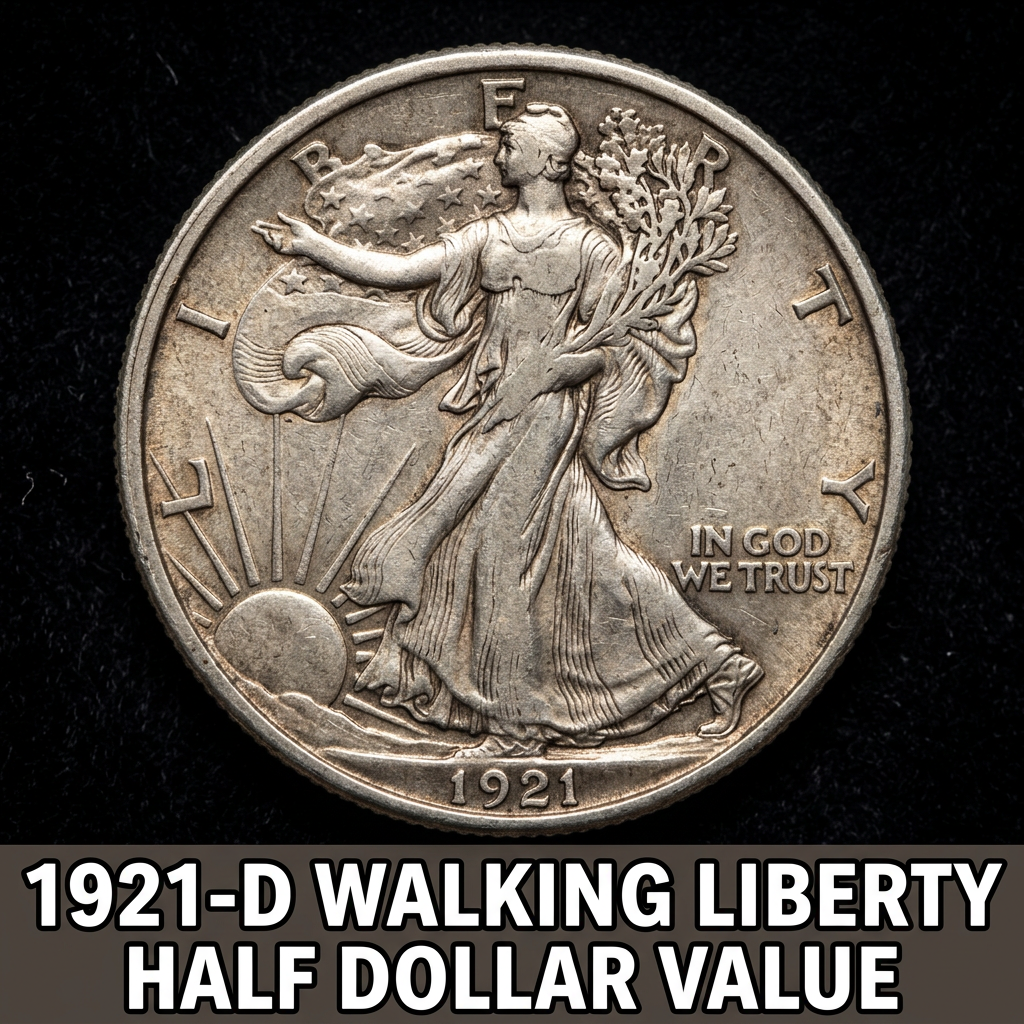
The 1921-D Walking Liberty Half Dollar is worth anywhere from $80 to $200 in heavily worn condition, and can climb to $1,500 or more in higher mint state grades — making it one of the most valuable regular-issue Walking Liberty halves you can own.
If you’ve stumbled across one of these coins in an old collection, a coin jar, or a family heirloom box, you’re in for a pleasant surprise. The 1921-D is no ordinary half dollar. Before we dive into the details, it’s worth noting that identifying and valuing old coins has never been easier — you can use a free coin identification app to get a quick read on what you’re holding before doing deeper research.
Why the 1921-D Walking Liberty Half Dollar Is Special
The Walking Liberty Half Dollar series ran from 1916 to 1947, and most dates are relatively affordable. But 1921 is different — and the Denver Mint version (marked with a “D” mintmark on the reverse, near the bottom left) is especially scarce. Only 208,000 were struck at the Denver Mint that year, compared to millions produced in other years. Low mintages almost always mean higher values, and that’s exactly what happened here.
This coin was designed by Adolph A. Weinman, and many collectors consider it one of the most beautiful American coins ever made. The obverse shows Lady Liberty draped in an American flag, striding confidently toward the rising sun. The reverse features a proud eagle perched on a mountain branch. If your coin has this design and a small “D” on the back, you may be holding something quite valuable.
How Condition Affects the 1921-D Half Dollar Value
Coin grading is everything when it comes to determining value. A heavily worn 1921-D looks very different from one that has been well-preserved, and the price gap between them can be dramatic. Here’s a general breakdown of what the 1921-D Walking Liberty Half Dollar is worth across different grade levels:
| Grade | Description | Estimated Value |
|---|---|---|
| Good (G-4) | Heavy wear, major details visible | $80 – $120 |
| Fine (F-12) | Moderate wear, design clearly visible | $140 – $220 |
| Extremely Fine (EF-40) | Light wear on high points | $350 – $550 |
| About Uncirculated (AU-55) | Slight traces of wear only | $700 – $1,000 |
| Mint State (MS-63) | Uncirculated, some marks | $1,200 – $1,800 |
| Mint State (MS-65) | Gem uncirculated, minimal marks | $5,000+ |
For the most up-to-date pricing, you can check out current 1921-D Walking Liberty Half Dollar market prices across all mint state grades to see what the coin is actually selling for right now at auction.
How to Identify the 1921-D and Spot Fakes
Authentication matters — especially for a coin worth hundreds or thousands of dollars. The “D” mintmark should appear on the reverse of the coin near the lower left, at the bottom of the eagle’s branch. The letters should be clean and clearly defined, not mushy or added after the fact.
Be cautious of cleaned coins. A coin that has been polished or dipped in chemicals may look shiny, but it has actually lost collector value. Professional grading services like PCGS and NGC can authenticate your coin and give it an official grade. For everyday Americans just getting started, CoinHix is a great tool to understand grading basics and track real market values without needing to be an expert right away.
Also pay attention to the coin’s overall strike quality. The 1921-D is known for sometimes having a weak strike, particularly on Liberty’s hand and the eagle’s breast feathers. That’s a genuine characteristic of the issue — not damage.
Where to Sell Your 1921-D Walking Liberty Half Dollar
Once you know what you have, you’ll want to decide whether to sell or hold. Options include local coin dealers, online auction platforms like eBay or Heritage Auctions, and coin shows. Always get multiple opinions before selling — especially if the coin appears to be in uncirculated or near-uncirculated condition.
For a detailed breakdown of 1921 Half Dollar values across all mint marks and grades, it’s worth spending a few minutes reviewing the data before you walk into any dealer’s shop.
If you want a convenient all-in-one resource while you’re on the go, CoinHix lets you look up coin values by date, mintmark, and grade — right from your phone. It’s especially helpful if you’re sorting through a larger collection and need quick reference points without hauling out a price guide book every time.
Frequently Asked Questions
Q: How do I know if my coin is the 1921-D and not the 1921 Philadelphia issue?
A: Look at the reverse of the coin near the lower left, at the base of the eagle’s perch. A “D” mintmark indicates it was struck at the Denver Mint. If there’s no mintmark, it’s the Philadelphia version, which is also scarce but slightly more common than the Denver issue.
Q: Is a cleaned 1921-D Walking Liberty Half Dollar still worth anything?
A: Yes, but significantly less than an original-surface coin. A cleaned example in Good condition might fetch $50–$70, while the same coin with natural surfaces could sell for $100 or more. Collectors and dealers can usually spot cleaning easily, so it’s best to leave the coin alone.
Q: Should I get my 1921-D professionally graded?
A: If your coin appears to be in Extremely Fine condition or better, professional grading from PCGS or NGC is almost always worth the cost. A certified coin sells for more and gives buyers confidence. For lower-grade examples, the certification fee may not be justified — but apps like CoinHix can help you make that call quickly and confidently.