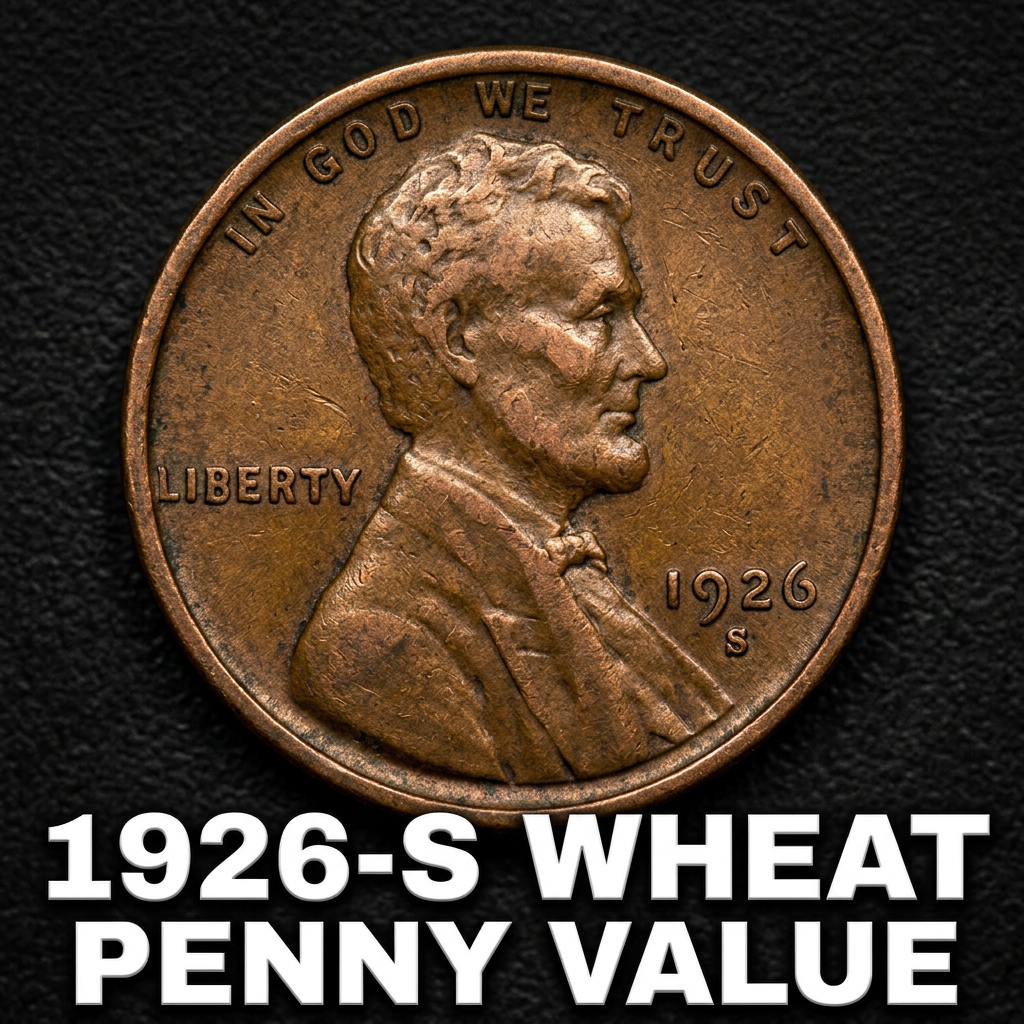
The 1926-S Wheat Penny is worth anywhere from $2 in heavily worn condition to well over $1,000 in high mint state grades. If you found one of these coins in an old jar or inherited collection, you may be sitting on something more valuable than you think.
What Makes the 1926-S Wheat Penny Special
The “S” mintmark on this penny tells you it was struck at the San Francisco Mint back in 1926. During this era, the San Francisco facility produced far fewer pennies than the main Philadelphia Mint, which makes the 1926-S a key date coin that collectors actively seek out. Total mintage came in at around 4,550,000 — not the rarest penny ever made, but low enough to command serious premiums in better grades. If you’re not sure how to spot the mintmark, it’s a small “S” located just below the date on the obverse side of the coin. A free coin identification app can help you confirm the mintmark and even give you a quick grade estimate right from your phone — no coin expertise required. Tools like CoinHix make this process incredibly simple for everyday people who stumble upon old coins.
1926-S Wheat Penny Value by Grade
Like all collectible coins, the 1926-S Wheat Penny value depends heavily on its condition, also called its grade. A coin that has been circulated for decades will show wear on Lincoln’s cheek, the wheat stalks, and the lettering. The better the detail preserved, the higher the value. Here’s a general breakdown of what you can expect:
| Grade | Condition Description | Estimated Value |
|---|---|---|
| Good (G-4) | Heavy wear, date visible | $2 – $5 |
| Fine (F-12) | Moderate wear, some detail | $10 – $20 |
| Extremely Fine (EF-40) | Light wear on high points | $60 – $100 |
| About Uncirculated (AU-50) | Slight wear, most luster remains | $150 – $250 |
| Mint State (MS-63) | Uncirculated, minor marks | $400 – $700 |
| Mint State (MS-65+) | Gem quality, full luster | $1,000+ |
For more detailed and up-to-date pricing across all grades, you can browse the 1926-S Wheat Penny price data across mint state red grades to see where the market currently stands.
How to Tell If Your Coin Is in Good Shape
You don’t need to be a professional numismatist to do a basic assessment of your 1926-S Wheat Penny. Start by looking at Lincoln’s portrait under good lighting — ideally with a magnifying glass. If the hair above his ear is still defined and the cheekbone shows crisp detail, you likely have a coin in Fine or better condition. The wheat stalks on the reverse should also show individual lines rather than being flattened down into the field. Avoid cleaning the coin under any circumstances. A cleaned coin loses significant value in the eyes of collectors and dealers. Even a gentle rinse with water can alter the coin’s surface in ways that experienced graders can detect. If your coin looks bright and shiny in an unnatural way, it may have been cleaned at some point — that’s worth noting before you try to sell it.
Where the 1926-S Penny Fits in Wheat Penny History
The Lincoln Wheat Penny series ran from 1909 to 1958, and certain dates and mintmarks are far more valuable than others. The 1926-S sits in the middle tier — not as rare as the famous 1909-S VDB or the 1914-D, but still a coin that experienced collectors will pay well for in high grades. It was minted during the Roaring Twenties, a period of economic optimism in the United States, and surviving examples in top condition are genuinely scarce. If you want a full picture of the 1926-S Wheat Penny value alongside comparisons to other Lincoln cents from the same era, the complete 1926 penny value breakdown including all mint varieties is a great resource to bookmark. CoinHix also lets you track these values over time, which is useful if you’re deciding when to sell.
Selling or Holding Your 1926-S Wheat Penny
If your coin grades out at EF-40 or higher, it’s worth getting a professional opinion before selling. Third-party grading services like PCGS or NGC can certify your coin’s grade and authenticate it, which typically adds value when selling. For coins in lower grades, you can realistically sell to local coin dealers, at coin shows, or through online platforms. CoinHix is a handy tool for keeping an eye on current auction results and real-time market data, so you’re never walking into a sale blind. If your 1926-S is in circulated condition but still clearly identifiable, expect offers in the $5 to $60 range depending on wear. Don’t let anyone low-ball you without doing your research first.
FAQ
Q: How do I know if my penny is a 1926-S or just a regular 1926 penny?
A: Look just below the date on the front of the coin. If you see a small “S,” it was minted in San Francisco. No mintmark means Philadelphia. The 1926-S is worth considerably more than the Philadelphia version, especially in higher grades.
Q: Is a 1926-S Wheat Penny rare?
A: It’s considered a semi-key date in the Lincoln Wheat Penny series. The mintage was relatively low at around 4.5 million, and surviving high-grade examples are genuinely hard to find. In circulated grades it’s uncommon but not extremely rare; in mint state it becomes a coin that serious collectors compete for.
Q: Should I clean my 1926-S Wheat Penny before selling it?
A: Absolutely not. Cleaning a coin — even gently — damages its surface and dramatically reduces its value to collectors. Always present your coin in the condition you found it. A naturally toned or worn coin is worth far more than one that’s been polished or wiped down.