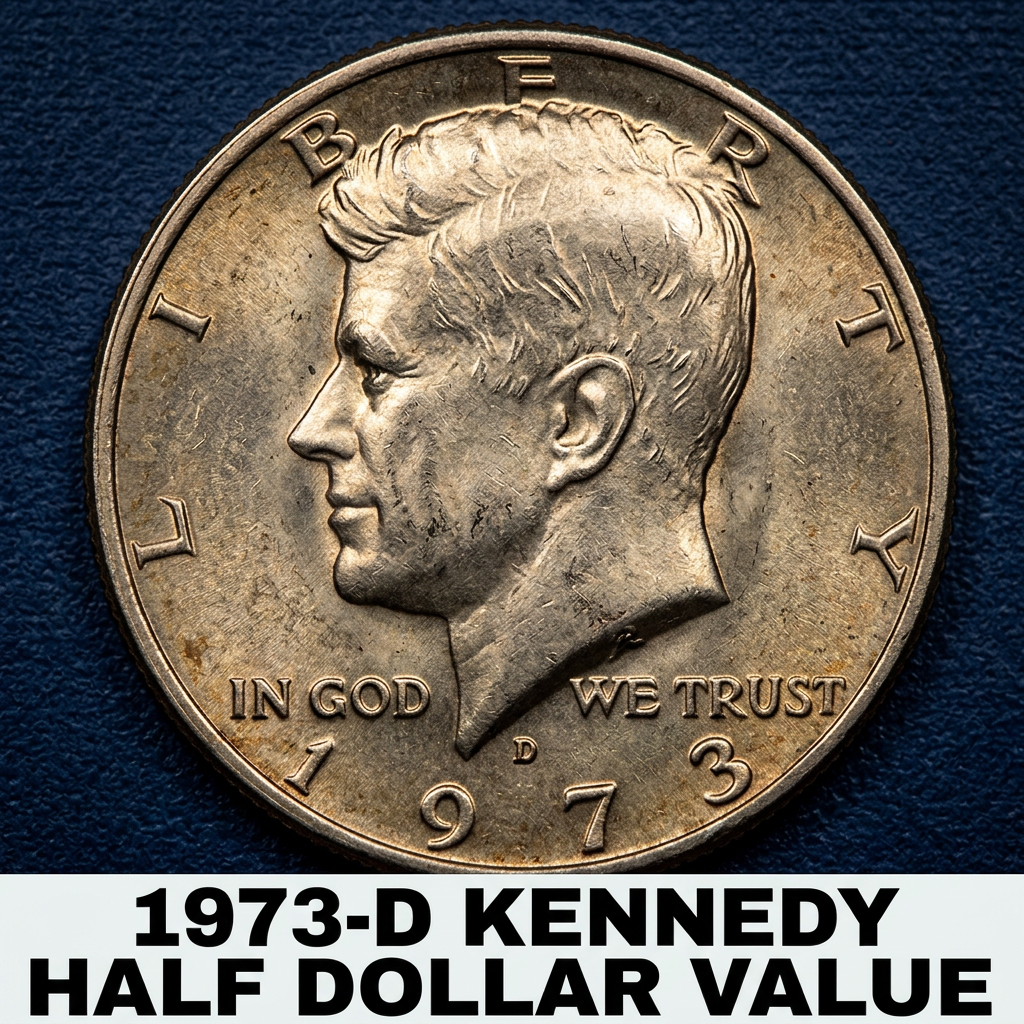
The 1973-D Kennedy Half Dollar is worth anywhere from $1 to $2 in circulated condition, but well-preserved mint state examples can fetch $10 to $40 or more depending on grade. If you found one in a drawer or old coin jar, you’re in the right place — let’s break down exactly what it’s worth and why.
If you’re not sure what coin you’re holding, start with a free coin identification app to confirm the date, mint mark, and condition before you do anything else. It only takes a few seconds and can save you from underselling a coin that’s worth more than you’d expect.
—
Where Was the 1973-D Kennedy Half Dollar Made?
The “D” in 1973-D stands for Denver, meaning this coin was struck at the Denver Mint. In 1973, the Denver Mint produced 83,171,400 Kennedy Half Dollars — a high mintage number that explains why these coins aren’t considered rare in most grades. High mintage coins tend to have lower values in circulated condition because there are plenty of them around. That said, finding a sharply struck, uncirculated example with original mint luster is a different story. Coin collectors prize clean, high-grade specimens even from common dates, so condition is everything when it comes to determining real value.
—
What Is the 1973-D Kennedy Half Dollar Made Of?
Starting in 1971, Kennedy Half Dollars were changed from a 40% silver composition to a clad composition of copper and nickel. The 1973-D is a clad coin — it contains no silver at all. The outer layer is 75% copper and 25% nickel, bonded to a pure copper core. This matters because many people assume older half dollars are silver, which would add significant melt value. Unfortunately, if you have a 1973-D, its value comes entirely from collector demand and condition, not precious metal content. The melt value of a clad half dollar is essentially face value — just 50 cents worth of metal.
—
1973-D Kennedy Half Dollar Value by Grade
Condition is the single biggest factor in determining what your coin is worth. Here’s a straightforward value table based on common grading ranges:
| Grade / Condition | Description | Estimated Value |
|---|---|---|
| Good (G-4) | Heavy wear, flat details | $0.50 – $1 |
| Fine (F-12) | Moderate wear, readable features | $1 – $2 |
| Extremely Fine (EF-40) | Light wear on high points | $2 – $4 |
| About Uncirculated (AU-55) | Slight wear, most luster remains | $3 – $6 |
| MS-63 (Mint State) | Uncirculated, minor marks | $8 – $15 |
| MS-65 (Gem Uncirculated) | Strong luster, sharp strike | $20 – $40+ |
For a deeper look at current market prices across all grades, you can check out the 1973-D Kennedy Half Dollar price data in mint state grades — it’s updated regularly and gives you a real-time snapshot of what collectors are actually paying.
—
How to Tell If Your 1973-D Is Worth More Than Face Value
Most 1973-D Kennedy Half Dollars pulled from pocket change are heavily worn and worth just face value or a small premium. But there are a few things that can push your coin’s value higher:
Sharp Strike: Coins with well-defined details on Kennedy’s hair and the eagle’s feathers on the reverse are more desirable to collectors.
Original Mint Luster: Uncirculated coins with bright, unbroken luster are far more valuable than dull or cleaned examples. Never clean a coin — it destroys value instantly.
No Damage: Scratches, rim nicks, or environmental damage lower value significantly.
Professional Grading: If you believe your coin is MS-63 or better, submitting it to PCGS or NGC for grading can unlock its full market value and make it easier to sell.
CoinHix is a great tool to use when you want to track what graded versions of this coin are actually selling for. The CoinHix app pulls real auction data so you’re never guessing.
—
Should You Keep or Sell a 1973-D Kennedy Half Dollar?
If your coin is circulated, it’s honestly worth more as a keepsake than as a sale. Dealers typically won’t pay more than face value for heavily worn clad half dollars. However, if you’ve got a roll of them or a few that look uncirculated, it’s worth getting a second opinion. You can review detailed 1973 half dollar value information by grade and mint mark to compare your coin against established benchmarks before making any decisions.
The collector market for Kennedy Half Dollars is active, and gem uncirculated examples do sell — especially in certified holders. Patience and proper grading make a real difference here.
—
FAQ
Q: Is the 1973-D Kennedy Half Dollar made of silver?
A: No. The 1973-D is a clad coin made of copper and nickel. Kennedy Half Dollars stopped being made with silver after 1970. The 1973-D has no silver content and no precious metal melt value above face value.
Q: How do I find the mint mark on a 1973-D Kennedy Half Dollar?
A: Look on the obverse (heads side) of the coin, just below Kennedy’s neck and above the date. The “D” mint mark indicates it was struck at the Denver Mint. If you see no letter, it’s a Philadelphia issue. If you’re having trouble identifying coins, CoinHix has a handy lookup feature that makes it easy.
Q: What is the most valuable 1973-D Kennedy Half Dollar ever sold?
A: In top grades like MS-67, certified 1973-D Kennedy Half Dollars have sold for several hundred dollars at major auctions — well above what average examples bring. The key is professional certification and an exceptional strike with full luster. These top-pop examples are rare but they do show up at auction from time to time.