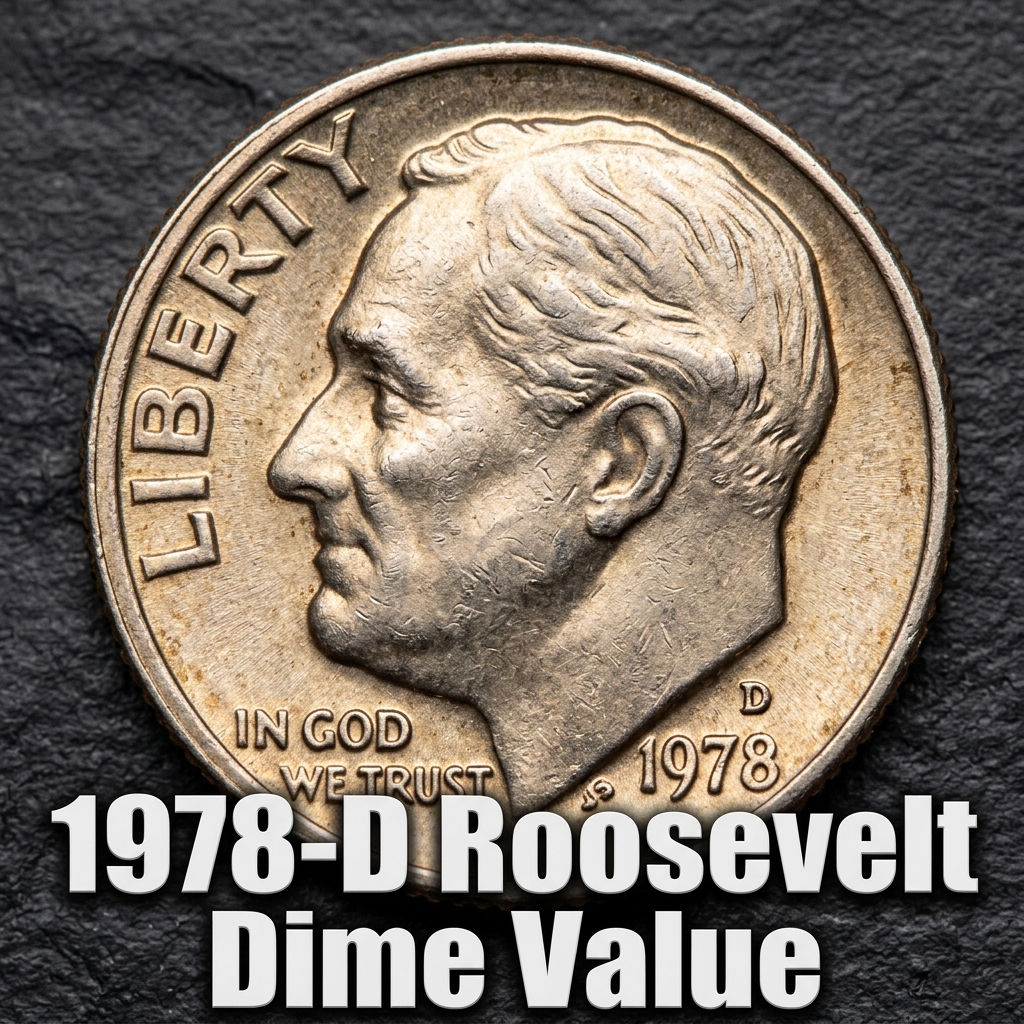
The 1978-D Roosevelt Dime is worth between 10 cents and around $8 in average circulated condition, but well-preserved examples grading MS65 or higher can fetch $15 to $30 or more. If you found one in a jar or old wallet, you’re in the right place — let’s break down exactly what it’s worth.
What Makes the 1978-D Roosevelt Dime Special
The 1978-D Roosevelt Dime was struck at the Denver Mint, indicated by the small “D” mintmark found on the obverse just above the date. That year, the Denver facility produced over 663 million dimes — a huge number, which is why most circulated examples aren’t rare. However, quantity doesn’t mean value is zero. The coin is made of a copper-nickel clad composition (no silver, unlike pre-1965 dimes), and its value depends almost entirely on its condition. Collectors who focus on Roosevelt dimes by date and mintmark do seek out sharp, uncirculated examples. If your 1978-D has no scratches, retains full luster, and shows crisp details on Roosevelt’s portrait and the torch on the reverse, it could be worth several times its face value. For most people who pull a circulated 1978-D out of pocket change, though, it’s still essentially worth 10 cents unless it grades very high. Using a free coin identification app is a great first step to assess your coin before visiting a dealer or submitting it for grading.
Understanding the 1978-D Dime Value by Grade
Coin grade is everything when it comes to determining what your 1978-D Roosevelt Dime is actually worth. The Sheldon scale runs from 1 (barely identifiable) to 70 (perfect). Here’s a quick breakdown:
| Grade | Condition Description | Estimated Value |
|---|---|---|
| G-4 (Good) | Heavy wear, outline visible | $0.10 – $0.25 |
| VF-20 (Very Fine) | Moderate wear, details clear | $0.25 – $0.75 |
| MS-63 (Mint State) | Uncirculated, minor blemishes | $2 – $6 |
| MS-65 (Gem) | Bright luster, minimal marks | $10 – $20 |
| MS-67 (Superb Gem) | Near perfect, exceptional eye appeal | $30 – $75+ |
You can view up-to-date 1978-D Roosevelt Dime price data by grade to see how recent auction results compare. Markets shift, and having current numbers matters if you’re thinking about selling.
How to Check Your 1978-D Dime’s Condition at Home
Before paying for a professional grade, you can do a basic assessment yourself. Hold the coin under good lighting and tilt it gently. A coin that still shows original mint luster will reflect light in a flowing, cartwheel pattern. Any dullness, heavy scratches, or flat spots on the high points (like Roosevelt’s cheek or hair) indicate wear. Also check for cleaning — many old coins were polished by well-meaning owners, which actually lowers value significantly in the eyes of collectors. A cleaned 1978-D dime, even if it looks shiny, may only be worth face value. If you want a more detailed breakdown of condition and worth, CoinHix offers a straightforward grading guide alongside live pricing that any beginner can follow. It’s a solid resource whether you’re just curious or ready to sell.
Are Any 1978-D Dimes Worth Big Money
For the most part, no — but there are exceptions. Error coins can change everything. A 1978-D dime with a doubled die obverse (where the date or lettering appears slightly doubled), an off-center strike, or a die cap error can be worth anywhere from $25 to several hundred dollars depending on severity. These aren’t common, but they do show up in circulation occasionally. Another area of interest is Full Bands (FB) designation — this refers to the horizontal bands on the torch on the reverse being fully separated and sharply struck. A 1978-D MS-66 FB certified by PCGS or NGC can sell for $50 or more. For a complete picture of what your coin might be worth, check out this detailed 1978 dime value guide covering all mint marks and grades. It’s especially helpful if you have multiple dimes from that era to compare.
Where to Sell Your 1978-D Roosevelt Dime
If your coin grades MS-65 or better, it’s worth getting it certified by PCGS or NGC before selling. Certified coins sell for more because buyers trust the grade. For raw (uncertified) coins in circulated condition, eBay, local coin shops, and coin shows are your best bets. Don’t expect big returns on worn examples — but a gem-quality 1978-D is a different story. CoinHix is also a great place to research what buyers are currently paying before you list anywhere. Knowing your floor price keeps you from leaving money on the table. Whether you’re a first-time seller or building a collection, doing your homework first is always the right move.
—
FAQ
Q: Is the 1978-D Roosevelt Dime made of silver?
A: No. The 1978-D dime is made of a copper-nickel clad composition. The U.S. Mint stopped making silver dimes for circulation after 1964. Your 1978-D has no silver content and its value comes from collector demand, not precious metal.
Q: How do I know if my 1978-D dime has a mintmark?
A: Look at the front (obverse) of the coin, just above the date on the right side. A small “D” indicates it was minted in Denver. If there’s no mintmark, it came from the Philadelphia Mint (the 1978-P dime also has no “P” mintmark, as Philadelphia didn’t add one until 1980).
Q: Where can I get my 1978-D dime professionally graded?
A: The two most trusted grading services are PCGS (Professional Coin Grading Service) and NGC (Numismatic Guaranty Company). Submitting through their websites or authorized dealers will get you a certified grade in a sealed holder. It’s only worth doing if your coin appears to be in uncirculated or near-uncirculated condition — otherwise, grading fees won’t be worth it. CoinHix can help you pre-assess value before you decide whether to submit.