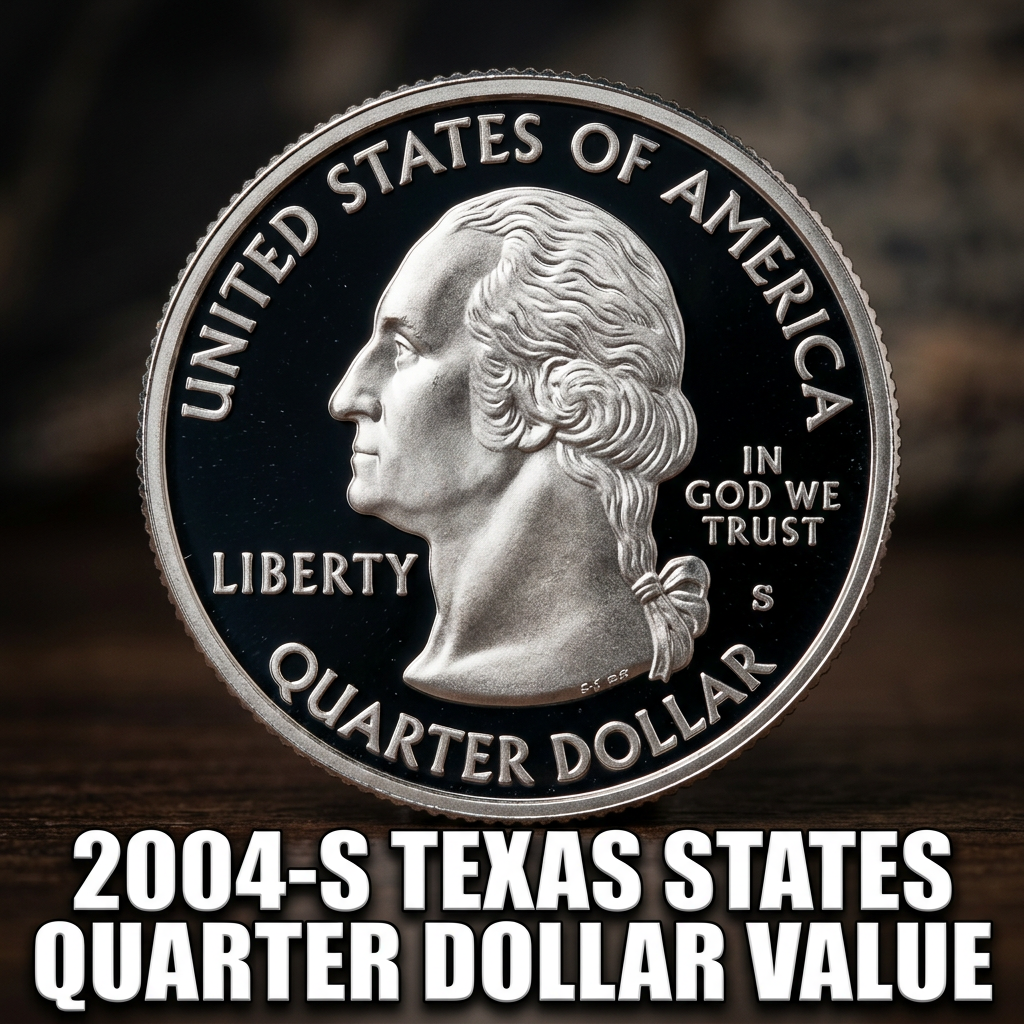
The 2004-S Texas State Quarter is worth anywhere from $1.50 in circulated condition to over $10 or more for proof versions in pristine condition. If you stumbled across one of these in an old coin jar or inherited collection, you’re in the right place to find out exactly what it’s worth.
If you’re not sure which version you have or want a quick identification, try using a free coin identification app to scan your coin and get instant details before diving into the value breakdown below.
—
What Is the 2004-S Texas State Quarter?
The 2004-S Texas State Quarter is part of the United States Mint’s 50 State Quarters Program, which ran from 1999 to 2008. The “S” mint mark tells you this coin was struck at the San Francisco Mint, which produced only proof coins — not coins meant for everyday circulation. That’s an important distinction because proof coins are made with special dies and polished planchets, giving them a mirror-like finish and higher collectible value compared to their Philadelphia (P) or Denver (D) counterparts.
The reverse design features the outline of Texas with a lone star, a lasso, and a golden eagle — all iconic symbols of the Lone Star State. The obverse carries the classic portrait of George Washington.
These coins were sold directly to collectors as part of proof sets, so they were never released into general circulation. That means most 2004-S Texas quarters you’ll find are still in excellent condition, which is great news for anyone who has one sitting around.
—
How Much Is the 2004-S Texas Quarter Worth Today?
Here’s a quick breakdown of typical values based on condition:
| Condition | Type | Estimated Value |
|---|---|---|
| PR-65 (Proof) | Clad Proof | $2 – $5 |
| PR-67 to PR-68 | Clad Proof | $5 – $12 |
| PR-69 DCAM | Deep Cameo Proof | $10 – $20+ |
| PR-70 DCAM | Deep Cameo Proof (Perfect) | $50 – $100+ |
| Silver Proof PR-69 | 90% Silver | $15 – $30 |
The silver proof version is especially popular with collectors because it contains 90% silver, giving it real metal value on top of its numismatic worth. For a closer look at certified grade pricing and auction records for similar 2004 State Quarter issues, you can explore recently sold examples to see what buyers are actually paying right now.
—
Proof vs. Silver Proof — Which One Do You Have?
This is one of the most common questions people have about the 2004-S Texas quarter. There are actually two varieties struck at San Francisco:
Clad Proof: This is the standard proof coin made from copper-nickel clad, just like regular quarters. It has a shiny, mirrored surface but contains no precious metal. These were included in the standard annual proof sets sold by the Mint.
Silver Proof: This version was sold as part of a special Silver Proof Set and contains 90% silver and 10% copper — the same composition as pre-1965 quarters. To tell them apart, look at the edge of the coin. A silver proof will show a solid silver-white edge, while a clad proof will have a visible copper stripe along the edge.
The silver version is worth more both for its metal content and for its collector appeal. CoinHix is a great resource for checking current silver melt values alongside certified coin prices, so you always know the full picture.
—
Factors That Affect the 2004-S Texas Quarter Value
Even among proof coins, condition matters a lot. Grading agencies like PCGS and NGC assign grades from PR-60 to PR-70, with PR-70 being a perfect coin. Most 2004-S Texas quarters grade in the PR-67 to PR-69 range, which puts them solidly in the $5–$20 range for clad examples.
The “Deep Cameo” (DCAM) designation is another value driver. This refers to coins that have heavily frosted devices (the raised design elements) against a brilliant, mirror-like field. DCAM coins are visually stunning and command a premium. If your coin shows a strong contrast between the frosted Texas design and the shiny background, you might have a DCAM specimen worth a nice premium.
Storage matters too. A coin that’s been loosely rattling in a drawer may show hairlines or surface marks under magnification, which can drop its grade significantly. Original mint packaging helps preserve the coin’s grade and adds credibility when selling.
For a full breakdown of what your 2004 quarter is worth based on mint mark and condition, detailed guides can walk you through each variety side by side.
—
Tips for Selling or Keeping Your 2004-S Texas Quarter
If you’re thinking about selling, a few tips can help you get the best price:
– Don’t clean the coin. Cleaning destroys the original surfaces and can drop a high-grade coin to a lower grade instantly.
– Consider grading. For coins that appear to be PR-69 or PR-70, professional grading by PCGS or NGC can significantly increase the sale price.
– Use the right platform. eBay, coin shows, and dedicated coin marketplaces are all solid options. CoinHix also lets you track current prices and compare values across grades.
– Check both versions. If you’re not sure whether you have the clad or silver proof, the edge test is the fastest way to find out before listing.
—
FAQ
Q: Is the 2004-S Texas quarter rare?
A: Not particularly. The San Francisco Mint produced millions of these proof coins. However, perfect PR-70 examples and silver proof specimens are less common and can fetch meaningful premiums from serious collectors.
Q: How do I know if my 2004-S Texas quarter is silver?
A: Look at the edge of the coin. A silver proof will have a completely silver-white edge with no copper stripe. A clad proof will show a thin orange-brown copper layer along the rim.
Q: Where can I get my 2004-S Texas quarter appraised or graded?
A: PCGS and NGC are the two most trusted grading services for U.S. coins. You can also use CoinHix to get a quick sense of current market values before deciding whether professional grading is worth the cost for your specific coin.