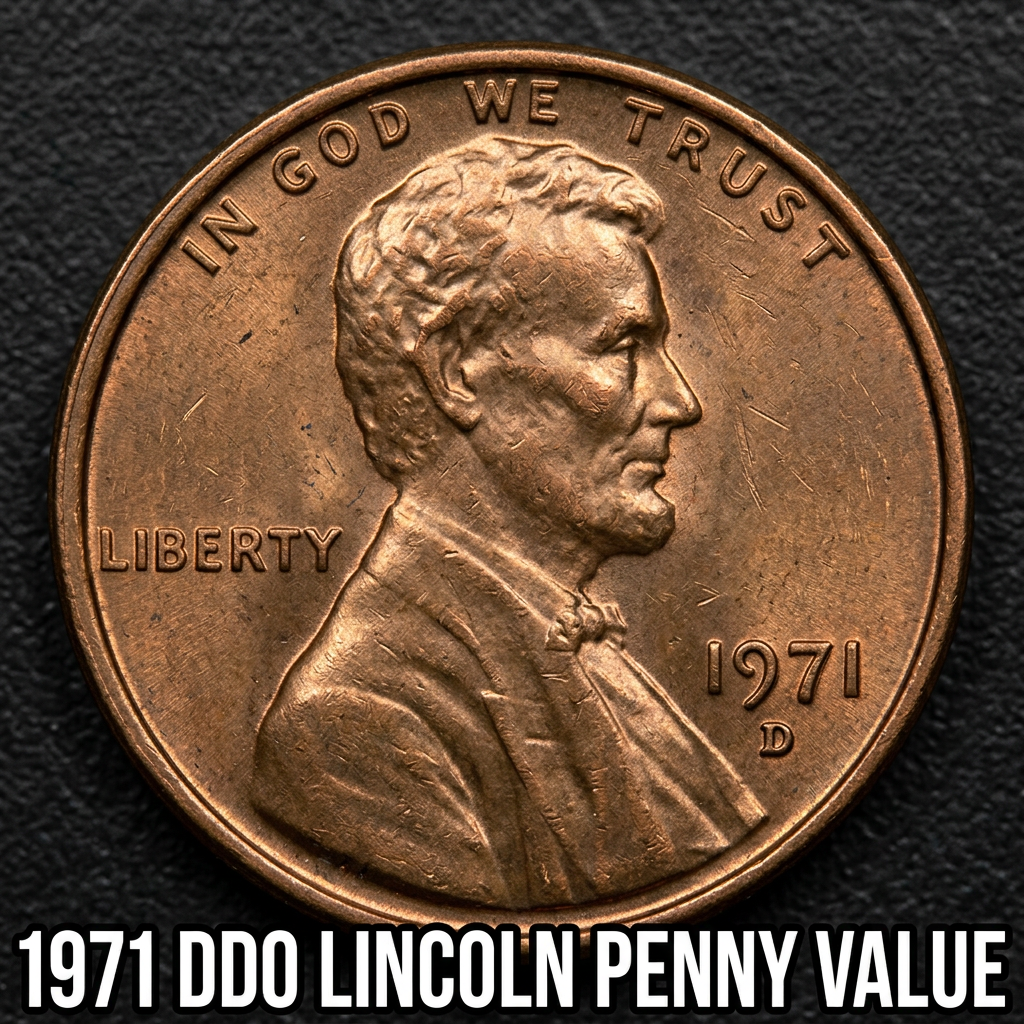
The 1971 DDO Lincoln Penny is worth anywhere from $25 in heavily worn condition to over $300 or more in uncirculated grades — and top examples have sold for hundreds at auction. If you recently found one of these in an old coin jar or inherited collection, you may be sitting on a surprisingly valuable piece.
free coin identification app tools like this one can help you quickly confirm whether you’re holding a genuine doubled die obverse or just a common 1971 cent before you get too excited.
—
What Is the 1971 DDO Lincoln Penny?
The 1971 DDO — short for Doubled Die Obverse — is one of the most sought-after Lincoln cent error coins from the early 1970s. It was produced at the Philadelphia Mint, and the doubling occurred during the hubbing process, where the die receives multiple impressions that are slightly misaligned. The result is a coin that shows clear, visible doubling on the date, the word LIBERTY, and IN GOD WE TRUST across the obverse (heads side).
This isn’t something you need a microscope to see on a strong example. On high-grade specimens, the doubling is bold and unmistakable even to the naked eye or with a simple 5x loupe. That’s exactly what makes this coin so popular among both new and experienced collectors. Varieties like this one tend to generate a lot of excitement because they’re real mint errors that slipped into circulation — meaning everyday people can find them in pocket change or old jars. The 1971 DDO is officially listed in major reference guides, including the Cherrypickers’ Guide, under the designation FS-101.
—
How Much Is the 1971 DDO Lincoln Penny Worth?
Value depends heavily on the coin’s grade and the strength of the doubling. A well-worn example showing clear doubling might bring $25 to $75 from a dealer or at a coin show. Mid-grade circulated coins in the VF to EF range typically sell for $75 to $150. Uncirculated examples — those that never saw everyday use — can push well past $200, and certified MS-65 or higher specimens have fetched $300 to $500 or more at major auction houses.
| Grade | Description | Estimated Value |
|---|---|---|
| G-4 (Good) | Heavy wear, doubling still visible | $25 – $40 |
| VF-20 (Very Fine) | Moderate wear, detail intact | $75 – $100 |
| EF-40 (Extremely Fine) | Light wear, strong doubling | $100 – $150 |
| MS-63 (Uncirculated) | No wear, some bag marks | $175 – $250 |
| MS-65 (Gem Uncirculated) | Sharp strike, minimal marks | $300 – $500+ |
You can browse up-to-date 1971 Lincoln Penny price data by grade on CoinHix to see recent sale trends and compare your coin’s condition to certified examples.
—
How to Identify the Genuine 1971 DDO
Not every 1971 penny with slight doubling is the real deal. Machine doubling — also called MD or shelf doubling — is extremely common and adds virtually no value. Genuine DDO doubling looks rounded and fully formed, almost like a shadow of the original lettering shifted slightly to one side. Machine doubling, on the other hand, looks flat and smeared.
To check your coin, look at the date “1971” and the letters in LIBERTY under a 5x to 10x loupe in good lighting. If the doubling appears strong, three-dimensional, and consistent across multiple letters and the date, there’s a solid chance you have the real variety. If you’re unsure, CoinHix offers a helpful reference tool where you can compare your coin against documented examples. Getting a professional grade from PCGS or NGC will confirm the variety and dramatically increase resale value.
—
Where to Sell a 1971 DDO Lincoln Penny
If your coin grades out as a genuine doubled die, you have several good options for selling. Online platforms like eBay reach a wide audience of collectors who actively search for error coins. Established coin dealers and local coin shows are also worth visiting, especially if you want an in-person offer without shipping risks.
For a full breakdown of what your 1971 cent could realistically bring today, check out this detailed 1971 penny value guide covering all grades and mint marks — it’s especially useful if you’re comparing multiple coins at once.
If you want to identify the variety before selling, the CoinHix app makes it easy to look up error coin listings, compare photos, and get a clearer picture of current market demand — all from your phone.
—
FAQ
Q: How do I know if my 1971 penny is a DDO and not just machine doubling?
A: Look for thick, rounded doubling on the date and lettering that appears as a full shadow — not a flat, shelf-like smear. Genuine DDO doubling is consistent and three-dimensional. When in doubt, a professional numismatist or a grading service like PCGS can confirm the variety.
Q: Is a 1971 DDO penny worth getting professionally graded?
A: Yes, especially if the coin appears uncirculated or shows strong, bold doubling. Certification from PCGS or NGC gives buyers confidence and typically adds significant value — sometimes doubling or tripling what you’d get for a raw (ungraded) coin.
Q: Can I find a 1971 DDO penny in circulation today?
A: It’s unlikely but not impossible. Most examples have already been pulled from circulation by collectors over the past 50 years. Your best bet is searching through old coin rolls, estate collections, or inherited jars of mixed cents from the early 1970s.