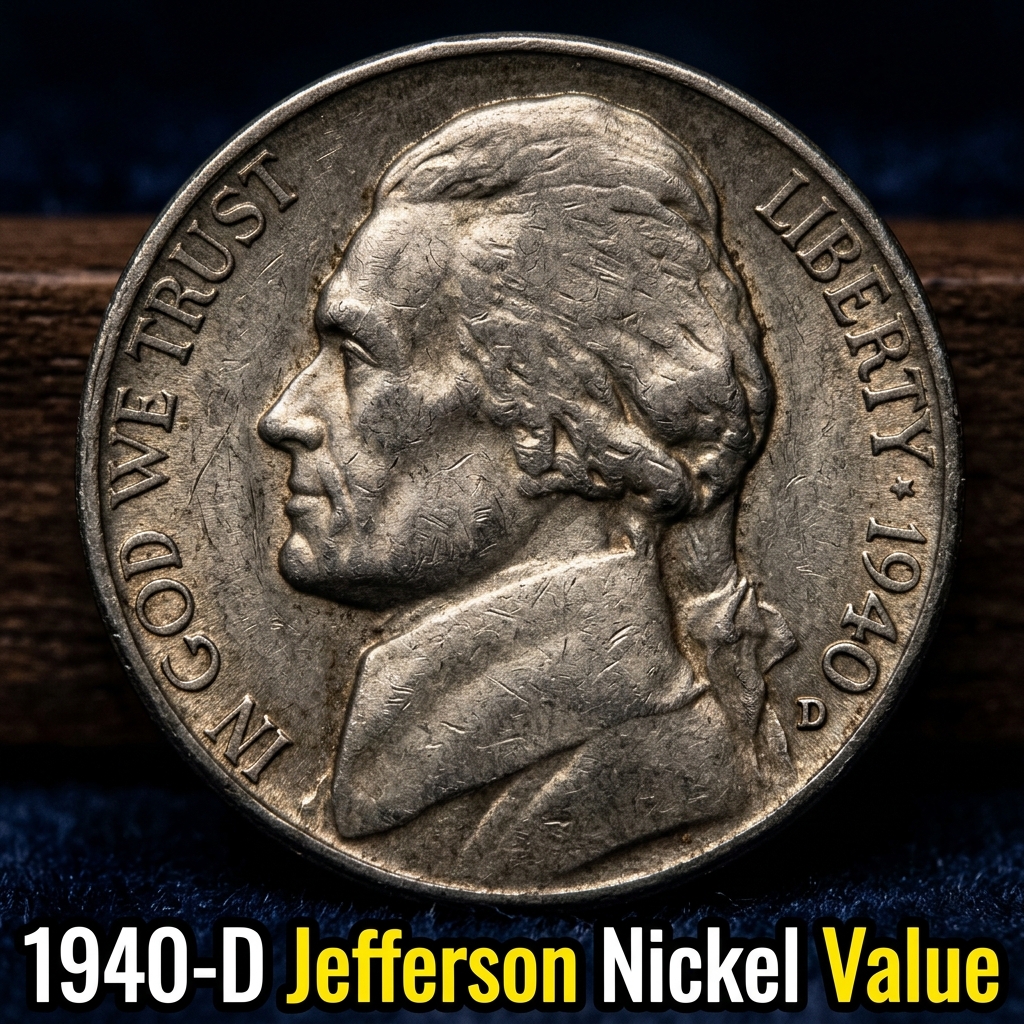
The 1940-D Jefferson Nickel is worth anywhere from $0.25 in heavily worn condition to over $30 or more in uncirculated mint state — and certain high-grade examples can fetch even higher prices at auction. If you just found one of these in an old coin jar or inherited collection, you might be sitting on a small but real piece of American history.
If you’re not sure which mint mark is on your nickel or want to confirm the date, try using a free coin identification app to get a quick read before diving deeper into the value research.
What Is the 1940-D Jefferson Nickel?
The 1940-D Jefferson Nickel was struck at the Denver Mint, indicated by the small “D” mint mark found to the right of Monticello on the reverse side of the coin. This was the third year of production for the Jefferson Nickel series, which launched in 1938 after replacing the beloved Buffalo Nickel design. The obverse features a left-facing portrait of Thomas Jefferson, while the reverse showcases his famous Virginia estate, Monticello.
In 1940, the Denver Mint produced approximately 43,540,000 of these nickels — a fairly generous mintage, which is one of the reasons most circulated examples aren’t worth a fortune. However, quantity doesn’t tell the whole story. Coins that managed to survive decades without heavy wear, especially those with sharp strikes and original luster, are genuinely scarce and command strong premiums from collectors. The composition is 75% copper and 25% nickel, the standard pre-war alloy before wartime silver nickels were introduced in 1942.
How Much Is a 1940-D Jefferson Nickel Worth?
Value is primarily driven by condition, also called “grade” in the coin hobby. A coin that has been circulated for years will show significant wear on the high points — Jefferson’s cheekbone, hair details, and the steps of Monticello tend to flatten first. Here’s a general value breakdown:
| Grade / Condition | Estimated Value |
|---|---|
| Good (G-4) | $0.25 – $0.50 |
| Fine (F-12) | $0.50 – $1.00 |
| Extremely Fine (EF-40) | $1.50 – $3.00 |
| About Uncirculated (AU-50) | $4.00 – $8.00 |
| Mint State (MS-63) | $15 – $25 |
| Mint State (MS-65+) | $30 – $100+ |
For the most current and detailed pricing tiers, you can check the 1940-D Jefferson Nickel MS grade price data on CoinHix, which tracks real auction results and updated market values.
What Makes Some 1940-D Nickels More Valuable
Not all coins of the same date and mint are equal. Two factors that dramatically affect value for the 1940-D Jefferson Nickel are strike quality and Full Steps designation.
The “Full Steps” (FS) designation refers to the steps at the base of Monticello on the reverse. When a coin was struck with enough force and the dies were in good condition, those six steps appear sharply defined and uninterrupted. Most 1940-D nickels show weakness in this area due to soft strikes or die wear during production. A coin that earns an FS designation from a grading service like PCGS or NGC can be worth many times more than a standard example at the same numeric grade.
CoinHix is a great tool to look up how these FS coins perform compared to standard strikes, especially if you’re trying to figure out whether submitting your coin for professional grading makes financial sense.
Eye appeal also matters — original golden or blue-toned luster on an uncirculated coin is far more desirable to collectors than a bright, harshly cleaned surface. Never clean your old coins, as this almost always reduces their value significantly.
How to Check Your 1940-D Jefferson Nickel’s Condition
Grading coins takes some practice, but here’s what to look for at home. Under a good light and a basic magnifier, examine Jefferson’s cheek, the hair above his ear, and the lettering on the rim. If these areas look flat or “mushy,” the coin is heavily circulated. If you can see crisp, raised detail throughout, you might have something closer to uncirculated.
For a broader look at how all grades of this coin translate into dollars, the complete 1940 nickel value guide with condition-based pricing breaks it down clearly for beginners and experienced collectors alike.
You can also use CoinHix on your phone to photograph the coin and compare it against graded examples in their database — it’s a handy way to get a ballpark idea of condition before deciding your next step.
—
FAQ
Q: Is the 1940-D Jefferson Nickel rare?
A: Not in circulated grades — over 43 million were made. However, high-quality uncirculated examples, especially those with Full Steps on Monticello’s reverse, are genuinely scarce and can be worth $50 or more depending on eye appeal and grade.
Q: How do I know if my nickel is the Denver “D” mint mark version?
A: Flip the coin to the reverse (the Monticello side) and look to the right of the building. A small “D” means it was struck in Denver. No mint mark means Philadelphia, and “S” indicates San Francisco. The 1940-D is the most common of the three mint marks from that year.
Q: Should I get my 1940-D Jefferson Nickel professionally graded?
A: It depends on the condition. For circulated coins in Good to Fine grades, professional grading costs more than the coin is worth. But if your coin appears uncirculated with strong luster and sharp details — especially Full Steps — professional grading by PCGS or NGC could significantly increase its resale value and buyer confidence.