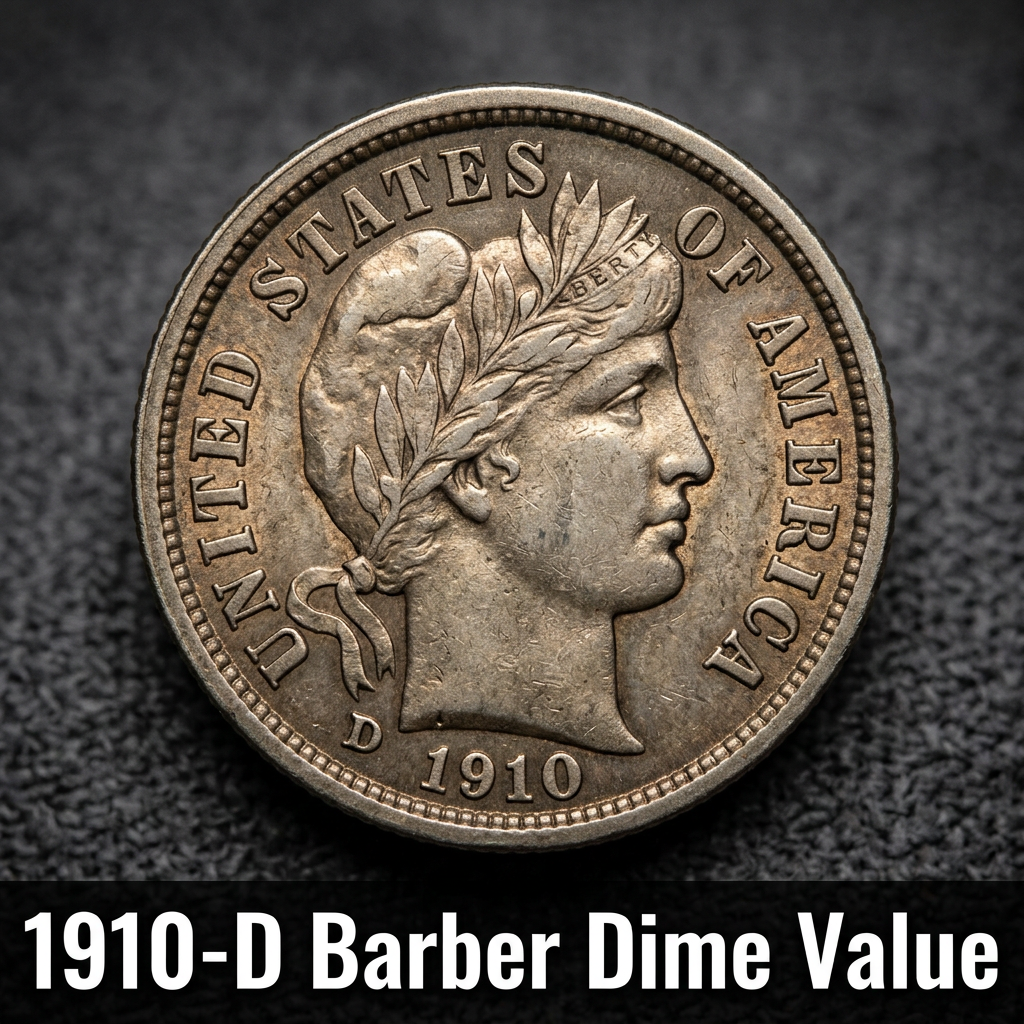
The 1910-D Barber Dime is worth anywhere from $4 in heavily worn condition to well over $200 in higher mint state grades — and in exceptional condition, certified examples have sold for significantly more. If you’ve found one of these old silver dimes, you’re holding a piece of American history that could be worth a lot more than ten cents.
What Is the 1910-D Barber Dime?
The 1910-D Barber Dime was struck at the Denver Mint in 1910, identified by the small “D” mintmark found on the reverse side of the coin, just above the “ONE DIME” inscription. It’s part of the Barber coinage series, designed by Charles E. Barber, who served as Chief Engraver of the U.S. Mint from 1879 to 1917. These dimes were made of 90% silver, which alone gives them a base melt value worth tracking.
With a mintage of 3,490,000 coins, the 1910-D isn’t the rarest Barber Dime out there, but it’s far from common — especially in well-preserved condition. Most of the surviving examples you’ll encounter in the wild show heavy wear from decades of circulation. If you want to get a quick sense of what yours might be worth before diving deeper, try using a free coin identification app to snap a photo and get an instant read on the coin’s grade and potential value.
How Condition Affects the 1910-D Barber Dime Value
With old coins like this one, condition is everything. The difference between a Good-4 and a Mint State-63 example can be hundreds of dollars. Barber Dimes are notoriously hard to find in high grades because they circulated heavily in everyday commerce.
Here’s a general value guide based on grade:
| Grade | Description | Estimated Value |
|---|---|---|
| Good (G-4) | Heavy wear, outline visible | $4 – $6 |
| Fine (F-12) | Moderate wear, lettering clear | $12 – $20 |
| Extremely Fine (EF-40) | Light wear on high points | $55 – $85 |
| About Uncirculated (AU-50) | Slight wear, most luster intact | $100 – $150 |
| Mint State (MS-63) | No wear, some minor marks | $200 – $350+ |
For a more detailed breakdown of how the 1910 Barber Dime value changes across all mint marks and grades, it’s worth checking a dedicated resource that tracks real auction data.
How to Grade Your 1910-D Barber Dime at Home
You don’t need to be a professional numismatist to get a rough idea of your coin’s grade. Start by looking at Liberty’s hair on the obverse. On a Good example, the hair is almost entirely flat and worn smooth. On a Fine coin, you can make out some hair detail and the headband lettering “LIBERTY” becomes more legible. On an Extremely Fine piece, individual hair strands are visible and the cheekbones show only light wear.
The reverse is equally telling. Look at the eagle’s breast feathers and the ribbon wrapping the arrows. Heavy wear flattens these details considerably. If your coin still shows crisp feather lines and a readable ribbon, you’re looking at a higher-grade example.
CoinHix is a great tool for this process. The CoinHix app uses AI-powered image recognition to estimate grades and values in real time — just take a clear photo in good lighting and let the app do the heavy lifting.
Silver Content and Melt Value
Even a beat-up 1910-D Barber Dime has intrinsic value beyond its numismatic grade. These coins are made of 90% silver and contain approximately 0.07234 troy ounces of pure silver. With silver prices fluctuating around $28–$30 per troy ounce at the time of writing, the silver melt value alone sits around $2.00–$2.20 per coin.
That means even the most worn examples are worth at least double face value in silver alone — and anything in Fine condition or better carries a significant collector premium on top of that.
Where to Sell or Get Your 1910-D Dime Appraised
If you believe your coin is in Fine condition or higher, it’s worth getting a professional opinion before selling. Options include submitting it to PCGS or NGC for certified grading, visiting a local coin dealer for a free appraisal, or listing it on platforms like eBay or Heritage Auctions where collector demand is strong.
Before you do any of that, CoinHix can give you a fast, no-cost preliminary estimate from your smartphone — handy when you want a second opinion before walking into a dealer’s shop.
Frequently Asked Questions
Q: How do I know if my dime is a 1910-D and not a 1910 Philadelphia issue?
A: Look at the reverse of the coin, just above the “ONE DIME” text. If you see a small “D” mintmark, it was struck in Denver. Philadelphia Mint coins from this era have no mintmark at all.
Q: Is the 1910-D Barber Dime worth getting professionally graded?
A: It depends on condition. If your coin looks like it’s in About Uncirculated or Mint State condition, professional grading from PCGS or NGC can significantly increase its resale value and buyer confidence. For heavily worn examples, the cost of grading may outweigh the benefit.
Q: Where can I find the most up-to-date value for my 1910-D Barber Dime?
A: Coin values shift with silver prices and collector demand, so it’s best to check current auction results and updated price guides regularly. Apps like CoinHix pull live market data to give you accurate, real-time estimates right from your phone.