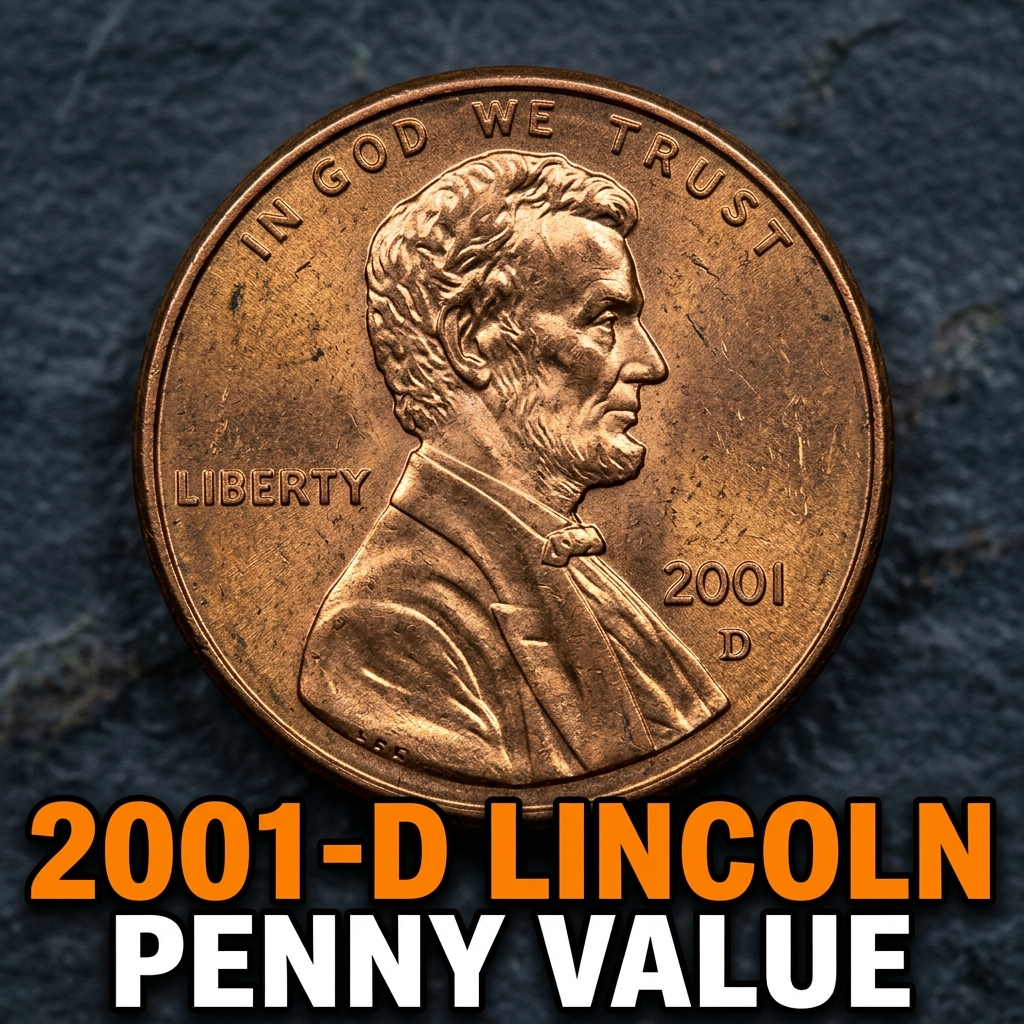
The 2001-D Lincoln Penny is worth anywhere from a few cents in circulated condition to around $1–$5 in uncirculated grades, with exceptionally well-preserved examples grading MS-67 or higher fetching $50 or more at auction. If you just pulled one out of your change jar, here’s what you need to know.
If you’re not sure which mint mark you’re looking at or want a quick way to identify your coin, a free coin identification app can help you figure out exactly what you have before you read any further. Now, let’s dig into the details of this modern Lincoln cent from the Denver Mint.
What Is the 2001-D Lincoln Penny?
The 2001-D Lincoln Memorial Penny was struck at the Denver Mint, which is why it carries the small “D” mint mark just below the date on the obverse. In 2001, Denver produced over 5.37 billion Lincoln cents — yes, billion with a “B” — making this one of the most widely produced coins in U.S. history. Because so many were made, the vast majority of circulated examples are worth exactly face value: one cent. However, don’t toss yours in the fountain just yet. Condition is everything in the coin world, and a pristine, uncirculated 2001-D Lincoln cent can still attract the attention of collectors who are chasing top-grade registry sets.
The coin features Victor David Brenner’s classic portrait of Abraham Lincoln on the obverse and the Lincoln Memorial design on the reverse — a design that was used from 1959 all the way through 2008. The composition is 97.5% zinc with a thin copper plating, giving it that familiar penny appearance.
How Much Is a 2001-D Lincoln Penny Worth?
The value of a 2001-D penny depends almost entirely on its condition. Worn coins pulled from circulation are worth face value. Lightly worn or “About Uncirculated” examples might fetch a few cents to a quarter among collectors. The real money, if you can call it that, is in mint-state coins that were never circulated.
Here’s a quick value breakdown by grade:
| Grade | Description | Estimated Value |
|---|---|---|
| Good (G-4) | Heavy wear, design visible | Face value ($0.01) |
| Fine (F-12) | Moderate wear | $0.01–$0.05 |
| Extremely Fine (EF-40) | Light wear on high points | $0.10–$0.25 |
| Mint State (MS-63) | Uncirculated, some marks | $0.50–$1.50 |
| Mint State (MS-65) | Gem uncirculated | $2–$5 |
| Mint State (MS-67+) | Superb gem, top pop | $50–$200+ |
For more precise and up-to-date figures, you can check the 2001-D Lincoln Penny price data by grade on CoinHix, which tracks real auction results and market prices for this coin.
Are There Any Valuable 2001-D Error Pennies?
This is where things get interesting. While a standard 2001-D penny isn’t going to fund your vacation, error coins from this year can be worth real money. The types of errors to watch for include:
– Double Die Obverse (DDO): Doubling visible in Lincoln’s portrait, the date, or the lettering. A clear DDO can fetch $25–$100 depending on the strength of the doubling.
– Off-Center Strikes: Coins struck noticeably off-center — especially those that are 20% or more off-center with a visible date — can sell for $10–$50 or more.
– Die Caps and Brockages: Rare major mint errors that can be worth hundreds of dollars.
– Broadstrikes: Coins struck without the collar die, giving them an expanded, flat appearance. These typically sell for $5–$20.
If you think you’ve spotted something unusual, use CoinHix to research comparable errors or take your coin to a local coin dealer for a second opinion. High-resolution photos and a magnifying loupe are your best friends here.
Should You Get Your 2001-D Penny Graded?
For most people, the honest answer is no — the cost of professional grading through PCGS or NGC (typically $20–$40+ per coin) far outweighs the potential value of a standard 2001-D penny. However, if your coin appears to be a gem uncirculated example with blazing red luster and absolutely no distracting marks, or if you’ve found what looks like a legitimate error coin, third-party grading is worth considering.
A graded and slabbed coin is easier to sell, more trusted by buyers, and can command a significant premium at auction compared to raw examples. For detailed guidance on whether grading makes sense for your specific coin, the 2001 penny value guide at CoinValueApp breaks down when professional grading is and isn’t worth the investment.
If you collect or flip coins regularly, CoinHix is a fantastic tool to keep tabs on real-time market values across thousands of coin types and grades, including the entire Lincoln cent series.
—
FAQ
Q: Is the 2001-D penny rare?
A: No, the 2001-D Lincoln penny is not rare. The Denver Mint produced over 5.37 billion of them in 2001, making it one of the most common coins in existence. Most examples are worth only face value unless they are in exceptional uncirculated condition or feature a verified mint error.
Q: What does the “D” mint mark mean on a 2001 penny?
A: The “D” stands for Denver, indicating that the coin was struck at the U.S. Mint’s Denver facility. You can find the mint mark on the obverse (front) of the coin, just below the date and to the right. Pennies without a mint mark were produced at the Philadelphia Mint.
Q: How can I tell if my 2001-D penny is uncirculated?
A: An uncirculated penny will have its original mint luster — a soft, slightly reflective sheen across the coin’s surface. There should be no wear on Lincoln’s cheekbone, the high points of his hair, or the steps of the Lincoln Memorial on the reverse. Any dullness or flatness in those areas indicates the coin has been circulated. For a more confident assessment, try CoinHix or bring it to a local coin show.