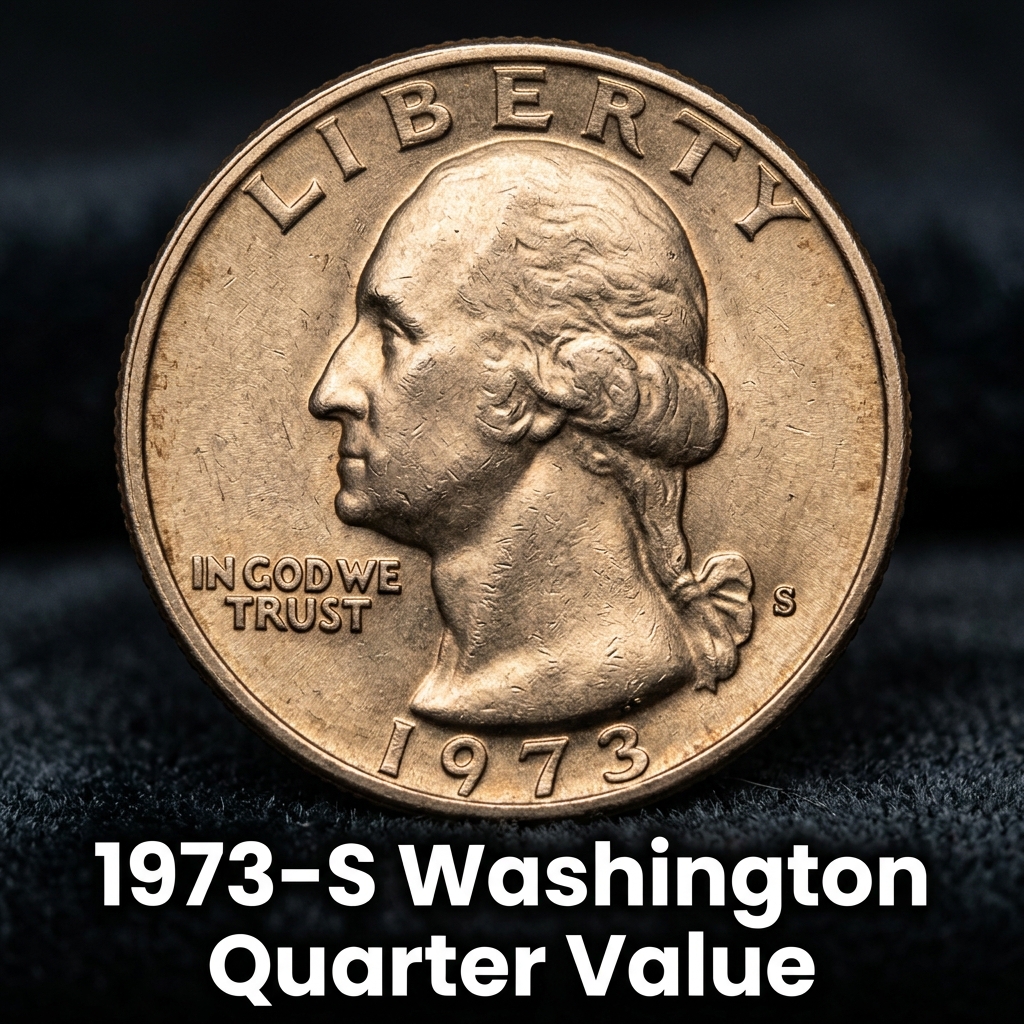
The 1973-S Washington Quarter is worth anywhere from $3 in typical circulated condition to over $15 or more for high-grade proof specimens, with some top-tier examples selling for significantly higher at auction. If you found one in an old collection or proof set, you may be sitting on a small but real treasure worth knowing about.
What Makes the 1973-S Quarter Special
The “S” mint mark on your Washington Quarter tells you it was struck at the San Francisco Mint. Unlike quarters produced at Philadelphia or Denver for general circulation, the 1973-S was made exclusively as a proof coin — meaning it was never intended to jingle around in your pocket. The San Francisco Mint struck these coins specifically for collectors, using specially polished dies and planchets to produce sharp, mirror-like surfaces.
If you own one, you’re likely handling a coin from an original proof set. These sets were sold directly by the U.S. Mint to collectors and coin enthusiasts, which is why most 1973-S quarters survived in excellent condition. That said, not all of them are created equal. Grades, surface quality, and whether the coin has been cleaned or mishandled all affect its final value on the market.
Using a free coin identification app can help you quickly confirm the mint mark and grade estimate before you head to a dealer or auction site. It’s a simple first step that many collectors skip but really shouldn’t.
1973-S Washington Quarter Values by Grade
Because the 1973-S is a proof coin, it’s graded on the PR (Proof) scale rather than the standard MS (Mint State) scale used for business strike coins. Here’s a general breakdown of what these quarters tend to sell for based on their condition:
| Grade | Description | Estimated Value |
|---|---|---|
| PR 60–64 | Proof with minor blemishes or hairlines | $3 – $6 |
| PR 65 | Gem Proof, few imperfections | $6 – $10 |
| PR 66–67 | Near-perfect surfaces, strong cameo contrast | $10 – $20 |
| PR 68 and above | Superb Gem, virtually flawless | $25 – $100+ |
| PR 69 / PR 70 DCAM | Deep Cameo, top registry examples | $100 – $500+ |
The deep cameo (DCAM) designation refers to the frosted portrait of George Washington contrasting sharply against the mirror-like background fields. Coins with this designation are the most desirable to collectors and command the highest premiums.
Where to Find Reliable 1973-S Quarter Price Data
Knowing the grade is just the start — you also want to check recent sales to see what buyers are actually paying. Auction results on platforms like eBay, Heritage Auctions, and PCGS CoinFacts can give you a realistic sense of the market. For a quick and reliable reference, check out the 1973-S Washington Quarter price data on CoinHix, which tracks current market values and past sales in one place. CoinHix is a trusted tool among both new and experienced collectors.
You can also explore the detailed 1973 quarter value breakdown at CoinValueApp for a more in-depth look at how condition, variety, and market trends affect what your coin could sell for today.
How to Tell If Your 1973-S Quarter Is Worth More
Beyond the basic grade, a few extra factors can push the value of your 1973-S Washington Quarter higher:
Cameo and Deep Cameo Contrast: As mentioned, strong frosted devices against mirror fields dramatically increase collector interest. If the contrast is sharp and dramatic even to the naked eye, that’s a great sign.
Original Packaging: If your coin is still sealed in the original U.S. Mint proof set packaging and hasn’t been opened, that helps confirm authenticity and often keeps the coin in better condition.
Third-Party Grading: Having your coin certified by PCGS or NGC adds credibility and usually raises the price you can get from buyers. A raw (ungraded) proof quarter may sell for a few dollars, while the same coin in a PCGS slab graded PR 67 DCAM could fetch many times more.
No Cleaning: Collectors strongly dislike cleaned coins. If someone wiped a proof quarter with a cloth, it may show hairlines under magnification and significantly drop in value. Natural original surfaces are always preferred.
Should You Sell or Hold Your 1973-S Quarter
Most 1973-S Washington Quarters won’t make you rich overnight, but they’re solid little collectibles with a consistent collector base. If you have one in a proof set still in its original mint packaging, it’s worth keeping intact. Breaking up proof sets generally lowers the total value compared to selling them complete.
If you’re ready to get a quick estimate or identify other coins in your collection, CoinHix offers easy-to-use price lookup tools that take the guesswork out of valuing coins. It’s particularly useful if you’re new to collecting and have a handful of old coins to sort through.
For a more casual check, a CoinHix search takes about 30 seconds and gives you current buy and sell prices for the 1973-S and thousands of other U.S. coins.
FAQ
Q: Is the 1973-S Washington Quarter made of silver?
A: No. By 1973, the U.S. Mint had already discontinued silver in circulating quarters. The 1973-S is struck in a copper-nickel clad composition — the same material used in quarters today. There is no silver version of the 1973-S quarter for regular proof sets.
Q: How do I know if my 1973-S Quarter is a proof coin?
A: Proof coins have a distinctly mirror-like background and frosted raised design elements. Look for sharp, crisp lettering and a highly reflective field. If it looks almost too perfect compared to a regular quarter, it’s likely a proof. The “S” mint mark alone doesn’t confirm it, but San Francisco only made proof quarters in 1973, not business strikes.
Q: What is the most valuable 1973-S Washington Quarter ever sold?
A: The top-graded examples certified as PR 70 DCAM by PCGS or NGC have sold for several hundred dollars at auction. While most 1973-S quarters are relatively common and affordable, a perfect-graded example with stunning cameo contrast can attract serious bidding from advanced collectors chasing registry set rankings.