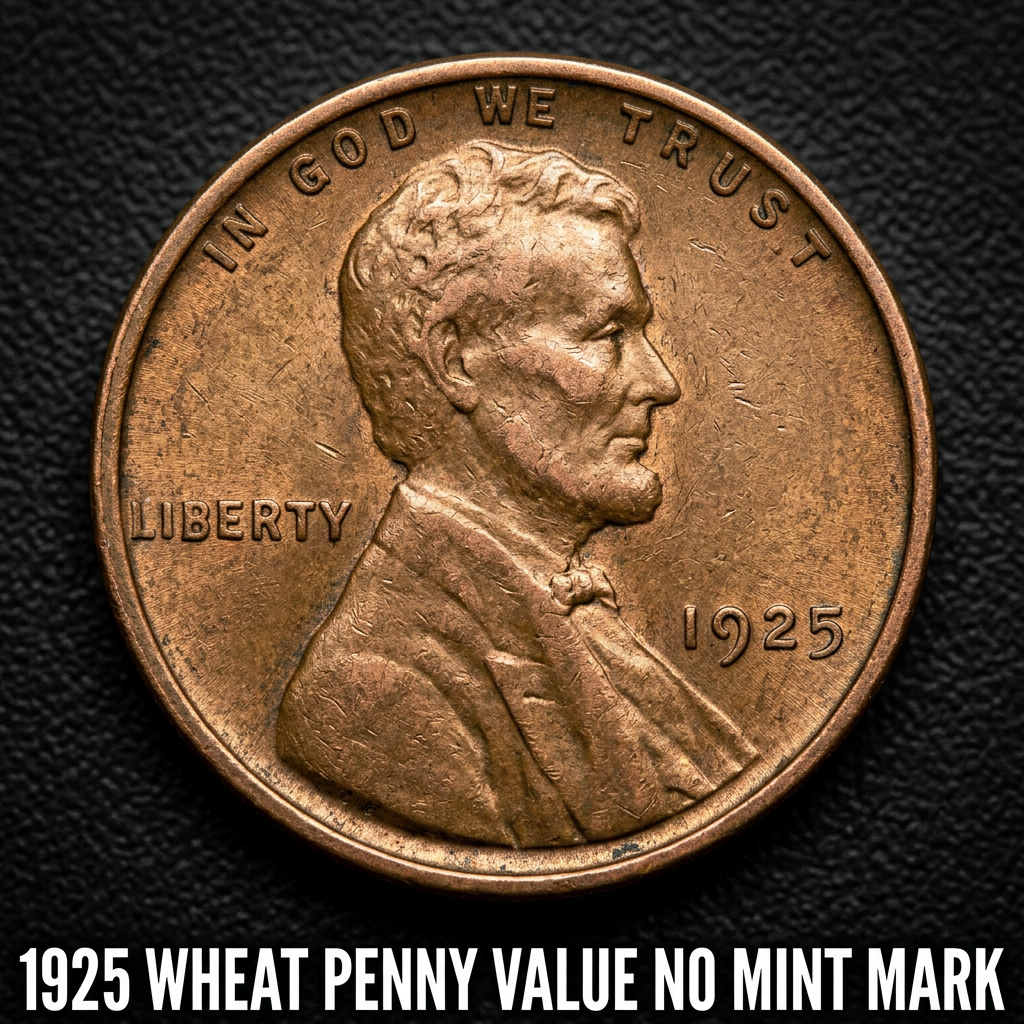
The 1925 Wheat Penny with no mint mark is worth anywhere from $0.25 in heavily worn condition to over $100 or more in pristine uncirculated grades. Most people find these coins tucked away in old jars or inherited collections, and the good news is — even average examples have real numismatic value worth knowing about.
Getting Started: How to Identify Your 1925 Wheat Penny
Before you can figure out what your coin is worth, you need to confirm what you have. The 1925 Wheat Penny no mint mark was struck at the Philadelphia Mint, which never stamped a mint mark on its cents during this era. Flip your coin over and look just below the date on the obverse (heads) side — if there’s no letter there, you’ve got a Philadelphia-minted coin.
The obverse features Abraham Lincoln’s portrait, and the reverse shows two stalks of wheat flanking the words “ONE CENT” and “UNITED STATES OF AMERICA.” This classic design ran from 1909 to 1958, which is why collectors call them Wheat Pennies or Wheaties.
If you’re unsure whether what you’re holding is actually a 1925 issue or something else entirely, try using a free coin identification app to confirm the date and details before doing anything else. It can save a lot of guesswork, especially if the coin is worn and the date is hard to read. Apps like CoinHix are particularly helpful for quick identification right from your phone.
1925 Wheat Penny Value by Grade
The condition of your coin — called its “grade” — makes the biggest difference in value. A coin that’s been passed through countless hands for decades will look very different from one that sat undisturbed in a roll since the 1920s.
Here’s a general value table for the 1925 Wheat Penny (no mint mark):
| Grade | Condition Description | Estimated Value |
|---|---|---|
| Good (G-4) | Heavily worn, outline visible | $0.25 – $0.50 |
| Fine (F-12) | Moderate wear, major features clear | $1 – $2 |
| Extremely Fine (EF-40) | Light wear on high points only | $5 – $10 |
| About Uncirculated (AU-50) | Slight wear, most luster intact | $15 – $25 |
| MS-63 Red (Uncirculated) | No wear, original mint red | $50 – $75 |
| MS-65 Red (Gem) | Gem quality, full red luster | $100 – $150+ |
For a more detailed breakdown of 1925 Wheat Penny prices across all mint state grades and color designations, the data there goes into excellent granular detail by PCGS and NGC population numbers.
Why Color Matters for Mint State Coins
You might have noticed the table references “Red” coins. For Lincoln cents graded in uncirculated condition, color plays a huge role in value. Grading services classify Wheat Pennies into three color categories: Red (RD), Red-Brown (RB), and Brown (BN).
A coin that retains 95% or more of its original copper mint luster is labeled Red — the most desirable. A coin that’s faded to mostly brown tones gets a BN designation and is worth noticeably less, even in the same numerical grade. This is why storage matters so much. Exposure to air, humidity, and harsh environments causes copper to tone and lose that bright mint appearance.
If your 1925 Wheat Penny still has a warm orange-red glow, that’s a great sign. It could be worth significantly more than a dull brown coin of the same grade.
Mint Mark Variants and How the No Mint Mark Compares
The 1925 Wheat Penny was produced at three mints: Philadelphia (no mint mark), Denver (D), and San Francisco (S). Philadelphia struck the most coins that year — over 139 million — which is why the no mint mark version is the most commonly found.
By comparison, the 1925-S had a much smaller mintage of just over 26 million, making it harder to find and more valuable in equivalent grades. The 1925-D falls somewhere in between. For the average collector, the no mint mark Philadelphia issue is the easiest to locate but still very collectible in higher grades.
If you want to compare pricing across all three 1925 variants or check how your coin stacks up in current market conditions, this complete 1925 penny value guide covers all three mint marks with updated estimates that reflect recent auction results and dealer pricing.
Should You Clean Your 1925 Wheat Penny?
Please don’t. This is one of the most common mistakes new collectors make. Cleaning a coin — even with gentle soap — almost always reduces its value. Graders can detect cleaning immediately under magnification, and a cleaned coin is typically worth far less than a naturally worn one.
If your 1925 Wheat Penny looks dark or dirty, leave it as-is. Store it in a protective flip or coin holder and let a professional assess it. Apps like CoinHix can give you a quick value estimate before you decide whether professional grading through PCGS or NGC is worth pursuing. For higher-grade examples worth $50 or more, submitting for third-party grading often pays for itself.
Frequently Asked Questions
Q: How do I know if my 1925 Wheat Penny is worth getting graded?
A: Generally, if your coin shows minimal wear and still has red or red-brown color, it’s worth considering professional grading. Coins that could grade MS-63 or higher are strong candidates, as the jump in value at gem grades can be significant. Use CoinHix to get a quick estimate first.
Q: Is a 1925 Wheat Penny with no mint mark rare?
A: Not particularly rare — Philadelphia minted over 139 million of them. However, coins in Extremely Fine or better condition are much harder to find, and true gem uncirculated examples with full red color are genuinely scarce and sought after by collectors.
Q: Where can I sell my 1925 Wheat Penny?
A: You have several good options: local coin dealers, eBay, Heritage Auctions, or coin shows. For common circulated examples, eBay is usually the fastest route. For nicer uncirculated coins, a reputable auction house or dealer will get you closer to full market value.