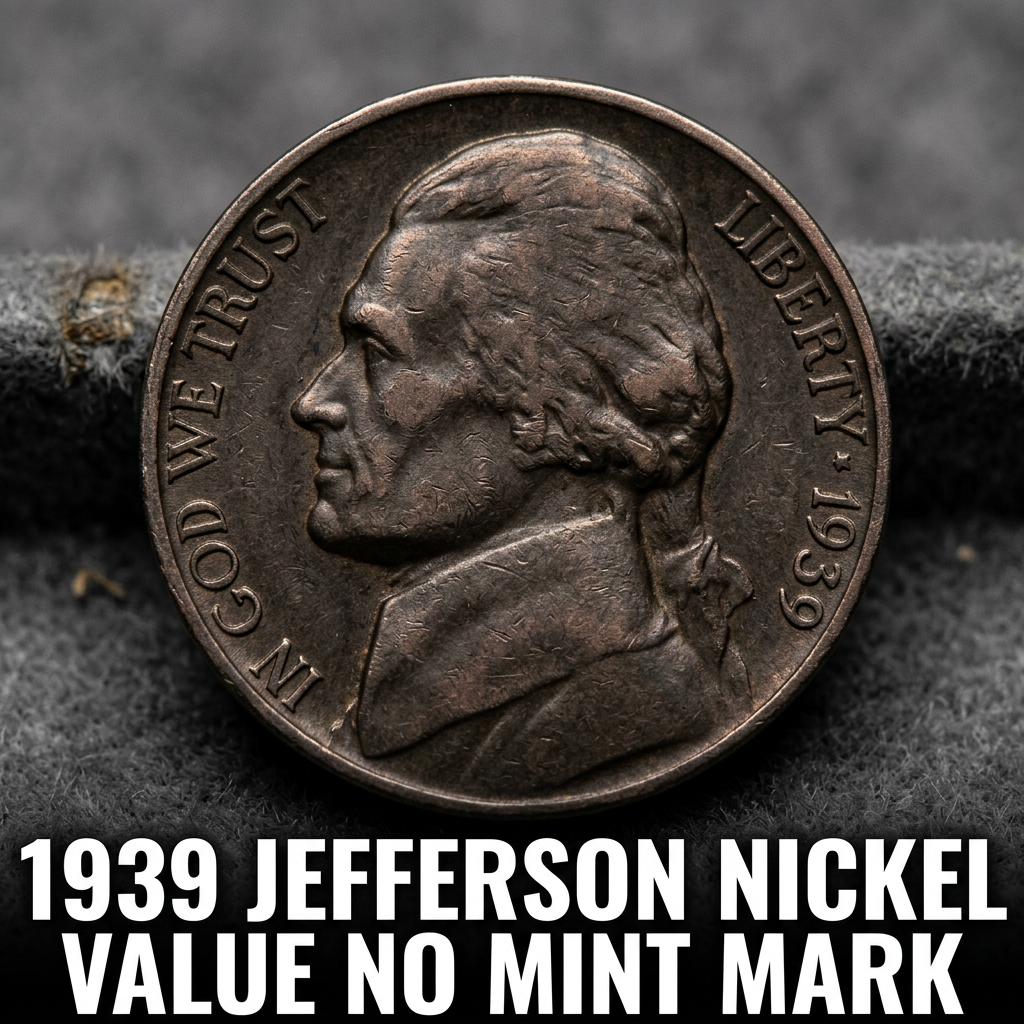
The 1939 Jefferson Nickel with no mint mark is worth anywhere from $0.10 in heavily worn condition to over $100 or more in pristine uncirculated grades. Most examples you’ll find in pocket change or old coin jars fall somewhere in between, making this a coin that’s easy to discover but potentially rewarding to evaluate.
If you recently stumbled across an old nickel and want to know what you’re holding, you’re in the right place. A great starting point is using a free coin identification app to quickly confirm what you have before diving into the value details below.
—
What Is the 1939 Jefferson Nickel No Mint Mark?
The 1939 Jefferson Nickel was produced at the Philadelphia Mint, which traditionally used no mint mark on its coins. That’s why you won’t see a “P,” “D,” or “S” anywhere on this nickel — the absence of a mint mark is actually the identifier for Philadelphia-struck coins from this era.
In 1939, the Philadelphia Mint struck an impressive 120,627,535 Jefferson Nickels, making this one of the most common dates in the early Jefferson series. Felix Schlag designed the coin, which features Thomas Jefferson on the obverse and Monticello on the reverse — a design that remained largely unchanged for decades.
Because so many were made, circulated examples in worn condition aren’t particularly rare. However, high-grade uncirculated coins with full steps on Monticello (known as “Full Steps” or FS designation) are a different story entirely and command serious premiums among collectors.
—
How Much Is the 1939 Jefferson Nickel Worth Today?
Value depends heavily on the coin’s condition. Here’s a quick breakdown to help you figure out where your coin lands:
| Grade | Condition Description | Estimated Value |
|---|---|---|
| Good (G-4) | Heavy wear, design visible | $0.10 – $0.25 |
| Fine (F-12) | Moderate wear, some detail | $0.50 – $1.00 |
| Extremely Fine (EF-40) | Light wear on high points | $1.50 – $3.00 |
| Uncirculated (MS-63) | No wear, minor blemishes | $10 – $20 |
| Gem Uncirculated (MS-65) | Sharp luster, minimal marks | $25 – $60 |
| MS-65 Full Steps (FS) | Gem grade with full Monticello steps | $100 – $300+ |
For the most current and detailed 1939 Jefferson Nickel price data across all mint state grades, it’s worth checking a live pricing database that updates regularly with auction results.
—
What Makes a 1939 Jefferson Nickel More Valuable?
The biggest value driver for this coin — beyond basic grade — is the “Full Steps” designation. On Monticello’s reverse, there are six steps leading up to the building’s entrance. When all six (or at least five) steps are fully struck and visible without interruption, the coin earns an FS designation from grading services like PCGS or NGC.
Full Steps examples are genuinely scarce because the Philadelphia Mint’s dies often showed weakness in that area, even on freshly struck coins. A standard MS-65 might be worth $30, but the same coin with Full Steps can fetch $150 or more — sometimes dramatically higher for MS-66 FS and MS-67 FS pieces.
Eye appeal also matters. Look for coins with bright, original luster, few contact marks, and no signs of cleaning or polishing. A cleaned coin — even in technically high grade — loses significant value in the collector market.
CoinHix is a fantastic tool for tracking these premium-grade values in real time. The app pulls auction data and price trends so you’re never guessing.
—
1939 Jefferson Nickel Reverse Varieties to Know
1939 is actually a fascinating year for variety collectors. The Philadelphia Mint produced two distinct reverse types:
– Reverse of 1938: Features a smaller Monticello with the words “MONTICELLO” and “FIVE CENTS” appearing slightly raised and distant.
– Reverse of 1939: Shows a larger, more detailed Monticello with bolder lettering.
Both varieties exist on the 1939 Philadelphia issue, and some collectors specifically seek out the “doubled MONTICELLO” variety found on the Reverse of 1938 coins. These doubled-die varieties are worth a meaningful premium even in lower grades, so it’s worth examining your coin closely under magnification.
For a comprehensive look at 1939 nickel value information including all varieties and mint marks, dedicated coin value resources can give you a fuller picture of the entire 1939 Jefferson Nickel series.
—
Tips for Getting the Most Out of Your 1939 Jefferson Nickel
If you believe your coin is uncirculated or near-uncirculated, here are a few practical steps:
1. Don’t clean it. Cleaning destroys original surfaces and dramatically reduces collector value, even if the coin looks shinier afterward.
2. Handle it carefully. Hold coins by the edges only to avoid leaving fingerprints on the fields.
3. Use a magnifying glass. Check the steps on Monticello and look for any doubling on the lettering.
4. Consider professional grading. For coins that appear MS-65 or higher, submitting to PCGS or NGC may unlock significantly higher resale value.
CoinHix makes this process easier by letting you compare your coin’s visual characteristics against graded examples, giving you a realistic sense of what grade — and value — to expect before spending money on professional submission.
—
FAQ
Q: Is a 1939 Jefferson Nickel with no mint mark rare?
A: No, it’s actually one of the most common coins in the Jefferson series due to a mintage of over 120 million. However, high-grade examples with Full Steps are genuinely scarce and worth significantly more than average circulated coins.
Q: How do I know if my 1939 nickel has Full Steps?
A: Look at the steps on Monticello’s reverse under a magnifying glass. If you can count five or six complete, unbroken horizontal lines representing the steps, your coin may qualify for a Full Steps designation when professionally graded.
Q: Where’s the best place to sell a 1939 Jefferson Nickel?
A: For common circulated examples, a local coin shop or online marketplace like eBay works fine. For uncirculated or Full Steps coins, consider having them graded first by PCGS or NGC, then selling through a reputable auction house or dealer — CoinHix can help you track recent sale prices so you know what to expect.