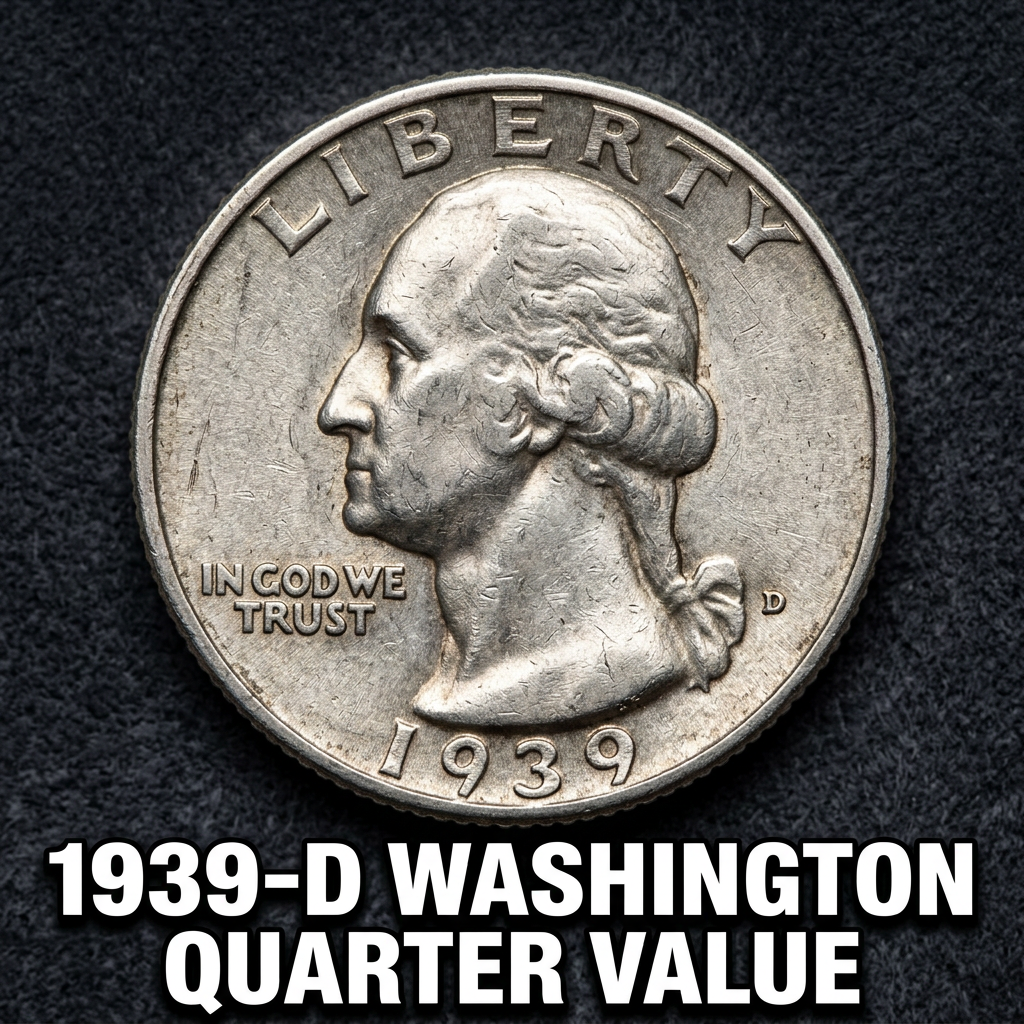
The 1939-D Washington Quarter is worth anywhere from $6 in heavily worn condition to over $200 or more in high-grade mint state. If you’ve come across one of these silver quarters in an old collection or coin jar, you might be sitting on a genuinely valuable piece of American history.
If you’re not sure what coin you have, a free coin identification app can help you confirm the date, mint mark, and condition before you go any further. Once you’ve identified it, read on — this guide will walk you through everything you need to know about the 1939-D Washington Quarter’s value.
—
What Makes the 1939-D Washington Quarter Special
The 1939-D Washington Quarter was struck at the Denver Mint, which is why it carries the small “D” mint mark on the reverse, just below the eagle. Washington Quarters were first introduced in 1932, and by 1939, the series was still relatively young and gaining collector attention.
The Denver Mint produced 7,092,000 quarters in 1939 — not a tiny number, but modest compared to later years. More importantly, many of these coins entered circulation and saw heavy use, meaning well-preserved examples are harder to come by today. That scarcity in high grades is a big reason why the 1939-D Washington Quarter can fetch serious money when graded MS65 or above.
The coin is composed of 90% silver and 10% copper, giving it an intrinsic metal value on its own. Even a worn example is worth more than face value thanks to its silver content alone.
—
1939-D Washington Quarter Value by Grade
Coin values change dramatically depending on condition. A coin that looks barely used is worth many times more than one that’s been worn smooth. Here’s a general value table to help you understand the range:
| Grade | Description | Estimated Value |
|---|---|---|
| Good (G-4) | Heavily worn, major details visible | $6 – $8 |
| Very Fine (VF-20) | Moderate wear, design clear | $9 – $15 |
| Extremely Fine (EF-40) | Light wear on high points | $18 – $30 |
| About Uncirculated (AU-55) | Slight wear, most luster intact | $35 – $60 |
| Mint State (MS-63) | No wear, minor contact marks | $75 – $120 |
| Mint State (MS-65) | Gem uncirculated, sharp strike | $150 – $250+ |
For the most current pricing, you can check real-time 1939-D Washington Quarter price data by grade to see how the market is moving right now.
—
How to Check the Condition of Your 1939-D Quarter
Grading your own coin doesn’t require expert training — just good lighting and a basic understanding of what to look for. Start by examining Washington’s cheek, hair above the ear, and the eagle’s breast feathers on the reverse. These are the highest points on the design and wear down first.
If those areas show significant smoothing or loss of detail, your coin is likely in the Good to Fine range. If you can still see hair strands and feather detail with only light wear, you’re looking at an Extremely Fine or About Uncirculated example. A coin with absolutely no wear and original mint luster is considered Mint State.
One tip: never clean your coin. Cleaning destroys the original surface and dramatically lowers collector value. A naturally toned, unpolished coin — even with some age spots — will always be preferred over one that’s been rubbed or washed.
CoinHix makes it easy to look up graded values in seconds. Whether you’re a first-time finder or a seasoned collector, CoinHix gives you reliable pricing at your fingertips.
—
Silver Value and What It Means for Your Quarter
Because the 1939-D Washington Quarter contains 0.1808 troy ounces of pure silver, its value never drops below what that silver is worth on the open market. With silver prices fluctuating around $25–$30 per troy ounce in recent years, even the most worn 1939-D quarter has a melt value of roughly $4.50 to $5.50.
This is called the coin’s “floor” — the absolute minimum it should sell for regardless of condition. But as you can see from the table above, collector demand pushes the actual selling price well above that floor for most grades. Even a Good-grade example trades at a premium over melt, simply because collectors want it.
For a full breakdown of the 1939 Washington Quarter value across all mint marks and grades, including Philadelphia and San Francisco issues from the same year, that resource covers it all in one place.
—
Tips for Selling Your 1939-D Washington Quarter
If you’ve decided to sell, knowing your options can help you get the best price. Local coin dealers offer convenience, but they typically buy at wholesale prices — around 60–70% of retail value — so they can resell at a profit. Online platforms like eBay allow you to reach more buyers and potentially get closer to full retail, especially for higher-grade coins.
For coins you believe are in Mint State condition, professional grading through PCGS or NGC is worth considering. A certified MS-65 coin commands far more buyer confidence and typically sells for significantly more than a raw, ungraded example of the same quality.
You can also use CoinHix to check recent auction results and get a realistic sense of what buyers are actually paying before you list your coin anywhere.
—
FAQ
Q: How do I know if my quarter is the 1939-D or another mint?
A: Look at the reverse (back) of the coin, just below the eagle. A small “D” means Denver. No mint mark means Philadelphia, and an “S” means San Francisco.
Q: Is the 1939-D Washington Quarter rare?
A: It’s not considered rare in lower grades, but well-preserved examples graded MS-65 and above are scarce and genuinely valuable to collectors.
Q: Should I get my 1939-D quarter professionally graded?
A: If your coin appears to be in uncirculated or near-uncirculated condition, professional grading can significantly increase its sale price and buyer trust. For heavily worn coins, grading fees may outweigh the benefit.