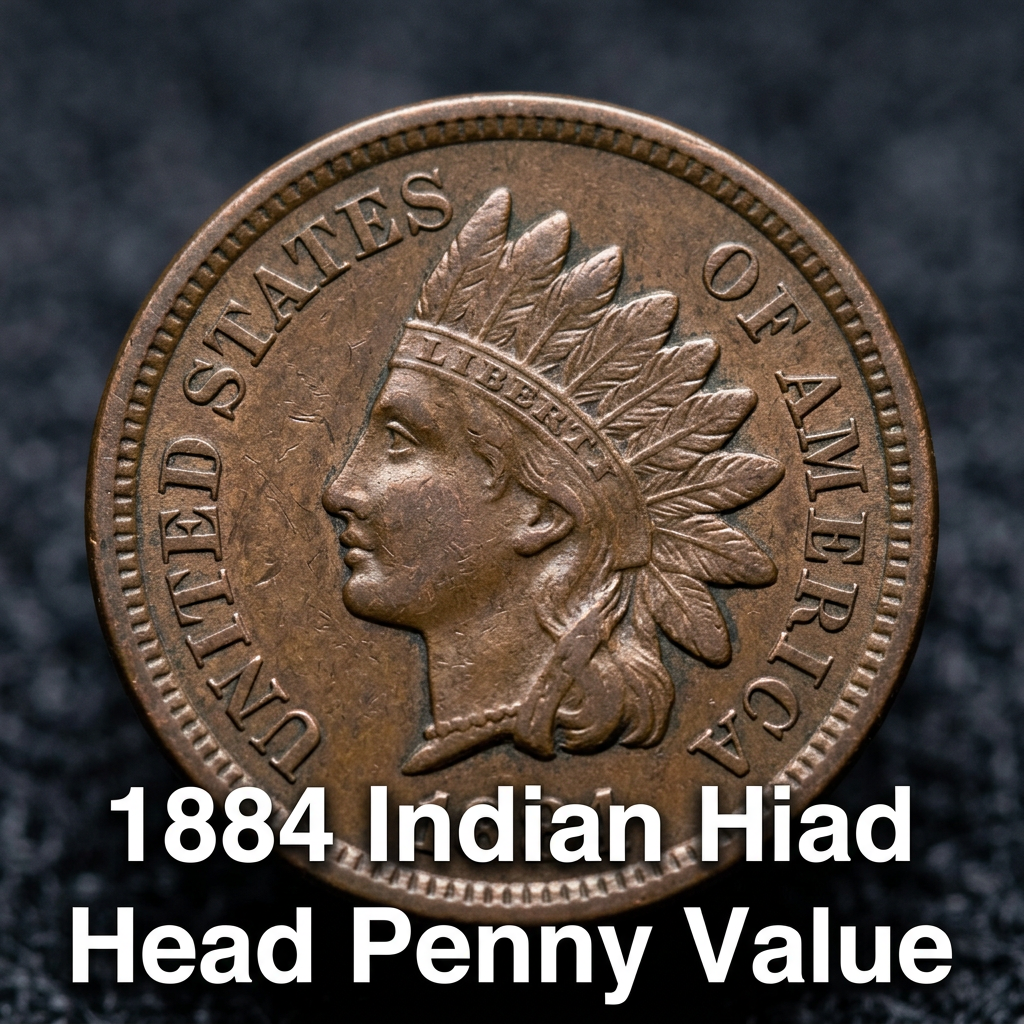
The 1884 Indian Head Penny is worth anywhere from $2 in heavily worn condition to over $150 or more in high mint state grades. If you just found one of these old copper cents in a drawer, a jar, or an old collection, you’re in the right place to find out exactly what it’s worth.
—
What Makes the 1884 Indian Head Penny Special
The 1884 Indian Head Penny was struck at the Philadelphia Mint, with a mintage of just over 23 million coins. While that sounds like a lot, most of those coins circulated heavily through everyday commerce in the post-Civil War era, meaning well-preserved examples are far rarer than you’d think. Designed by James Barton Longacre, the coin features Lady Liberty wearing a Native American headdress on the obverse, and a wreath encircling the words “ONE CENT” on the reverse.
If you’ve got one sitting in your hand right now and want to identify it quickly, a free coin identification app can help you confirm the date, mint mark, and condition before you dive into valuation. These tools are especially handy when you’re sorting through a pile of old coins and don’t know where to start.
The 1884 issue is considered a mid-date in the Indian Head Penny series, which ran from 1859 to 1909. It’s not the rarest date, but it’s old enough — and scarce enough in top grades — to command serious collector interest.
—
1884 Indian Head Penny Value by Grade
Coin value depends almost entirely on condition, which collectors call “grade.” A coin that looks barely recognizable is worth far less than one that still shows sharp detail and original luster. Here’s a general breakdown of what the 1884 Indian Head Penny is worth across different grades:
| Grade | Description | Estimated Value |
|---|---|---|
| Good (G-4) | Heavy wear, major features visible | $2 – $4 |
| Very Good (VG-8) | Moderate wear, design clear | $5 – $8 |
| Fine (F-12) | Even wear, details visible | $10 – $15 |
| Extremely Fine (EF-40) | Light wear on high points | $30 – $45 |
| About Uncirculated (AU-55) | Slight wear, most luster present | $55 – $75 |
| Mint State (MS-63) | No wear, some bag marks | $100 – $130 |
| Mint State (MS-65 RD) | Gem uncirculated, full red | $300+ |
For the most current auction results and certified coin prices, you can check the latest 1884 Indian Head Penny MS-RD price data on CoinHix, which tracks real-time market values across grades and designations.
—
How to Evaluate the Condition of Your 1884 Penny
When you’re looking at your coin, start with the high points of the design. On the obverse, check the feathers in the headdress and the hair curls just above the ear. On the reverse, inspect the tips of the wreath leaves and the ribbon knot. These areas wear down first, and their sharpness tells you a lot about the grade.
Color also plays a huge role in Indian Head Penny values, especially for uncirculated coins. Collectors use three color designations: Red (RD), Red-Brown (RB), and Brown (BN). A fully red 1884 cent in gem uncirculated condition is dramatically more valuable than the same grade in brown. If you see original copper-orange luster under good lighting, that’s a great sign.
CoinHix is a great tool to help you compare your coin against certified examples. The app lets you browse photos of professionally graded coins so you can gauge where your piece might fall.
—
Errors and Varieties That Can Increase Value
Like many coins from the 19th century, the 1884 Indian Head Penny exists with a few minor die varieties that can affect value. Most of these differences are subtle — repunched dates, slightly misaligned dies, or minor doubling — but they’re the kind of thing serious collectors hunt for. If you notice anything unusual about the lettering or numbers on your coin, it’s worth getting a closer look with a magnifying glass or loupe.
Proof versions of the 1884 Indian Head Penny were also struck for collectors, with approximately 3,942 proofs produced. These coins have a mirror-like finish and sharp, squared rims. A genuine proof in top condition can fetch several hundred dollars. If you think you might have a proof, professional certification through PCGS or NGC is strongly recommended.
You can also explore how values shifted over time by looking at comparable dates — for example, the 1898 Indian Head Penny value guide gives a useful comparison for a later date in the same series.
—
Should You Get Your 1884 Indian Head Penny Graded?
If your coin appears to be in Extremely Fine or better condition, professional grading is almost always worth the cost. A coin graded and encapsulated by PCGS or NGC sells for significantly more than a raw, ungraded coin because buyers trust the independent opinion. For a coin potentially worth $100 or more, the grading fee is a smart investment.
For everyday collectors or those who just found a coin and are curious, CoinHix offers a convenient way to get a quick value estimate and compare your coin to similar examples in the marketplace — without leaving home.
—
FAQ
Q: Is the 1884 Indian Head Penny rare?
A: It’s not considered one of the key dates in the series, but it’s over 140 years old and genuine mint-state examples are genuinely scarce. Most survivors are in circulated grades, which keeps collector demand steady.
Q: Does a 1884 Indian Head Penny need to be cleaned before selling?
A: Absolutely not. Cleaning a coin almost always lowers its value significantly. Collectors strongly prefer original, uncleaned surfaces — even if the coin looks a little dark or dirty. Leave it as-is.
Q: How can I tell if my 1884 Indian Head Penny is real?
A: Check the weight (it should be 3.11 grams), the diameter (19mm), and look for sharp, natural detail. A magnet test can help too — genuine copper cents are not magnetic. When in doubt, a professional coin dealer or a grading service can authenticate it for you.