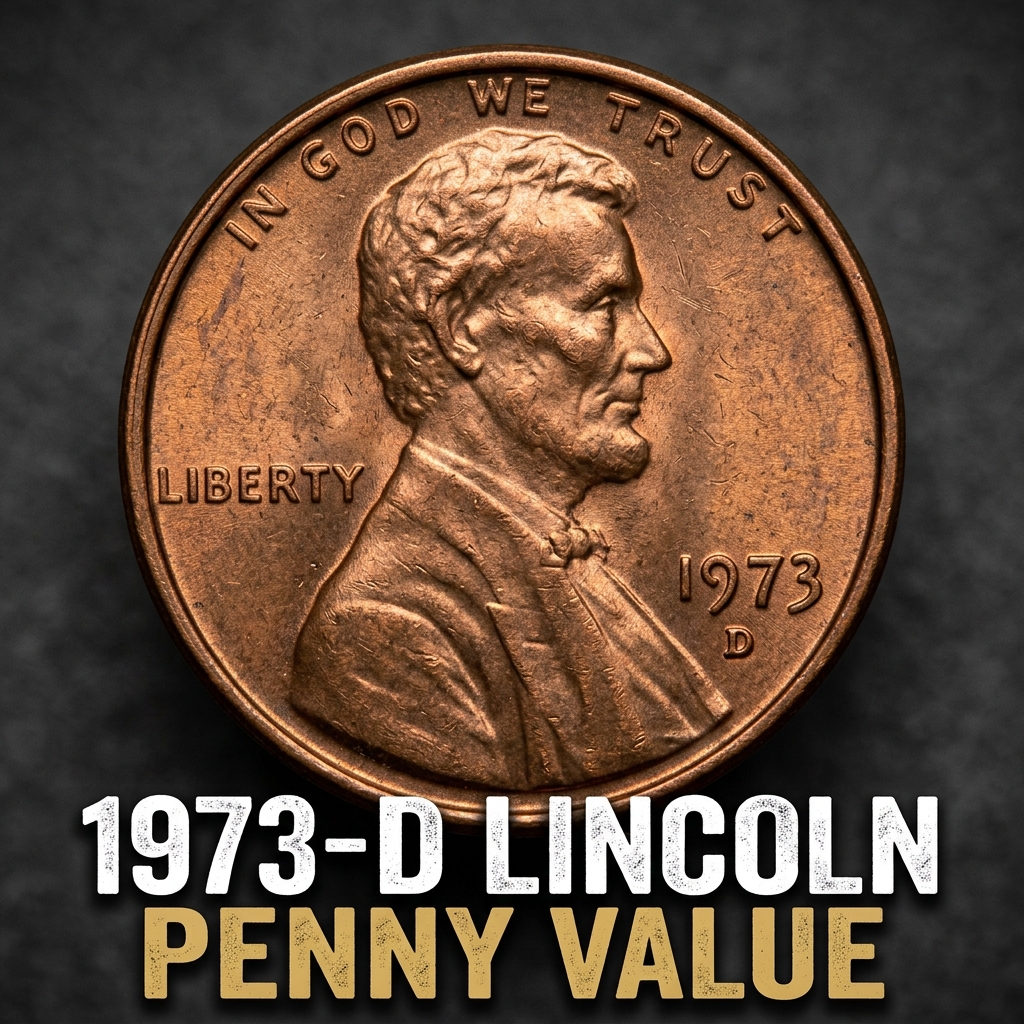
The 1973-D Lincoln Penny is worth anywhere from a few cents in heavily worn condition to $10 or more in uncirculated grades — and top mint state examples can fetch $25 to $50 or higher at auction. If you just found one of these coins in your pocket change or a jar at home, you’re in the right place to learn exactly what you’ve got.
What Makes the 1973-D Lincoln Penny Special
The “D” in 1973-D stands for Denver, meaning this penny was struck at the Denver Mint. In 1973, the Denver Mint produced over 3.5 billion of these coins, making it one of the higher-mintage pennies of the era. High mintage generally means lower collector value — but that doesn’t mean your coin is worthless.
If you’re just getting started identifying old coins, a free coin identification app can help you quickly confirm what you’re holding before diving into valuation. It’s a great first step for anyone who isn’t sure whether their coin is the real deal.
The 1973-D cent features the classic Lincoln Memorial reverse design, which was used from 1959 through 2008. The obverse shows the familiar portrait of Abraham Lincoln designed by Victor D. Brenner. These are copper-coated zinc coins — actually, 1973 cents were still made from 95% copper, which matters for their long-term value.
1973-D Lincoln Penny Value by Grade
Coin values depend heavily on condition, which is measured using a grading scale from 1 (barely identifiable) to 70 (perfect). Here’s a general breakdown of what a 1973-D Lincoln Penny is worth in different grades:
| Grade / Condition | Description | Estimated Value |
|---|---|---|
| Good (G-4) | Heavy wear, major details visible | $0.02 – $0.05 |
| Fine (F-12) | Moderate wear, lettering clear | $0.05 – $0.15 |
| Extremely Fine (EF-40) | Light wear on high points | $0.25 – $0.75 |
| Uncirculated (MS-63) | No wear, some bag marks | $2 – $8 |
| Gem Uncirculated (MS-65 RD) | Sharp strike, full red luster | $15 – $50+ |
For the most current auction records and certified sale prices, you can browse detailed 1973-D Lincoln Penny MS Red price data on CoinHix to see exactly what high-grade examples are selling for right now.
How Condition and Color Affect the 1973-D Penny Value
One thing that surprises many new collectors is how much the color designation affects a Lincoln cent’s value. Copper coins are graded not only by wear but also by their surface color:
– Red (RD): Full original mint luster, bright copper color. Most valuable.
– Red-Brown (RB): Mix of red and brown toning. Mid-range value.
– Brown (BN): Fully toned brown. Lowest value among uncirculated examples.
A 1973-D penny graded MS-65 Red can be worth 5 to 10 times more than the same grade in Brown. If you have a coin that still looks shiny and bright copper-colored, that’s a very good sign. Avoid cleaning it — cleaned coins lose significant collector value even if they look pretty.
CoinHix makes it easy to look up current values by color designation, so you’ll always know what your specific coin is worth based on its exact grade and surface quality.
Errors and Varieties Worth More Money
Like most Lincoln cents, the 1973-D penny has a few known error coins that can dramatically increase value. While most 1973-D cents you find in circulation are standard issues, keep an eye out for:
– Doubled Die Obverse (DDO): Look for doubling in the date, lettering, or Lincoln’s portrait under magnification. Strong DDO errors on a 1973-D can add $20 to $100 or more to the coin’s value.
– Off-Center Strikes: Coins where the design is noticeably shifted off-center — especially 20% or more — can be worth $15 to $50+.
– Repunched Mintmark (RPM): The “D” mintmark was punched by hand in 1973. Some show traces of a second punch, which collectors actively seek.
For a complete breakdown of the full 1973 penny value including errors and mint varieties, it’s worth checking a dedicated resource so you don’t accidentally sell a rare coin for face value.
If you want to identify potential errors quickly without expensive equipment, CoinHix offers easy-to-use lookup tools right from your phone.
Should You Hold Onto Your 1973-D Lincoln Penny?
Honestly, most worn 1973-D cents you find in everyday change aren’t worth a significant premium right now. But if you have rolls or jars of old pennies, it’s worth taking a few minutes to sort through them. Check for original red color, strong strikes, and any signs of doubling or off-center strikes.
The best candidates to hold onto are those in uncirculated condition — especially full red coins that have never seen circulation. These are the ones that professional graders like PCGS or NGC would assign an MS-65 RD or higher, and those coins absolutely have real collector value.
—
FAQ
Q: Is a 1973-D penny rare?
A: No, the 1973-D Lincoln penny is not rare — over 3.5 billion were minted. However, coins in pristine uncirculated condition, especially with full red color or notable errors, are scarcer and worth more to collectors.
Q: How do I know if my 1973-D penny is uncirculated?
A: An uncirculated coin shows no signs of wear on the high points — Lincoln’s cheekbone, hair, and the wheat stalks (or Memorial columns on the reverse). The surface should still have its original luster. If it looks dull or the details are flat, it has likely circulated.
Q: Where is the best place to sell a valuable 1973-D Lincoln penny?
A: For high-grade or error coins, consider getting it certified by PCGS or NGC first, then selling through eBay, a coin show, or a reputable coin dealer. For quick lookups and current market prices before you sell, CoinHix is a great free resource to check real-time values.