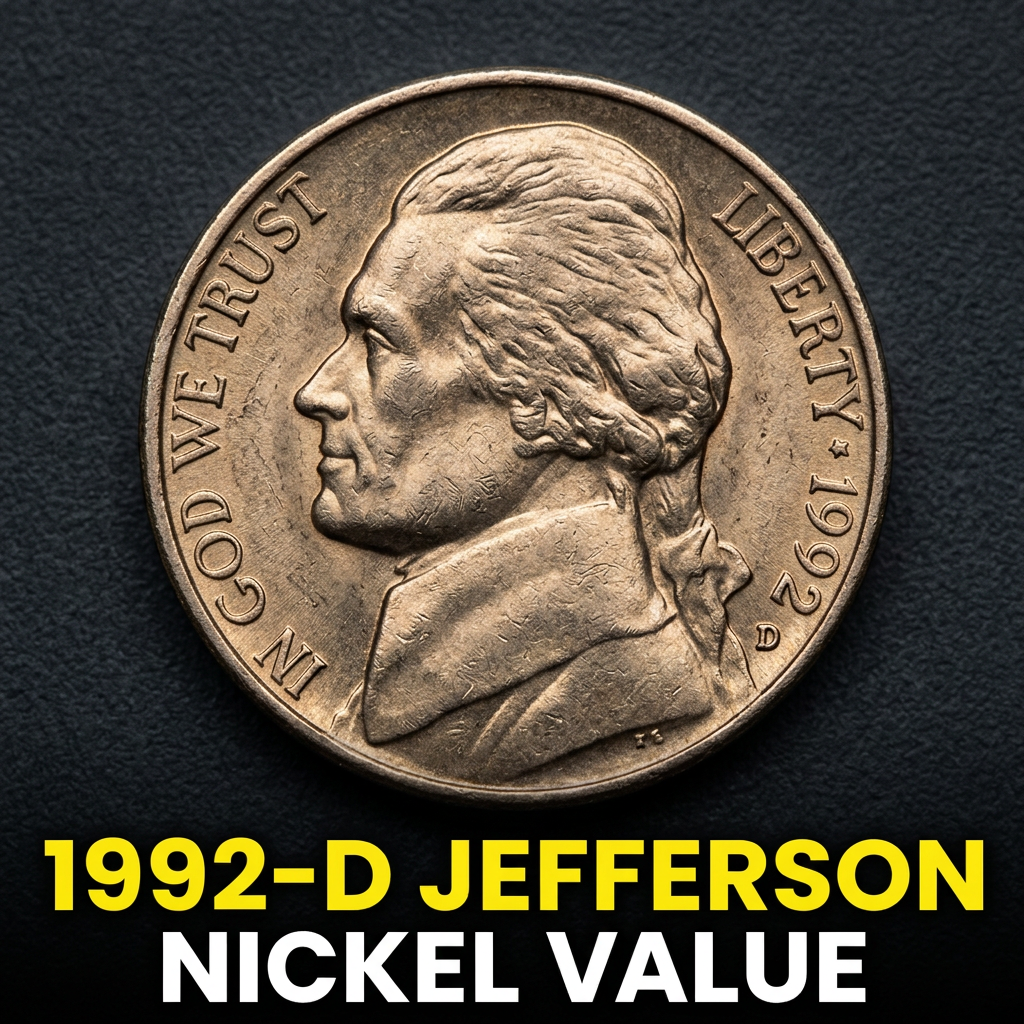
The 1992-D Jefferson Nickel is worth anywhere from 5 cents in heavily circulated condition to around $10 or more in pristine mint state — and a few exceptional specimens have sold for even higher at auction. If you found one of these coins in a drawer, jar, or old collection, you’re in the right place to find out exactly what you’ve got.
What Is the 1992-D Jefferson Nickel?
The “D” in 1992-D tells you this coin was struck at the Denver Mint, one of the two main facilities producing Jefferson Nickels that year alongside Philadelphia. Denver turned out a hefty mintage of approximately 385 million coins in 1992, which means they’re not exactly rare finds. Still, condition plays a huge role in value — a coin that’s been sitting untouched in a collection for decades can be worth multiples of what a worn pocket-change example fetches.
If you’re not sure whether the coin in your hand is really a 1992-D or something else, a free coin identification app can help you scan it and confirm the date, mint mark, and denomination in seconds. Tools like that take the guesswork out of sorting through old coins.
The Jefferson Nickel series has been running since 1938, making Monticello one of the most familiar reverse designs in American coinage. While the 1992-D isn’t a key date, collectors still seek out high-grade examples, and that’s where the real value conversation starts.
How Much Is a 1992-D Jefferson Nickel Worth by Grade?
Coin value is almost entirely driven by condition, or “grade” in collector terms. Here’s a simple breakdown of what a 1992-D Jefferson Nickel typically sells for at different grade levels:
| Grade | Description | Estimated Value |
|---|---|---|
| Good (G-4) | Heavy wear, design outline visible | $0.05 – $0.10 |
| Fine (F-12) | Moderate wear, major details clear | $0.10 – $0.25 |
| Extremely Fine (EF-40) | Light wear on high points | $0.25 – $0.75 |
| Mint State 63 (MS-63) | Uncirculated, minor blemishes | $1 – $3 |
| Mint State 65 (MS-65) | Gem uncirculated, strong luster | $4 – $8 |
| Mint State 67 (MS-67) | Superb gem, near perfect | $10 – $50+ |
For the most up-to-date auction results and dealer pricing, you can check recent 1992 Jefferson Nickel mint state sales data to see what collectors are actually paying right now.
Grading Your 1992-D Jefferson Nickel at Home
You don’t need to be a professional numismatist to get a rough sense of your coin’s grade. Start by looking at Jefferson’s cheekbone and the steps of Monticello on the reverse — these are the high points that wear first. If the steps are sharp and you can count all five or six of them clearly, that’s a positive sign for grade.
Luster matters too. An uncirculated coin should have a faint sheen or cartwheel effect when you tilt it under a light. Any dullness, scratches, or flat spots suggest the coin saw circulation. Handling marks from being in a pocket or cash register will noticeably lower the grade.
CoinHix is a great tool to use once you have a rough idea of condition. It aggregates real market prices and lets you see how comparable coins have sold, so you’re working with actual data instead of guesswork.
Are Any 1992-D Jefferson Nickels Worth More Than Face Value?
With such a large mintage, the 1992-D isn’t a coin you’ll see dealers fighting over. But that doesn’t mean yours is worthless. Any coin in full uncirculated condition — pulled straight from a mint set or carefully stored — commands a real premium among type collectors and set builders.
The coins most worth paying attention to are those grading MS-65 or higher with Full Steps (FS) designation. Full Steps means all the horizontal lines on the steps of Monticello are complete and uninterrupted. Coins with that designation consistently sell for significantly more than regular uncirculated examples. A certified MS-66 FS or MS-67 FS coin can sell for $30, $50, or more depending on the buyer.
For a complete picture of 1992 nickel value across all grades and mint marks, it’s worth doing a bit of research before deciding whether to spend, save, or sell your coin.
Should You Get Your 1992-D Jefferson Nickel Graded?
Professional grading through PCGS or NGC makes sense when you have a coin that looks truly exceptional — think blazing luster, sharp details, and zero visible marks. The grading fee typically runs $20–$40 per coin for standard service, so it only makes economic sense for coins that could realistically grade MS-65 FS or higher.
For most 1992-D nickels found in circulation, professional grading isn’t worth the cost. Enjoy the coin, learn what you’ve got, and use apps like CoinHix to track the market before making any decisions. If you ever want a second opinion on identification or date verification, a scan through a CoinHix-powered tool or a dedicated coin app takes about ten seconds and costs nothing.
FAQ
Q: Is a 1992-D Jefferson Nickel rare?
A: No, it’s not considered rare. The Denver Mint struck around 385 million of them in 1992, making it a common date. However, high-grade uncirculated examples with Full Steps are considerably harder to find and worth more to collectors.
Q: How do I find the mint mark on a 1992-D Jefferson Nickel?
A: Look on the obverse (heads side) of the coin, just to the right of Jefferson’s portrait near the rim. You’ll see a small “D” indicating it was minted in Denver. If there’s no letter, it’s a Philadelphia Mint coin from that year.
Q: Where’s the best place to sell a 1992-D Jefferson Nickel?
A: For circulated coins in average condition, face value is realistic. For uncirculated or high-grade examples, try eBay, coin shows, or a local coin dealer. Getting a free appraisal estimate through an app like CoinHix first can help you set a fair asking price and avoid leaving money on the table.