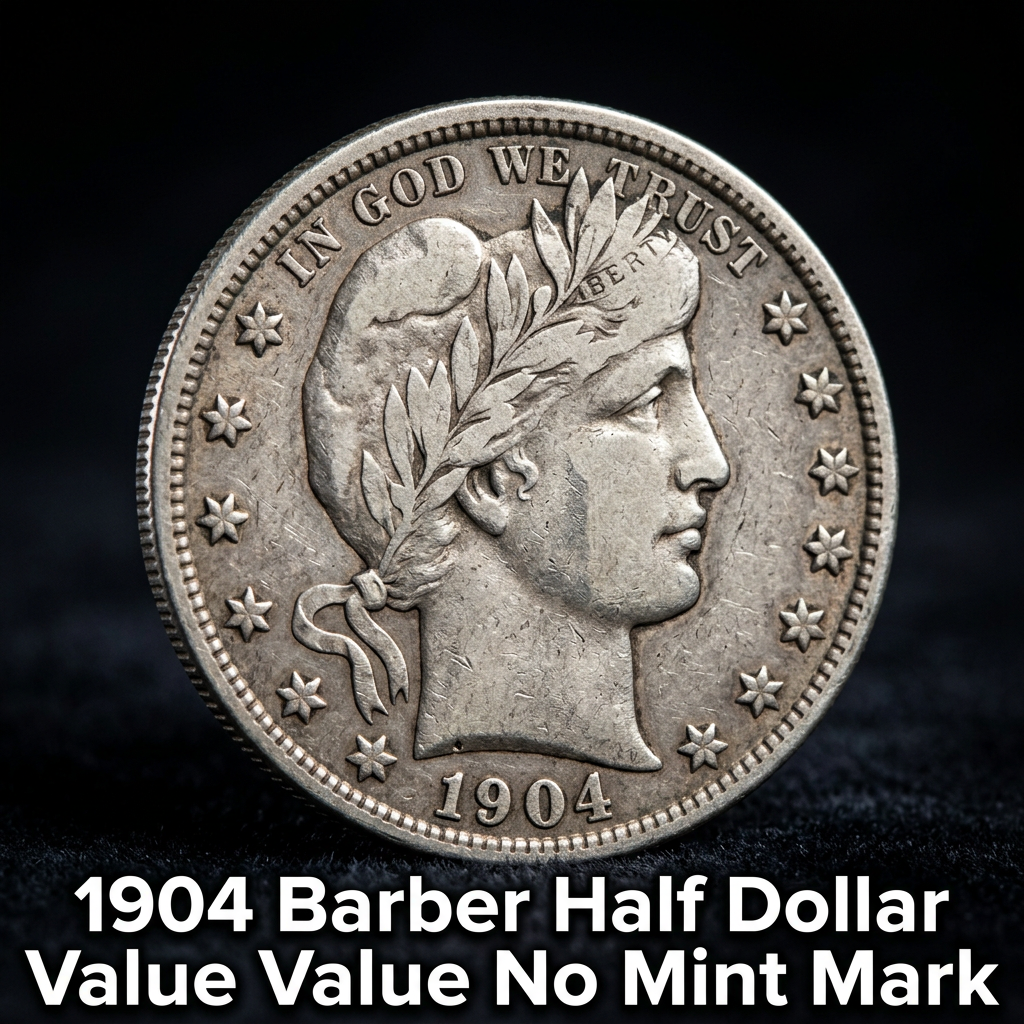
The 1904 Barber Half Dollar is worth anywhere from $15 in heavily worn condition to over $800 or more in mint state grades, making it one of the more interesting finds from the early 1900s. If you stumbled across one of these silver coins and noticed no mint mark on the reverse, that means it was struck at the Philadelphia Mint — and it has some real value worth knowing about.
What Is the 1904 Barber Half Dollar?
The 1904 Barber Half Dollar is part of a classic series designed by U.S. Mint Chief Engraver Charles E. Barber. The obverse features Lady Liberty in a Greco-Roman style helmet, while the reverse shows a heraldic eagle. These coins were minted from 1892 to 1915 and contain 90% silver, which already gives them a solid base value regardless of condition.
The Philadelphia Mint struck 1,117,600 Barber Half Dollars in 1904 — a relatively modest mintage for the era. Coins without a mint mark came from Philadelphia, which was standard practice at the time. If you’re trying to figure out whether your coin is from Philadelphia, just check below the eagle on the reverse. No mint mark? You’ve got a Philly coin.
Before you dig deeper into grading, it’s worth downloading a free coin identification app to help you quickly confirm what you’re holding. Apps like CoinHix can scan your coin and give you an instant identification and estimated value right from your phone — no guesswork needed.
How Much Is the 1904 Barber Half Dollar Worth by Grade?
Condition is everything in coin collecting. A 1904 Barber Half Dollar that’s been rattling around in a drawer for 120 years will look very different from one that’s been carefully preserved. Here’s a general value breakdown:
| Grade / Condition | Estimated Value |
|---|---|
| Good (G-4) | $15 – $20 |
| Very Good (VG-8) | $22 – $35 |
| Fine (F-12) | $40 – $65 |
| Very Fine (VF-20) | $75 – $120 |
| Extremely Fine (EF-40) | $150 – $225 |
| About Uncirculated (AU-50) | $275 – $400 |
| Mint State (MS-63) | $600 – $850+ |
Keep in mind these are approximate market values. Prices fluctuate depending on silver spot prices, collector demand, and whether the coin has been professionally graded by services like PCGS or NGC.
The Silver Melt Value Factor
Even a beat-up 1904 Barber Half Dollar has intrinsic silver value. These coins are composed of 90% silver and weigh 12.5 grams, giving them about 0.3617 troy ounces of pure silver. With silver hovering around $25–$30 per troy ounce in recent years, the raw melt value alone is approximately $9 to $11.
That means even the most worn examples are still worth more than melt, thanks to collector premiums. This is good news for anyone who found one of these old coins — you’re not dealing with a worthless token. You’re holding a genuine piece of American history with real monetary value.
For a broader look at related silver coins from this period, check out this helpful guide on 1904 silver dollar values and what makes them worth collecting — it gives great context for understanding the market around early 20th century U.S. silver coins.
What Makes Some 1904 Barber Halves Worth More?
Not all 1904 Barber Half Dollars without a mint mark are equal. Several factors can push the value significantly higher:
Strike quality: Some examples from this year came with weak strikes, especially around Liberty’s head and the eagle’s feathers. A coin with sharp, full details is considerably more desirable.
Luster and eye appeal: For mint state coins, original cartwheel luster dramatically increases value. Cleaned coins — which are extremely common in this series — lose a significant portion of their collector value.
Toning: Natural, original toning is welcomed by many collectors. Artificial toning, however, is a red flag and can reduce value.
Professional grading: A coin certified by PCGS or NGC carries a premium because buyers trust the grade. If you think your coin is in exceptional shape, having it graded could be worth the investment.
Using CoinHix is a great first step before spending money on professional grading. The app uses AI-powered coin recognition to assess your coin’s approximate grade and value within seconds.
FAQ
Q: How do I know if my 1904 Barber Half Dollar has no mint mark?
A: Flip the coin to the reverse (eagle side) and look at the bottom, just below the eagle and above the “HALF DOLLAR” text. If there’s no letter there, it was made at the Philadelphia Mint. An “O” means New Orleans, and an “S” means San Francisco.
Q: Is a cleaned 1904 Barber Half Dollar still worth anything?
A: Yes, but significantly less than an original-surface coin. Collectors heavily discount cleaned coins. A coin that might grade VF-20 and sell for $100 in original condition might fetch only $30–$50 if it shows signs of cleaning or polishing.
Q: Can I use an app to find out what my 1904 Barber Half Dollar is worth?
A: Absolutely. CoinHix is one of the most popular options right now. Just take a clear photo of both sides of your coin and the app will identify it and give you a current value estimate. It’s a fast, easy way to get a ballpark figure before visiting a dealer or coin show.