The 1912 Liberty Nickel is worth anywhere from $2 in heavily worn condition to over $150 in well-preserved mint state, with rare varieties climbing into the thousands. If you just found one of these coins, you may be sitting on a nice little treasure — and this guide will walk you through exactly what you have.
Getting to Know the 1912 Liberty Nickel
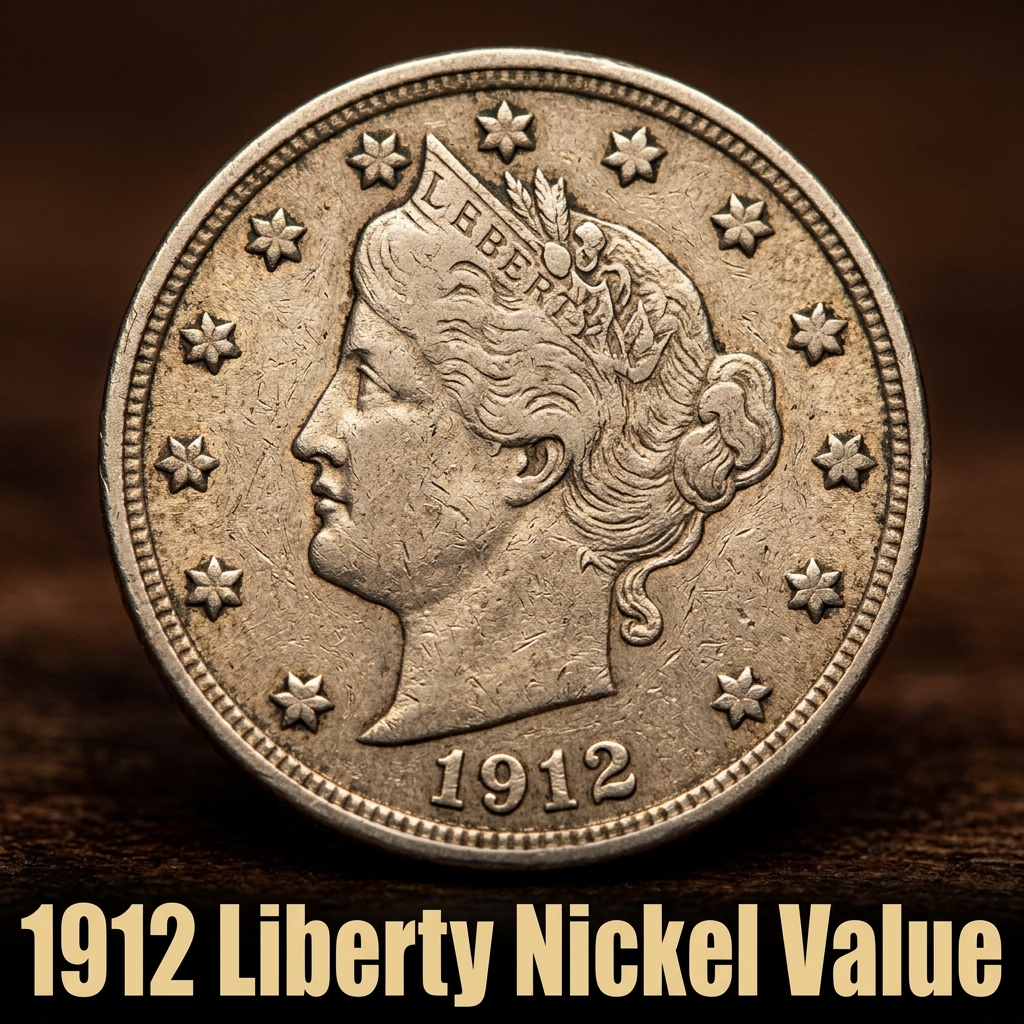
The Liberty Nickel, also called the “V Nickel” because of the Roman numeral “V” on its reverse, was designed by Charles Barber and minted from 1883 to 1912. That’s right — 1912 was the very last year this design was produced, making it historically significant to coin collectors. The obverse features Lady Liberty wearing a coronet inscribed with the word “LIBERTY,” surrounded by 13 stars. The reverse simply displays the large letter “V” framed by a wreath and the words “UNITED STATES OF AMERICA” and “E PLURIBUS UNUM.”
Because 1912 was the final year of issue, collectors often seek it out as a “last year” coin. If you’re not sure whether you have a V Nickel or another type, you can use a free coin identification app to confirm the design and date before you start researching its value. Getting a proper ID is always the first step — you’d be surprised how often people mix up similar-looking coins.
1912 Liberty Nickel Value by Mint Mark and Condition
The 1912 Liberty Nickel was struck at three different mints: Philadelphia (no mint mark), Denver (D), and San Francisco (S). The mint mark, if present, appears on the left side of the “CENTS” on the reverse. Each mint produced a different number of coins, and mintage directly affects value.
Here’s a breakdown of current estimated values:
| Mint Mark | Mintage | Good (G-4) | Fine (F-12) | MS-63 | MS-65 |
|---|---|---|---|---|---|
| 1912 (Philadelphia) | 26,236,714 | $3 | $10 | $100 | $250 |
| 1912-D (Denver) | 8,474,000 | $5 | $18 | $175 | $500 |
| 1912-S (San Francisco) | 238,000 | $90 | $175 | $1,200 | $4,000+ |
The 1912-S is a standout coin. With only 238,000 struck, it’s considered a key date and commands serious premiums even in lower grades. For the most up-to-date 1912 Liberty Nickel prices across all mint state grades, it’s worth checking a dedicated coin pricing database before buying or selling.
How Coin Condition Affects Your 1912 Liberty Nickel’s Worth
Condition — or “grade” in collector terms — is one of the most important factors in determining what your coin is worth. A 1912 Philadelphia nickel in Good condition might only fetch a couple of dollars, while the exact same coin in Mint State could sell for $100 or more. Grading goes from Poor (P-1) all the way up to Perfect Mint State (MS-70).
For circulated coins, here’s what to look for:
– Good (G-4): The coin is heavily worn. The date and letters are still visible, but Liberty’s features and the wreath details are nearly flat.
– Fine (F-12): Moderate wear is visible, but major details like Liberty’s hair and the wreath are still clear.
– Extremely Fine (EF-40): Only light wear on the high points. The coin looks sharp overall.
– About Uncirculated (AU-50/55): Slight wear on the cheekbone and high points only. Most of the original luster is present.
Uncirculated (Mint State) coins show no wear at all, and their luster and strike quality determine the exact MS grade. If you think your coin might be in exceptional condition, consider having it professionally graded by PCGS or NGC for a certified opinion.
CoinHix is a great tool to reference while evaluating condition. The CoinHix app gives you side-by-side grade comparisons with real auction photos, so even beginners can get a solid sense of where their coin falls on the grading scale.
The Special Case of the 1912-S and Why It Matters
The 1912-S Liberty Nickel deserves its own section. As the last San Francisco-minted V Nickel ever made, and with a mintage of just 238,000, it’s one of the most desirable coins in the entire Liberty Nickel series. Collectors hunting for a complete date-and-mint set must have this coin, which keeps demand — and prices — consistently high.
In circulated grades, even a worn example in Good-4 can sell for $90 or more. In Fine condition, expect to pay $150–$200. A mint state example is genuinely rare. An MS-65 can easily break $4,000 at auction, and top-grade examples with great eye appeal go even higher.
If you’re curious about how other nickels from this era compare in terms of value, it’s useful to look at related denominations. For instance, understanding what the 1912 dime is worth gives you broader context for how coin values from the same year differ by denomination and mint.
Tips for Selling or Keeping Your 1912 Liberty Nickel
If you’re thinking about selling, here are a few practical tips:
1. Don’t clean the coin. Cleaning removes original surfaces and dramatically lowers value. Collectors prefer natural toning and wear over a “shiny” but damaged coin.
2. Get multiple quotes. Local coin dealers, online platforms like eBay, and auction houses all offer different prices. Compare your options before committing.
3. Use a grading app first. Tools like CoinHix let you research recent sale prices and get a rough grade estimate before walking into a shop, so you won’t be caught off guard.
4. Consider certification for high-grade coins. If your 1912-S or a high-grade Philadelphia example looks uncirculated, a PCGS or NGC slab can significantly increase buyer confidence and the final sale price.
—
Frequently Asked Questions
Q: How do I know if my 1912 nickel is the valuable S mint mark variety?
A: Flip the coin over and look to the left of the word “CENTS” on the reverse. If you see a small “S,” you have the San Francisco issue, which is by far the most valuable of the three 1912 Liberty Nickel varieties.
Q: Is a 1912 Liberty Nickel made of silver?
A: No. The Liberty Nickel is composed of 75% copper and 25% nickel — no silver content. Its value comes entirely from its numismatic (collector) appeal, not its metal content.
Q: What is the most I could get for a 1912 Liberty Nickel in perfect condition?
A: For a 1912-S in top mint state grades like MS-66 or higher, auction prices have reached $10,000 or more. Even a pristine 1912-D in MS-65 can top $500. The key is having a professionally certified, problem-free coin with strong luster and strike quality.