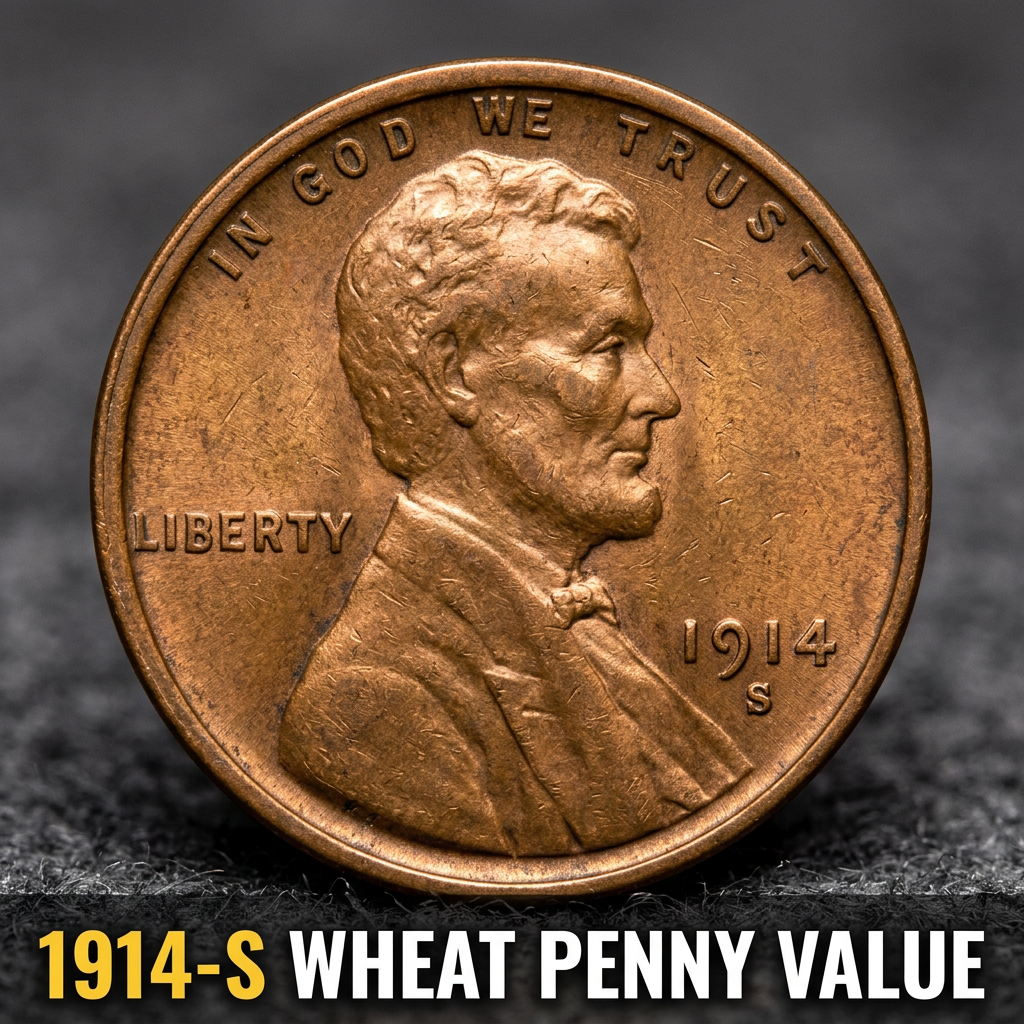
The 1914-S Wheat Penny is worth anywhere from $15 in heavily worn condition to well over $300 in fine grades — and in mint state, certified examples can fetch $1,000 or more. If you’ve got one sitting in a jar or old coin collection, you might be holding something genuinely valuable.
free coin identification app can help you quickly identify whether the coin in your hand is truly a 1914-S or another date from that era, saving you a lot of guesswork before you head to a dealer.
—
What Makes the 1914-S Wheat Penny Special
The 1914-S Lincoln Wheat Penny was struck at the San Francisco Mint, identified by the small “S” mintmark sitting just below the date on the obverse side. That little letter makes a huge difference in value. While the Philadelphia Mint produced over 75 million Lincoln cents that year, San Francisco struck only about 4 million — making the 1914-S one of the lower-mintage issues in the entire Wheat Penny series.
Lower mintage means fewer survivors today, especially in decent condition. Most 1914-S cents that have been found were well-circulated, passed from hand to hand over decades. Finding one in even “Fine” condition is considered lucky. For everyday collectors and people who just stumbled across one in an old tin box, this coin is a pleasant surprise. It’s not the rarest Wheat Penny ever made, but it consistently commands strong premiums compared to common-date cents from the same era.
The coin features the classic Victor David Brenner design: Abraham Lincoln’s portrait on the front and two wheat stalks framing the words “ONE CENT” on the back. This design ran from 1909 to 1958, making it one of the longest-running U.S. cent designs in history.
—
1914-S Wheat Penny Value by Grade
Coin value depends heavily on condition. Here’s a general breakdown of what the 1914-S Wheat Penny is worth across different grades:
| Grade | Description | Estimated Value |
|---|---|---|
| Good (G-4) | Heavily worn, date visible | $15 – $25 |
| Very Good (VG-8) | Major features clear | $30 – $50 |
| Fine (F-12) | Moderate even wear | $60 – $90 |
| Very Fine (VF-20) | Light wear on high points | $100 – $175 |
| Extremely Fine (EF-40) | Slight wear, sharp details | $200 – $325 |
| Mint State (MS-63+) | Uncirculated, original luster | $600 – $1,500+ |
You can explore detailed 1914-S Wheat Penny price data by grade on CoinHix, which tracks real auction results and retail pricing to give you the most current picture.
—
How to Identify Your 1914-S Wheat Penny
Before you get excited about value, make sure you’ve got the right coin. Here’s what to look for:
– Date: Should clearly read 1914
– Mintmark: A small “S” below the date — this is key
– Design: Lincoln portrait on front, wheat stalks on reverse
– No mintmark: That would make it a Philadelphia coin, worth considerably less
One important thing to watch for is the 1914-D cent, which is one of the most counterfeited coins in American numismatics. Fakers have been known to alter the date on a 1944-D penny or add a “D” mintmark to other coins. The same caution applies to the 1914-S — always examine mintmarks carefully, ideally under magnification.
CoinHix is a great tool for this. The app lets you look up coins by date and mintmark, compare photos, and see what similar coins have actually sold for in recent auctions. It takes the mystery out of coin research for beginners and experienced collectors alike.
—
What Affects the Value Beyond Grade
Condition isn’t the only factor that moves the needle on 1914-S Wheat Penny values. Here are a few more things that matter:
Color designation: Uncirculated coins are graded as Red (RD), Red-Brown (RB), or Brown (BN). A full Red example retains its original copper brilliance and commands a significant premium over a Brown coin of the same numeric grade.
Strike quality: Some 1914-S coins came out of the mint with weak strikes, particularly on Lincoln’s cheek and the wheat stalks. A well-struck example is more desirable and can sell for more.
Certification: Coins graded and encapsulated by PCGS or NGC tend to sell for more because buyers trust the grade. Raw (ungraded) coins often trade at a discount due to uncertainty.
For a well-rounded look at all these value factors, this 1914 penny value guide breaks down pricing by mintmark, grade, and color designation — a useful reference whether you’re buying or selling.
If you’re serious about getting an accurate value for your coin, CoinHix makes it simple to look up recent sold prices and understand exactly what the market is paying right now.
—
FAQ
Q: Is the 1914-S Wheat Penny rare?
A: It’s considered a semi-key date in the Lincoln Wheat Penny series. With only about 4 million minted and far fewer surviving in collectible condition, it’s significantly scarcer than common dates — but not as rare as the famous 1909-S VDB or 1914-D.
Q: How can I tell if my 1914-S penny is genuine?
A: Look at the mintmark carefully under magnification. It should appear naturally integrated into the coin’s surface, not added or tampered with. If possible, have it authenticated by PCGS or NGC for peace of mind, especially if it’s in high grade.
Q: Where is the best place to sell a 1914-S Wheat Penny?
A: For coins in Fine grade and above, a reputable coin dealer or auction house will typically get you the best price. For lower-grade examples, platforms like eBay can work well. Before selling, use CoinHix to research current market values so you know what your coin is actually worth going in.