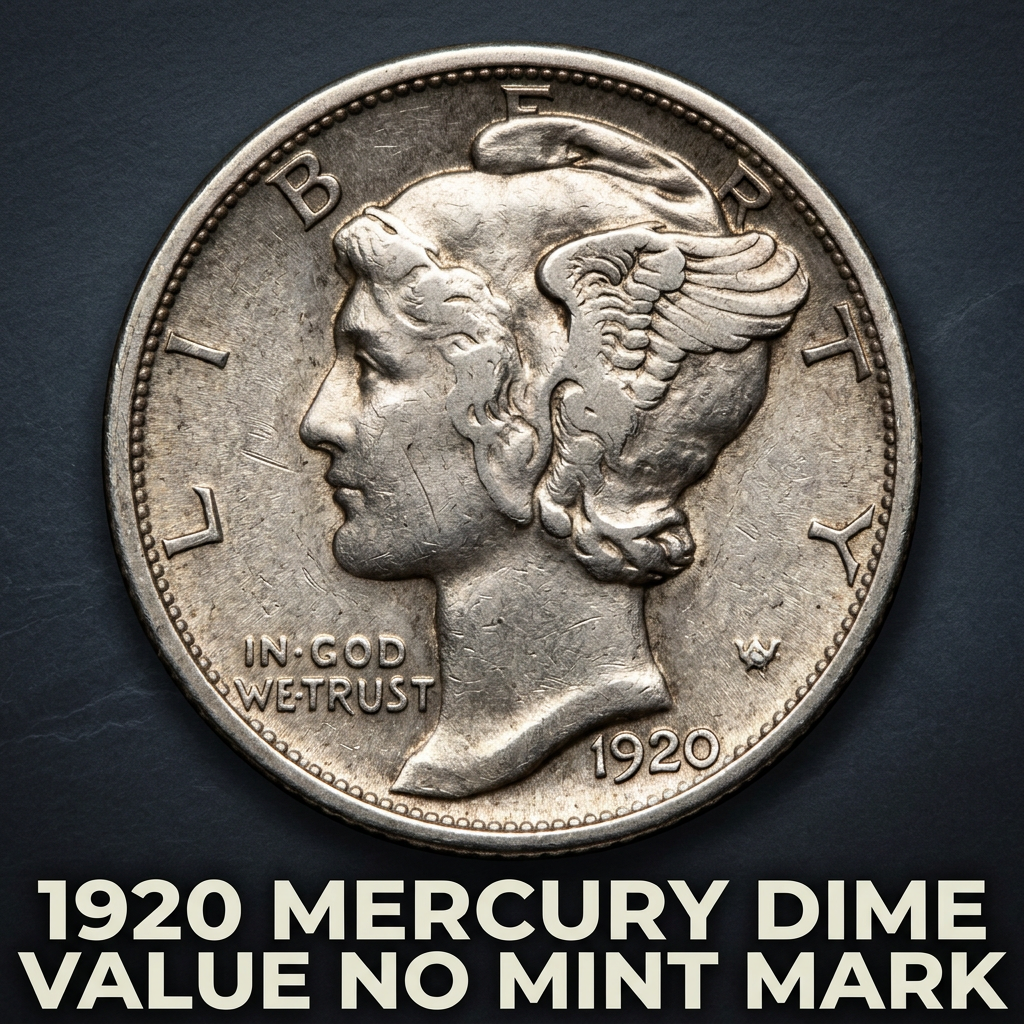
The 1920 Mercury Dime with no mint mark is worth anywhere from $3 to $5 in heavily worn condition, while well-preserved examples can fetch $25 to $50 or more — and top-grade mint state coins have sold for hundreds of dollars at auction.
If you recently found a small silver dime with a winged head on the front, you may be holding a 1920 Mercury Dime from the Philadelphia Mint. These little coins have real silver in them and can be worth a surprising amount depending on their condition. Whether you’re a seasoned collector or just cleaning out an old drawer, this guide will walk you through everything you need to know about its value. You can also use a free coin identification app to quickly confirm what you have before diving into the details.
What Is the 1920 Mercury Dime No Mint Mark?
The 1920 Mercury Dime was struck at the Philadelphia Mint, which is why it carries no mint mark — Philadelphia-made coins of this era simply didn’t include one. The coin was designed by Adolph Weinman and features Lady Liberty wearing a winged cap, often mistaken for the Roman god Mercury (hence the nickname). The reverse shows a fasces bundled with an olive branch, symbolizing unity and peace.
This coin is made of 90% silver and 10% copper, giving it real intrinsic metal value right from the start. In 2025, with silver prices hovering around $28 to $30 per ounce, even a heavily worn 1920 Mercury Dime is worth at least its melt value — roughly $2.00 to $2.50. But numismatic (collector) value is usually much higher than melt value for this coin, especially as the condition improves.
The Philadelphia Mint produced over 19 million Mercury Dimes in 1920, making this date fairly common. But common doesn’t mean worthless — far from it. The grade of your coin is the biggest factor in determining its final price.
1920 Mercury Dime No Mint Mark Value by Grade
Coin grading follows a scale from 1 (barely identifiable) to 70 (perfect, never circulated). Most coins you find in old jars or inherited collections fall somewhere in the worn to moderately circulated range. Here’s a general breakdown of what a 1920 Mercury Dime with no mint mark is worth at different grades:
| Grade | Description | Estimated Value |
|---|---|---|
| Good (G-4) | Heavy wear, major features visible | $3 – $5 |
| Fine (F-12) | Moderate wear, details clearer | $5 – $9 |
| Extremely Fine (EF-40) | Light wear on high points only | $15 – $25 |
| About Uncirculated (AU-55) | Slight traces of wear, mostly sharp | $30 – $50 |
| Mint State (MS-63) | Uncirculated, some bag marks | $60 – $100 |
| Mint State (MS-65+) | Gem quality, nearly perfect | $150 – $400+ |
For the most up-to-date auction results and certified coin prices, you can check out detailed 1920 Mercury Dime price data by grade on CoinHix, which tracks real sales across major platforms.
How to Check the Condition of Your 1920 Mercury Dime
You don’t need to be an expert to get a rough idea of your coin’s grade. Start by looking at the design under good lighting — natural daylight or a simple lamp works fine. On the obverse (front), look at the bands on Liberty’s cap and the details in her hair. On the reverse, the key area to examine is the diagonal bands on the fasces (the bundle of sticks). These bands are often called “Full Bands” or FB, and a coin with complete, separated bands is worth significantly more than one where they’ve merged from wear.
If the bands are fully defined and the coin has never been cleaned or polished, you could be holding a premium-quality specimen. Cleaning actually reduces coin value — collectors prefer original surfaces, even if they’re a bit toned. If you’re unsure, CoinHix is a great resource for comparing your coin to certified examples and understanding what grade it might land in.
What Makes a 1920 Mercury Dime More Valuable
Beyond condition, a few specific factors can push the value of your 1920 no mint mark dime higher:
Full Bands (FB): As mentioned, coins with fully split horizontal bands on the fasces carry a premium. A 1920 Mercury Dime graded MS-65 FB can be worth two to three times more than the same grade without Full Bands.
Original Luster: Coins that have never been cleaned and retain their original mint luster are worth far more to collectors. If yours still has that soft, satiny glow, that’s a very good sign.
Toning: Natural, original toning in appealing colors (golden, blue, or russet) can actually add value. Unnatural or blotchy toning, however, reduces it.
Certification: Having your coin graded and encapsulated by PCGS or NGC gives buyers confidence and typically results in higher sale prices.
For a full breakdown of 1920 dime values across all mint marks and conditions, that resource is especially helpful if you’re comparing Philadelphia, Denver, and San Francisco versions side by side.
Should You Sell, Keep, or Get It Graded?
If your coin looks worn but intact, it’s probably worth $3 to $10 — a nice little silver keepsake but not a life-changing find. However, if the coin looks sharp, bright, and detailed, it might be worth paying for a professional grading service. PCGS and NGC each charge around $30 to $50 for basic submissions, but a high-grade coin can easily return that investment many times over.
You can also download CoinHix on your phone to browse recent sale prices and compare your coin to certified examples without leaving home. It’s one of the easiest ways to get a real-world market sense before committing to a sale or a grading fee.
—
Frequently Asked Questions
Q: How do I know if my 1920 dime is from Philadelphia?
A: If there’s no mint mark on the coin, it was struck at the Philadelphia Mint. On Mercury Dimes, the mint mark (D for Denver, S for San Francisco) appears on the reverse side just above the “E” in “ONE.” No mark at all means Philadelphia.
Q: Is the 1920 Mercury Dime with no mint mark rare?
A: Not especially. Philadelphia struck over 19 million of them in 1920. However, rarity isn’t everything — condition matters far more. A common-date Mercury Dime in gem uncirculated condition is still worth good money to collectors.
Q: Can I clean my 1920 Mercury Dime to make it worth more?
A: No — please don’t. Cleaning a coin almost always lowers its collector value, sometimes dramatically. Experienced collectors can spot a cleaned coin easily, and most grading services will note cleaning on their labels. Leave the coin as-is and let a professional assess it in its natural state.