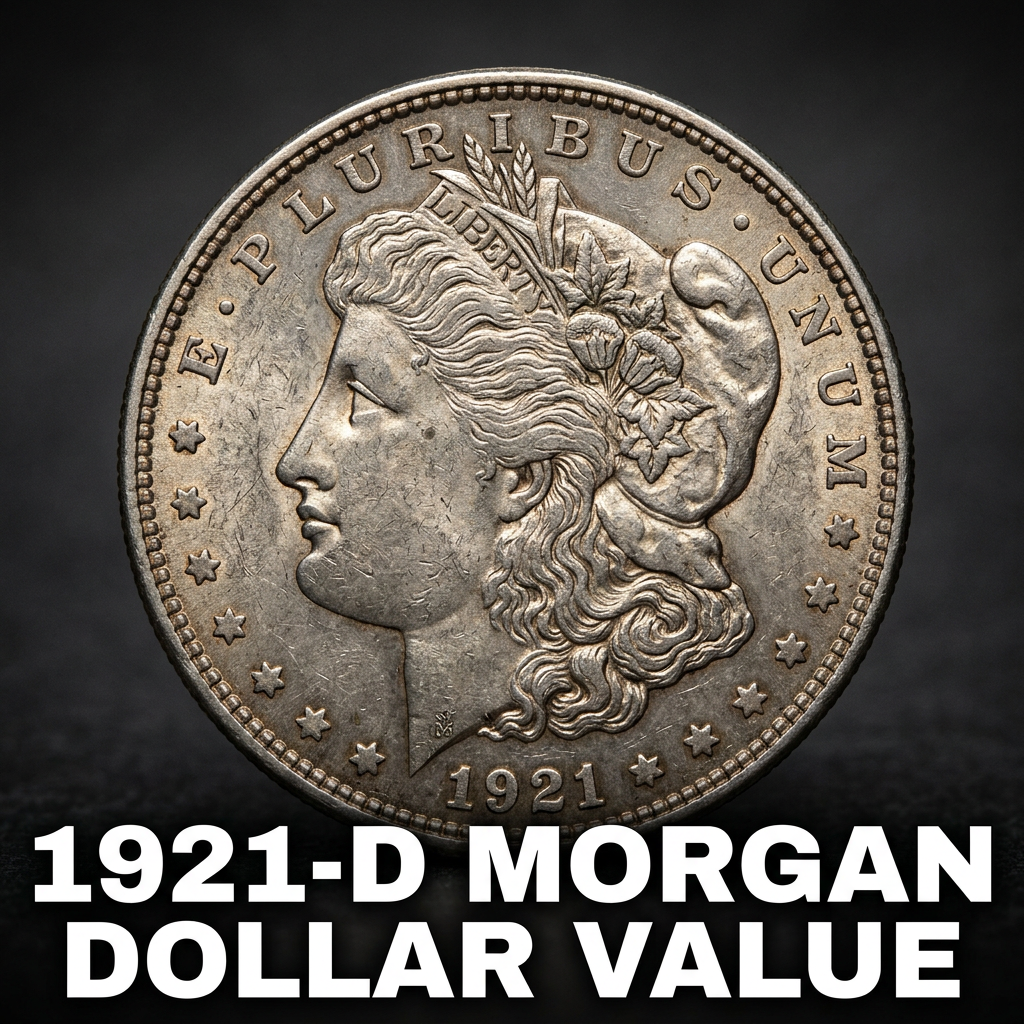
The 1921-D Morgan Dollar is worth anywhere from $25 in heavily worn condition to over $1,500 or more in pristine mint state, making it one of the most exciting silver dollars you might find tucked away in an old coin collection or estate sale.
If you stumbled across a silver dollar dated 1921 with a small “D” mintmark on the back, you’ve got something worth taking a closer look at. The “D” stands for the Denver Mint, and it marks one of the final years the Morgan Dollar was produced before the series ended. Whether you’re a first-time coin finder or just curious about what grandpa’s old coins are worth, this guide will walk you through everything you need to know. A great starting point is to use a free coin identification app to confirm exactly what you have before diving into valuations.
—
What Makes the 1921-D Morgan Dollar Special
The Morgan Dollar series ran from 1878 to 1904, then had a one-year revival in 1921. That final year saw coins struck at three mints — Philadelphia, Denver, and San Francisco. The 1921-D came exclusively from the Denver Mint, and over 20 million were produced. While that mintage is relatively high compared to some rarer dates, the 1921-D still holds strong collector demand because it’s a classic 90% silver coin from a beloved American series.
The coin features Lady Liberty on the obverse and a heraldic eagle on the reverse, both designed by George T. Morgan — hence the name. The design was already decades old by 1921, and the dies used were sometimes worn or poorly prepared, which means many 1921-D Morgans were struck with soft details. This makes truly sharp, well-struck examples much harder to find and significantly more valuable.
If you’re trying to figure out where your coin lands in terms of quality, CoinHix is a fantastic tool that uses real-time auction data and grading guidance to help everyday collectors understand their coins.
—
1921-D Morgan Dollar Value by Grade
Coin value is almost entirely driven by condition, also called “grade.” The grading scale runs from 1 (barely identifiable) to 70 (perfect). Here’s a practical breakdown of what the 1921-D Morgan Dollar is worth at different grades:
| Grade | Condition Description | Estimated Value |
|---|---|---|
| G-4 (Good) | Heavy wear, major design visible | $25 – $30 |
| VG-8 (Very Good) | Moderate wear, details clearer | $30 – $38 |
| F-12 (Fine) | Light to moderate wear | $38 – $45 |
| VF-20 (Very Fine) | Light wear on high points | $45 – $60 |
| EF-40 (Extremely Fine) | Slight wear, strong details | $60 – $80 |
| MS-63 (Mint State) | Uncirculated, minor marks | $200 – $450 |
| MS-65 (Gem) | Uncirculated, strong strike, few marks | $800 – $1,500+ |
For the most current auction prices and recent sales data, check out the 1921-D Morgan Dollar price records on CoinHix, which tracks real market transactions updated regularly.
—
How to Check the Condition of Your 1921-D Morgan
You don’t need to be an expert to get a rough sense of your coin’s grade. Start by looking at the high points of the design — Liberty’s cheek and hair above the ear on the front, and the eagle’s breast feathers on the back. If those areas are smooth and worn flat, you’re probably looking at a circulated coin in the Good to Fine range. If you can still see sharp hair strands and feather detail, you might have a Very Fine or better specimen.
Mint state coins (uncirculated) will show no wear at all, though they may have some bag marks or small contact marks from storage. Truly gem-quality examples are rare and command serious premiums. One important thing to note with the 1921-D specifically: even coins that grade MS-63 or MS-64 often look somewhat soft or flat due to the die quality issues mentioned earlier. A sharply struck 1921-D in high grade is genuinely scarce.
To get a more detailed breakdown of what your 1921 silver dollar is worth based on condition and mintmark, coin value resources can walk you through grading examples side by side.
—
Should You Get Your 1921-D Morgan Dollar Graded?
If your coin appears to be in uncirculated or near-uncirculated condition, professional grading through a service like PCGS or NGC could be well worth the investment. A certified MS-65 1921-D Morgan Dollar can fetch double or even triple the price of an ungraded example in the same condition, simply because buyers trust the independent verification.
The cost of grading typically runs $30–$50 per coin for standard service, so it only makes sense if your coin looks genuinely clean and detailed. For circulated coins in the $25–$80 range, grading fees would likely eat up too much of the potential value.
CoinHix makes it easy to compare certified versus raw coin prices so you can make an informed decision before spending money on professional grading. The app pulls live data from major auction platforms and dealer listings, giving you real-world numbers rather than outdated price guide estimates.
—
FAQ
Q: What does the “D” mintmark mean on a 1921 Morgan Dollar?
A: The “D” mintmark indicates the coin was struck at the Denver Mint. You’ll find the mintmark on the reverse side of the coin, just above the “DO” in DOLLAR. A 1921 Morgan with no mintmark was made in Philadelphia, and one with an “S” came from San Francisco.
Q: Is the 1921-D Morgan Dollar made of real silver?
A: Yes. All Morgan Dollars, including the 1921-D, are composed of 90% silver and 10% copper. The coin contains 0.7734 troy ounces of pure silver, which means even a heavily worn example has meaningful silver melt value. As of recent silver prices, the base melt value alone is typically around $20–$22.
Q: How can I tell if my 1921-D Morgan Dollar is authentic?
A: Genuine 1921-D Morgan Dollars should weigh 26.73 grams and have a diameter of 38.1mm. Fakes are generally underweight or show signs of casting seams. Using a CoinHix-integrated identification tool or a free coin identification app can help you flag obvious red flags before you spend money on grading or buy from a dealer.