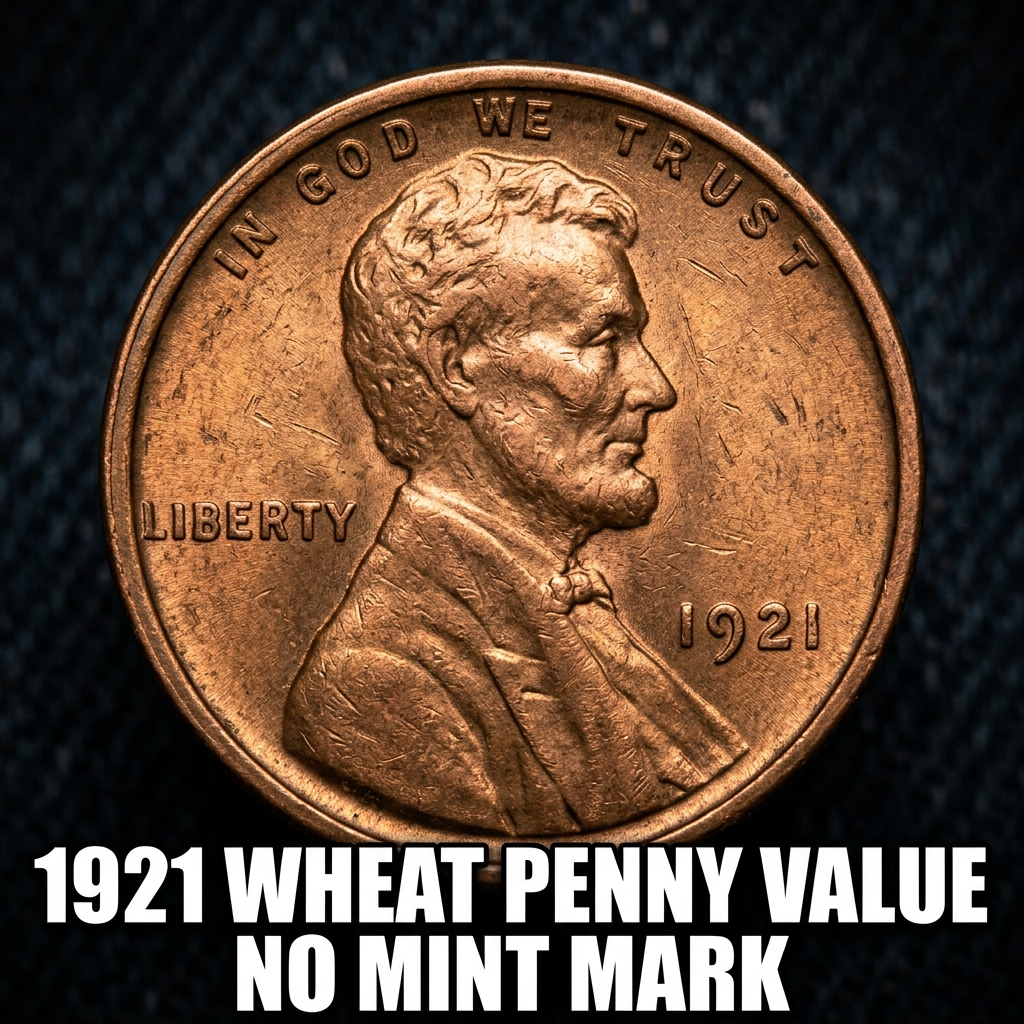
The 1921 Wheat Penny with no mint mark is worth anywhere from $0.50 in heavily worn condition to over $100 or more in high-grade mint state. Most circulated examples fall between $1 and $15, making this a surprisingly valuable coin that might be sitting in your change jar right now.
What Is the 1921 No Mint Mark Wheat Penny?
If you’ve found an old Lincoln cent with two wheat stalks on the back and the date 1921, you’re holding a coin that’s over 100 years old. The “no mint mark” version means it was struck at the Philadelphia Mint, which was the main production facility for U.S. coins at the time. In 1921, the Philadelphia Mint produced approximately 39,157,000 Lincoln Wheat Pennies — a relatively modest mintage compared to some other years in the series.
These coins are made of 95% copper and 5% tin and zinc, giving them that classic reddish-brown color you’ve probably noticed. If you want to quickly identify what you have before diving into values, you can use a free coin identification app to confirm the coin details right from your phone. Apps like CoinHix make this easy — just snap a photo and get instant results. Understanding what you’re holding is the first step toward knowing what it’s actually worth.
1921 Wheat Penny Value Chart by Grade
The value of your 1921 no mint mark penny depends heavily on its condition, which coin collectors call “grade.” A coin that looks like it just left the mint is worth far more than one that’s been passed around in pockets for decades. Here’s a breakdown of typical values:
| Grade | Condition Description | Estimated Value |
|---|---|---|
| Good (G-4) | Heavily worn, date visible | $0.50 – $1.00 |
| Very Good (VG-8) | Moderate wear, design clear | $1.50 – $3.00 |
| Fine (F-12) | Even wear, details present | $3.00 – $6.00 |
| Very Fine (VF-20) | Light wear on high points | $6.00 – $12.00 |
| Extremely Fine (EF-40) | Slight wear, sharp details | $15.00 – $30.00 |
| Mint State (MS-63) | Uncirculated, minor marks | $60.00 – $100.00 |
| Mint State (MS-65+) | Gem quality, full luster | $150.00 – $300.00+ |
For the most up-to-date market prices, you can check the 1921 Wheat Penny price data in MS Red condition on CoinHix, which tracks live auction results and dealer sales.
How Condition and Color Affect the 1921 Penny Value
One thing many beginners don’t realize is that copper coins like the 1921 Lincoln Wheat Penny are also graded by color. There are three color designations used by major grading services:
– Red (RD): The coin retains at least 95% of its original mint red color. These are the most valuable.
– Red-Brown (RB): A mix of red and brown toning, indicating some age but partial original color retained.
– Brown (BN): The coin has fully toned to brown. Still collectible, but worth less than RD examples.
A 1921 penny graded MS-65 Red can fetch significantly more than the same coin graded MS-65 Brown. When hunting for high-grade examples, color matters just as much as the numeric grade. Always check with a trusted resource like CoinHix to compare values across different color designations before buying or selling.
What Makes a 1921 Wheat Penny More Valuable
Beyond condition and color, a few other factors can push your coin’s value higher. Error coins — such as doubled dies, off-center strikes, or repunched dates — can be worth several times more than a normal example. Examine your coin carefully under good lighting or a magnifying glass. Any unusual doubling in the lettering or Lincoln’s portrait could indicate a valuable error variety.
Provenance also matters. A coin that comes with documentation showing it was part of a notable collection may carry a premium among serious collectors. And of course, professional grading by PCGS or NGC adds credibility and can significantly increase resale value. You can find a detailed breakdown of the 1921 penny’s value across all grades and varieties to help you figure out where your coin stands before submitting it for grading.
Should You Clean or Keep Your 1921 Wheat Penny As-Is?
This is one of the most common mistakes new collectors make — cleaning an old coin. Never clean your 1921 Wheat Penny. Even light polishing removes the natural surface patina that forms over decades, and professional graders can immediately detect a cleaned coin. Cleaned coins are typically worth far less than their original, undisturbed counterparts, even if they look shinier.
Store your coin in a non-PVC coin flip or a hard plastic holder to protect it from further environmental damage. If you’re serious about getting an accurate value, use the CoinHix app to photograph your coin and compare it to certified examples in their database. It’s one of the best free tools available for everyday collectors who want real answers without having to visit a coin shop.
FAQ
Q: How do I know if my 1921 penny has no mint mark?
A: Look just below the date on the obverse (front) of the coin. If there is no small letter present — no “D” for Denver and no “S” for San Francisco — then it was minted in Philadelphia and carries no mint mark. This is the most common variety for 1921.
Q: Is a 1921 Wheat Penny rare?
A: It’s not considered a rare coin in lower circulated grades since nearly 40 million were made. However, finding one in high uncirculated grades, especially with original red color, is genuinely difficult and those examples can be quite valuable.
Q: Where is the best place to sell a 1921 Wheat Penny?
A: Online auction platforms like eBay are popular for selling individual coins, while coin dealers and local coin shows can work well for quick sales. For higher-grade or certified coins, major auction houses like Heritage Auctions often yield the best prices. Always research current market values before selling.