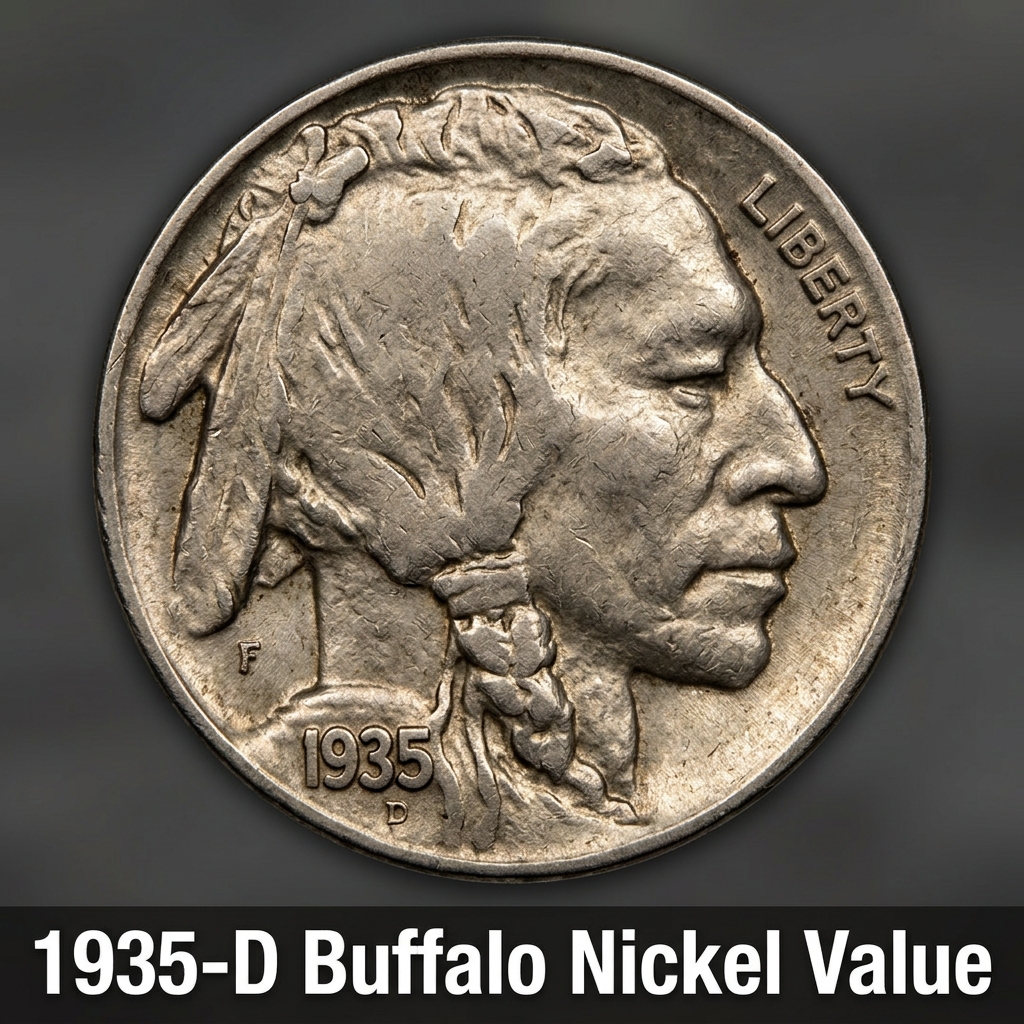
The 1935-D Buffalo Nickel is worth anywhere from $1.50 in heavily worn condition to well over $200 or more in uncirculated mint state grades. If you recently found one of these coins in an old jar or inherited collection, you may be sitting on a nice little treasure. Read on to find out exactly what yours might be worth.
If you’re not totally sure what coin you’re holding, a free coin identification app can help you confirm the date, mintmark, and series before you dig deeper into the value. Once you know what you have, tools like CoinHix make it easy to track current market prices right from your phone.
—
What Is the 1935-D Buffalo Nickel?
The 1935-D Buffalo Nickel was struck at the Denver Mint during one of the final years of the beloved Buffalo Nickel series, which ran from 1913 to 1938. The “D” mintmark appears on the reverse side of the coin, just below the words “FIVE CENTS.” This coin features the iconic design by sculptor James Earle Fraser — a Native American portrait on the obverse and a standing American bison on the reverse.
In 1935, the Denver Mint produced approximately 12,092,000 Buffalo Nickels. That’s a reasonably sized mintage, which is one reason well-worn examples are fairly affordable today. However, high-grade uncirculated specimens are genuinely scarce, and collectors pay serious premiums to add them to their sets. Whether you’re a casual finder or a dedicated numismatist, the 1935-D is a coin worth knowing about.
—
1935-D Buffalo Nickel Value by Grade
The condition of your coin is everything when it comes to value. Numismatists use a 70-point Sheldon scale to grade coins, from Poor (P-1) all the way to Perfect Mint State (MS-70). Here’s a quick breakdown of typical 1935-D Buffalo Nickel values across different grades:
| Grade | Description | Estimated Value |
|---|---|---|
| Good (G-4) | Heavy wear, outlines visible | $1.50 – $3 |
| Very Good (VG-8) | Moderate wear, some detail | $3 – $5 |
| Fine (F-12) | Even wear, legends clear | $5 – $9 |
| Very Fine (VF-20) | Light wear on high points | $9 – $18 |
| Extremely Fine (EF-40) | Slight wear, sharp detail | $20 – $35 |
| About Uncirculated (AU-58) | Traces of wear only | $40 – $65 |
| Mint State (MS-63) | Uncirculated, minor marks | $90 – $150 |
| Mint State (MS-65) | Gem uncirculated | $200 – $400+ |
For the most up-to-date auction results and dealer pricing, you can view live 1935-D Buffalo Nickel price data across mint state grades on CoinHix, which pulls real-time market data so you always have a current picture of what collectors are actually paying.
—
How to Check the Condition of Your 1935-D Nickel
The single biggest factor in what your 1935-D Buffalo Nickel is worth is its grade — or simply put, how well-preserved it is. Start by looking at the bison’s horn and shoulder on the reverse. On worn coins, these high points flatten out first. If the horn is still sharp and the fur texture on the shoulder is visible, your coin likely grades Fine or better.
Next, look at the Native American’s cheekbone and hair braid on the obverse. Well-struck, lightly worn examples will show clear separation in the hair lines. If those details are crisp and there’s still some original luster (that faint, cartwheel shine) under good light, you might have an About Uncirculated or even Mint State piece.
Avoid cleaning your coin. A cleaned Buffalo Nickel — even one that looks shiny — is worth significantly less than an honest, unaltered example in the same underlying grade. Collectors can spot cleaning easily, and it permanently hurts a coin’s value.
—
Errors and Varieties That Can Boost the 1935-D Value
Some 1935-D Buffalo Nickels carry special characteristics that make them more valuable than a typical example. One thing to look for is a doubled die, where design elements appear slightly doubled when examined under a loupe. While major doubled dies on this date are rare, minor varieties do exist and are documented by specialists.
Strike quality also varies. Denver Mint coins from this era were sometimes weakly struck, particularly in the horn area of the bison. A fully struck 1935-D with a sharp, complete horn is actually a premium coin among collectors — sometimes referred to as a “Full Horn” example — and can command noticeably higher prices even in circulated grades.
If you think your coin might have an error or strong strike feature, get it authenticated and graded by a third-party service like PCGS or NGC. A graded, slabbed coin is far easier to sell and typically fetches a better price at auction. For a detailed look at 1935 Buffalo Nickel values including error and variety premiums, there are excellent resources to help you identify what you have.
—
Where to Sell Your 1935-D Buffalo Nickel
Once you know what your coin is worth, you have several solid options for selling. Online marketplaces like eBay allow you to reach a national audience of collectors. Coin shows and local coin dealers are also great choices if you prefer an in-person transaction and want cash on the spot. For valuable uncirculated examples, major auction houses like Heritage Auctions or Stack’s Bowers can get you top dollar.
Whatever route you choose, doing your homework first is essential. Download CoinHix to compare recent sale prices before you walk into a dealer’s shop — knowing your coin’s approximate value ahead of time puts you in a much stronger negotiating position and helps ensure you don’t leave money on the table.
—
Frequently Asked Questions
Q: How do I know if my nickel is a 1935-D?
A: Flip the coin to the reverse side and look just below the words “FIVE CENTS.” If you see a small “D” mintmark there, it was struck at the Denver Mint. No mintmark means it came from Philadelphia, and an “S” means San Francisco.
Q: Is a worn 1935-D Buffalo Nickel still worth keeping?
A: Absolutely. Even a heavily worn example is worth a small premium over face value, and it’s a genuine piece of American history from the Great Depression era. If the date and mintmark are fully readable, many collectors and dealers will pay $2–$5 for it.
Q: Should I get my 1935-D Buffalo Nickel professionally graded?
A: It depends on the condition. If your coin appears uncirculated or nearly so, professional grading by PCGS or NGC can significantly increase its marketability and final sale price. For circulated coins worth under $20, the grading fee may not be cost-effective unless you plan to sell through a major auction platform.