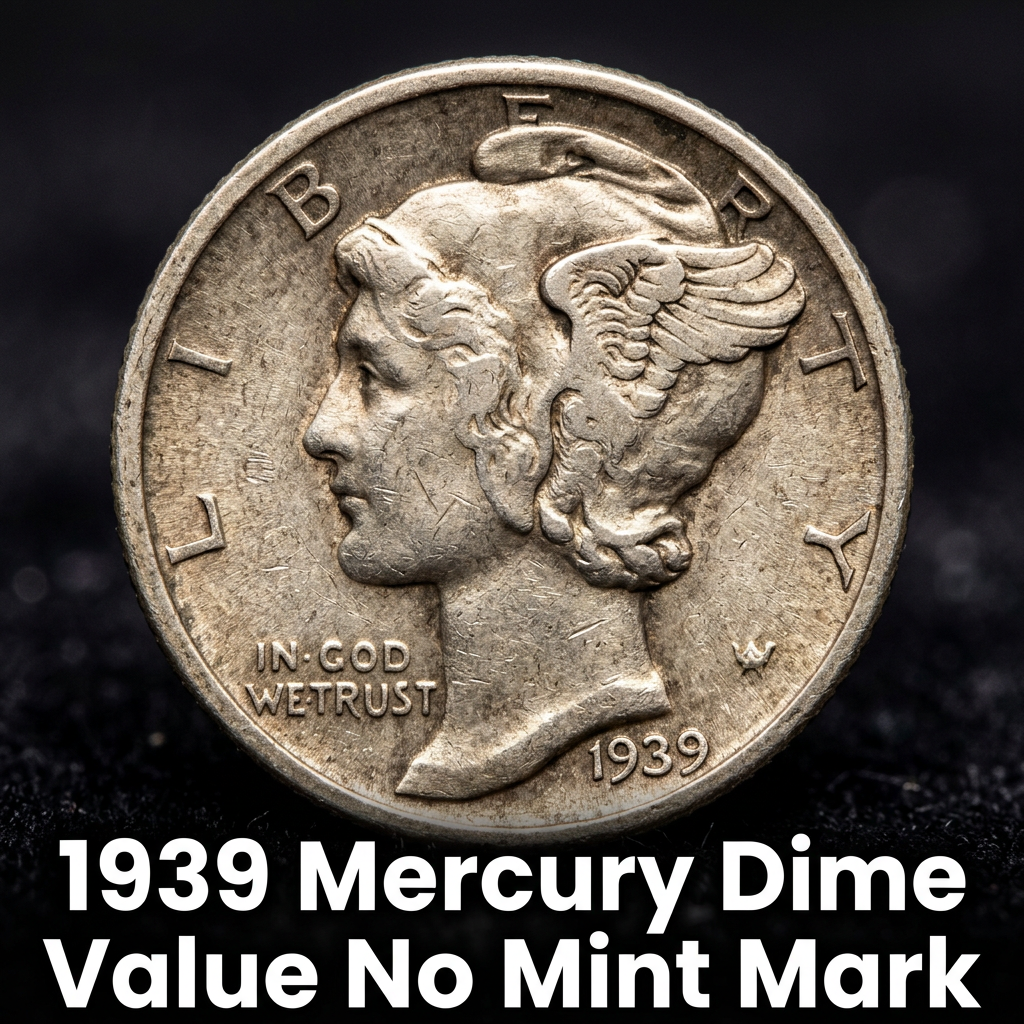
The 1939 Mercury Dime with no mint mark is worth anywhere from $2 to $3 in heavily worn condition to well over $25 or more in uncirculated grades, with top mint state examples fetching hundreds of dollars at auction. If you’ve found one of these beautiful old dimes, you’re in luck — this is a genuinely collectible coin with a rich history.
What Is the 1939 Mercury Dime?
The 1939 Mercury Dime — officially called the Winged Liberty Head Dime — was designed by Adolph A. Weinman and produced at three U.S. Mint facilities. The version with no mint mark was struck at the Philadelphia Mint, which traditionally did not add a mint mark to its coins. Philadelphia produced over 67 million of these dimes in 1939, making it the most common variety from that year. Still, plenty of coin collectors actively seek out well-preserved examples, and even circulated coins carry real silver value since the coin is made of 90% silver. If you’re not sure which version you have, you can use a free coin identification app to scan your coin and get instant details about its mint mark, variety, and estimated worth. Tools like CoinHix make the identification process quick and reliable, even for beginners who’ve never collected coins before.
How Much Is the 1939 Mercury Dime Worth with No Mint Mark?
Value depends heavily on the coin’s condition. Coin collectors use a grading scale from Poor (P-1) to Perfect Mint State (MS-70). For the 1939 Philadelphia dime, circulated coins are common and worth mostly their silver melt value, which as of recent silver prices sits around $1.80 to $2.50 per coin. However, lightly worn or uncirculated examples are worth noticeably more to collectors. For the most up-to-date numbers, you can check the 1939 Mercury Dime mint state price data on CoinHix, which tracks real auction results and dealer prices in real time.
Here’s a quick breakdown of typical values by grade:
| Grade | Condition Description | Estimated Value |
|---|---|---|
| G-4 (Good) | Heavy wear, design visible | $2 – $3 |
| F-12 (Fine) | Moderate wear, clear details | $3 – $5 |
| EF-40 (Extremely Fine) | Light wear on high points | $6 – $10 |
| MS-63 (Uncirculated) | No wear, some bag marks | $20 – $35 |
| MS-65 (Gem Uncirculated) | Sharp luster, minimal marks | $50 – $100+ |
| MS-67+ (Superb Gem) | Near perfect, exceptional strike | $300 – $800+ |
What Makes a 1939 Mercury Dime More Valuable?
Several factors push the value of a 1939 Mercury Dime no mint mark higher than the average. One of the most important is Full Bands designation — this refers to whether the horizontal bands on the fasces (the bundle of rods on the reverse) are fully struck and separated. Coins certified as FB (Full Bands) by grading services like PCGS or NGC command significant premiums, sometimes doubling or tripling the standard value in the same grade. Luster, surface marks, and strike sharpness also matter. A sharp, lustrous MS-65 FB example can easily sell for $150 or more. For a detailed look at how collectors and dealers currently price these coins across all grades, the 1939 Mercury Dime value guide at CoinValueApp is an excellent resource to bookmark.
The Silver Content and Melt Value Factor
Every Mercury Dime, including the 1939 Philadelphia issue, contains 0.07234 troy ounces of pure silver. At current silver prices (which fluctuate daily), that means every single one of these dimes has an intrinsic silver melt value of roughly $1.50 to $2.50 regardless of its condition. This acts as a natural price floor — even a heavily worn, nearly unreadable example still has real monetary value. If you find a jar of old dimes, it’s worth sorting through them carefully. You can use CoinHix to quickly check current silver melt values alongside collector premiums so you always know whether your coin is worth more to a silver buyer or a coin collector.
How to Sell Your 1939 Mercury Dime
If you’ve decided your coin is worth selling, you have several options. For circulated, lower-grade examples, a local coin dealer or silver buyer will often pay close to melt value. For nicer uncirculated or Full Bands coins, online platforms like eBay, Heritage Auctions, or Great Collections typically yield better results because collector demand drives prices higher. Before selling, it’s always smart to get at least two or three price quotes. Apps like CoinHix let you track recent sale prices so you don’t walk away with less than your coin is worth. Getting your coin professionally graded by PCGS or NGC before selling a high-grade example can also significantly increase buyer confidence and final sale price.
FAQ
Q: How do I know if my 1939 dime is from Philadelphia?
A: If there’s no mint mark on the reverse side of the coin near the bottom of the olive branch and fasces design, it was made at the Philadelphia Mint. Denver-minted coins show a “D” and San Francisco coins show an “S.”
Q: Is a 1939 Mercury Dime rare?
A: The 1939 Philadelphia Mercury Dime is not rare in general — over 67 million were minted. However, high-grade examples, especially those with Full Bands certification, are genuinely scarce and can be worth significant money.
Q: Should I clean my 1939 Mercury Dime before selling it?
A: No — never clean an old coin. Cleaning removes the natural patina and surface details that collectors value, and it will almost always reduce the coin’s grade and market value significantly. Present the coin exactly as you found it.