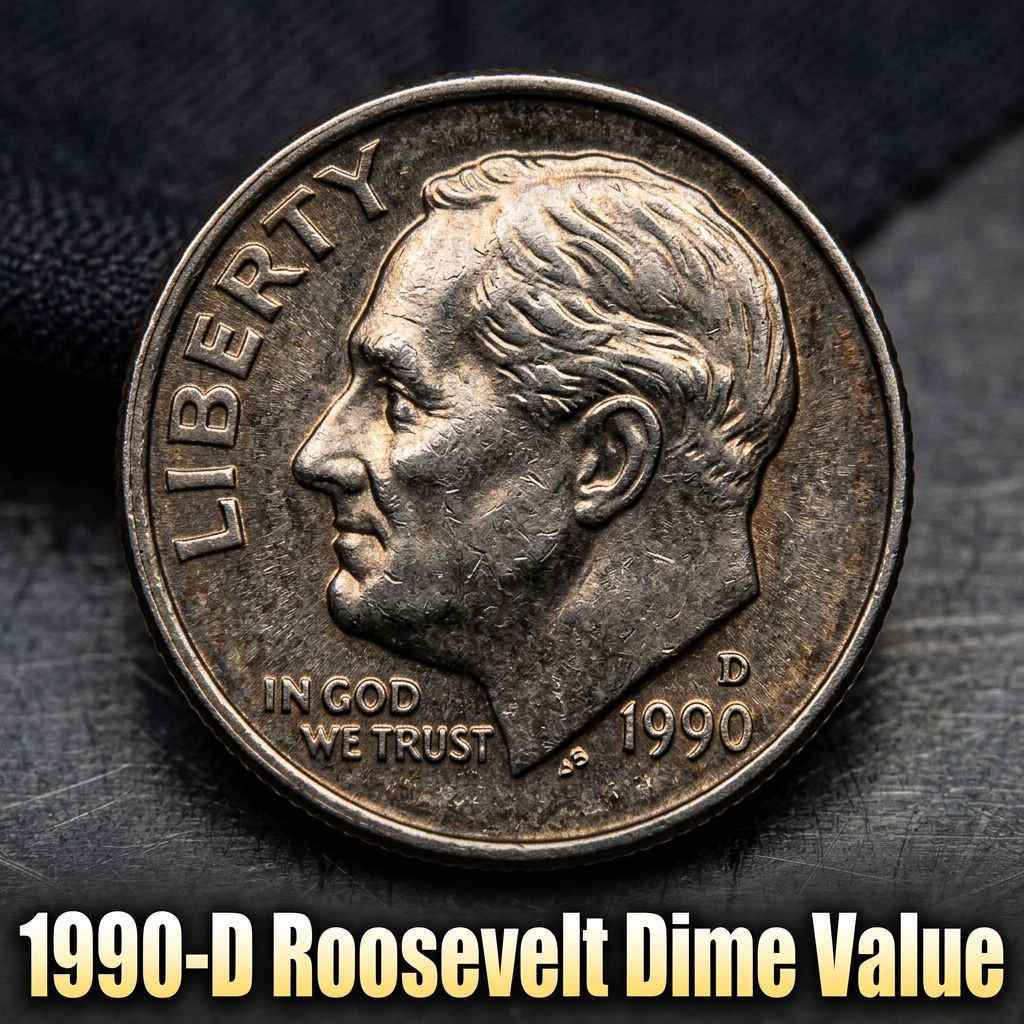
The 1990-D Roosevelt Dime is worth anywhere from 10 cents in heavily worn condition to around $10 or more in pristine, uncirculated grades — and a handful of certified gems have sold for significantly higher at auction. If you found one in your change jar or inherited a coin collection, here’s everything you need to know about its value.
What Is the 1990-D Roosevelt Dime?
The 1990-D Roosevelt Dime was struck at the Denver Mint, indicated by the small “D” mintmark located on the obverse (front) of the coin, just above the date. In 1990, the Denver Mint produced an enormous quantity of these coins — over 1.4 billion — making them extremely common in circulated grades. The coin features the familiar portrait of President Franklin D. Roosevelt on the front and a torch flanked by olive and oak branches on the reverse, a design that has been used since 1946.
Because so many were made, finding one in your pocket change is no surprise. But condition is everything when it comes to value. A well-worn 1990-D dime is only worth face value. However, coins that never made it into circulation — or high-grade examples certified by professional grading services — can be worth real money to collectors.
If you’re not sure what coin you’re holding, a free coin identification app can help you quickly figure out the mint year, mintmark, and even estimate the grade before you dig deeper into pricing.
1990-D Roosevelt Dime Value by Grade
Coin grading is based on the Sheldon scale, which runs from 1 (barely identifiable) to 70 (perfect). For a 1990-D dime, most examples pulled from circulation will grade between G-4 and EF-40. Uncirculated coins — those with no wear at all — start at MS-60 and go up.
Here’s a simple value table to give you a quick sense of what your coin might be worth:
| Grade | Description | Estimated Value |
|---|---|---|
| G-4 to VF-30 | Worn, circulated | Face value ($0.10) |
| EF-40 to AU-58 | Lightly worn to almost uncirculated | $0.15 – $0.50 |
| MS-63 to MS-65 | Uncirculated, minor marks | $1 – $5 |
| MS-66 to MS-67 | Gem uncirculated | $5 – $25+ |
| MS-68+ | Superb gem | $100+ |
You can find detailed 1990 Roosevelt Dime price data across all MS grades to get a better sense of where certified examples are actually trading in today’s market.
How Condition Affects the 1990-D Dime’s Worth
This is where most people get surprised. Two coins with the same date and mintmark can be worth wildly different amounts based purely on preservation. A 1990-D dime that spent decades rolling around in someone’s pocket will show flat, dull details — especially on Roosevelt’s hair above the ear and on the torch’s flame. These coins are worth exactly 10 cents to a dealer.
On the other hand, a coin that was set aside in a bank roll or a mint set right away could still have original mint luster — that bright, slightly frosty shine that comes straight from the press. These examples can attract collectors and command real premiums, especially when professionally graded by PCGS or NGC.
The key areas to examine under good lighting: the high points of Roosevelt’s portrait, the flame of the torch, and the coin’s overall luster. Any rubbing or dullness drops the grade fast.
Is the 1990-D Dime Rare or Special in Any Way?
Honestly, the 1990-D Roosevelt Dime is not considered a key date or a rare coin. Its mintage of over 1.4 billion means millions of examples exist in every grade. However, that doesn’t mean every single one is worthless to collectors.
What collectors do look for are Full Bands (FB) designations — meaning the horizontal bands separating the torch’s upper and lower sections are fully struck and clearly defined. Coins that earn this designation from grading services like PCGS or NGC can sell for a noticeable premium over standard examples.
There are also occasional error coins from this era — doubled dies, off-center strikes, and lamination errors — that can be worth anywhere from a few dollars to several hundred depending on severity. Always examine your 1990-D dime closely before assuming it’s just pocket change.
For a comprehensive look at what the 1990 dime is worth across different grades and varieties, that resource breaks it down clearly for both beginners and experienced collectors.
How to Get an Accurate Value for Your 1990-D Dime
If you want to know exactly what your coin is worth, the best approach is a combination of visual grading, recent auction research, and — if the coin looks exceptional — professional grading. Start by cleaning your coin? Don’t. Cleaning a coin almost always destroys its value in the eyes of collectors and dealers.
Instead, take a clear photo in natural light, then use CoinHix to quickly look up recent sale prices for the 1990-D Roosevelt Dime. CoinHix pulls real market data so you’re not guessing — you’ll see what similar coins actually sold for, not just theoretical price guide numbers.
If the coin looks uncirculated or you spot something unusual, consider submitting it to PCGS or NGC for official grading. The cost is usually $20–$40 per coin, which makes sense only if you believe your dime could be MS-65 or better, or if it has an interesting error.
CoinHix is especially handy for quick lookups when you’re sorting through a whole jar of old coins — no need to manually cross-reference multiple price guides.
FAQ
Q: Is a 1990-D dime worth more than face value?
A: In circulated condition, no — it’s worth 10 cents. In uncirculated or gem grades, it can be worth anywhere from $1 to $25 or more depending on the exact grade.
Q: What does the “D” mintmark mean on a 1990 dime?
A: The “D” stands for Denver, meaning the coin was minted at the U.S. Mint’s Denver facility. In 1990, Denver produced over 1.4 billion dimes with this mintmark.
Q: How can I tell if my 1990-D dime is uncirculated?
A: Look for original mint luster — a bright, slightly frosty or cartwheel sheen across the entire coin’s surface. Any flat or dull spots on the high points indicate wear and mean the coin has been circulated. When in doubt, use CoinHix to compare your coin against graded examples.