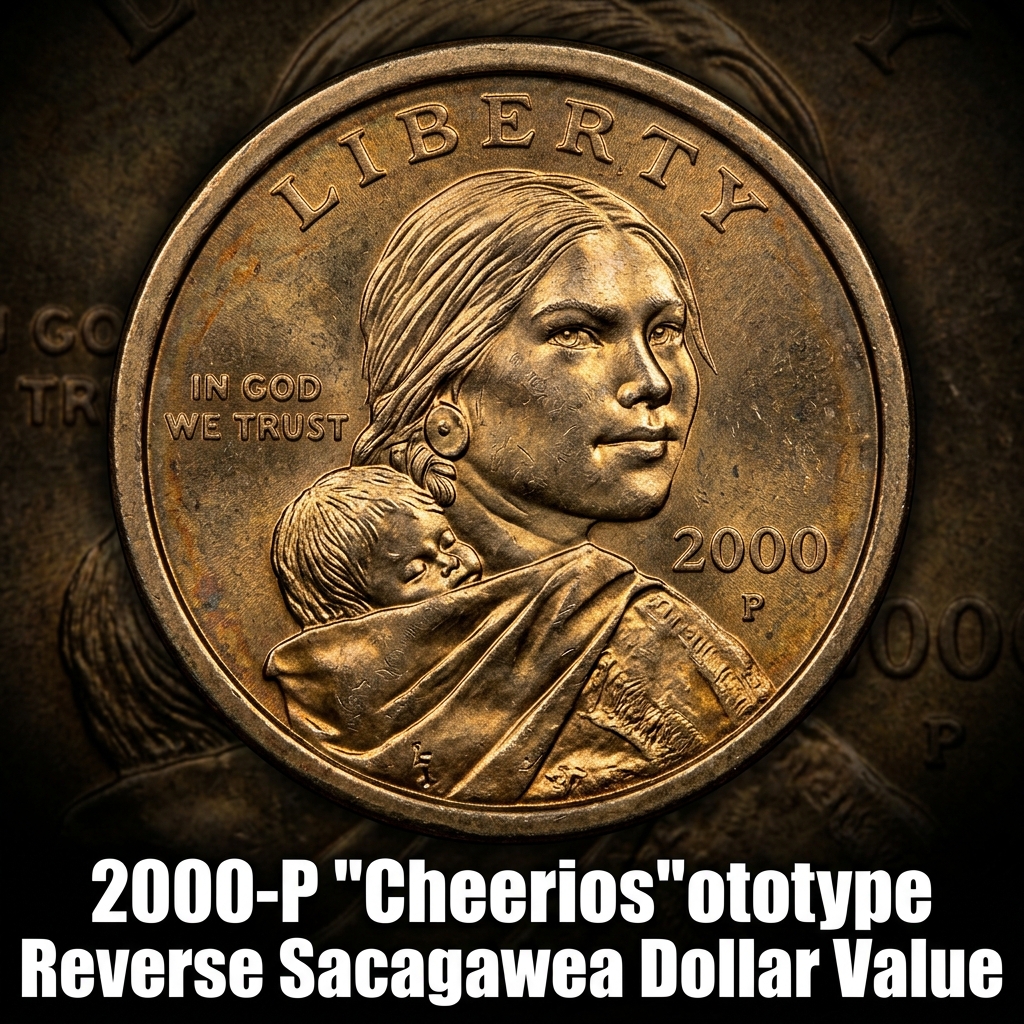
The 2000-P “Cheerios” Prototype Reverse Sacagawea Dollar is worth anywhere from $5,000 in well-circulated condition to over $25,000 or more for high-grade specimens — making it one of the most exciting modern coin discoveries any American could stumble upon in an old cereal box or coin collection.
If you’ve got one of these coins and aren’t sure what you’re looking at, you’re not alone. Thousands of people discover unusual coins every year and have no idea they might be holding something extraordinary. A great first step is downloading a free coin identification app that can help you quickly figure out what you’ve got before you take it to a dealer. One excellent option is CoinHix, which gives you instant coin recognition and market pricing right from your phone.
—
What Is the 2000-P Cheerios Prototype Reverse Sacagawea Dollar?
Back in 2000, the U.S. Mint partnered with General Mills to promote the new Sacagawea dollar coin. Roughly 5,500 of these coins were inserted into specially marked boxes of Cheerios cereal as part of a promotional giveaway. Sounds simple enough — until coin researchers discovered something unusual decades later.
The coins placed in those Cheerios boxes were struck with a prototype reverse die, meaning the tail feathers on the eagle’s design are noticeably more detailed and sharper than those found on the regular 2000-P Sacagawea dollars that entered circulation. The feathers on the prototype show enhanced engraving and a different texture that sets them apart from the final production design.
This makes the “Cheerios” dollar a true numismatic rarity — not just a promotional novelty. Experts believe only around 5,500 exist, and far fewer have been professionally graded. If you think you have one, comparing the eagle’s tail feathers closely against a regular 2000-P Sacagawea dollar is the key first test.
—
How to Tell If Your Sacagawea Dollar Is the Cheerios Variety
Not every 2000-P Sacagawea dollar is a Cheerios coin. The easiest way to spot the difference is by examining the reverse (eagle side) under magnification. Here’s what to look for:
– Enhanced tail feather detail — On the Cheerios variety, the individual tail feathers are crisply defined with finer lines and more distinct separations.
– Sharper overall design elements — The entire reverse tends to show more pronounced high-relief details.
– Mint mark — It must be a 2000-P (Philadelphia) issue.
You can also check your coin against detailed value and variety information for the 2000 Sacagawea Dollar to compare design characteristics and pricing tiers side by side. If you’re not confident identifying it yourself, submitting to PCGS or NGC for professional attribution is absolutely worth it — the difference in value between a regular 2000-P and a confirmed Cheerios variety is staggering.
—
2000-P Cheerios Sacagawea Dollar Value by Grade
The value of this coin depends heavily on its condition. Coins from cereal boxes were often handled by curious kids and parents, so finding one in top condition is rare. Here’s a general value breakdown:
| Grade | Description | Estimated Value |
|---|---|---|
| MS-60 to MS-62 | Mint State, minor marks | $5,000 – $8,000 |
| MS-63 to MS-64 | Choice Uncirculated | $8,000 – $14,000 |
| MS-65 | Gem Uncirculated | $14,000 – $20,000 |
| MS-66 and above | Superb Gem | $20,000 – $25,000+ |
For the most current auction results and real-time market pricing, you can view up-to-date 2000-P Sacagawea Dollar price data by grade on CoinHix — it’s one of the most reliable resources for tracking what these coins are actually selling for right now.
—
Should You Get It Graded and What Happens Next?
If you genuinely believe you have a 2000-P Cheerios Sacagawea dollar, your next move is professional grading. Submitting to PCGS or NGC ensures your coin gets officially attributed as the Cheerios variety, which is essential for getting full market value. Without that certification, most buyers will lowball you.
Grading fees typically range from $30 to $65 per coin depending on the service tier. Given that a confirmed Cheerios dollar can easily fetch five figures, that’s a very small investment. Once graded, selling through major auction houses like Heritage Auctions or Stack’s Bowers will get you the best exposure.
In the meantime, download CoinHix to track live coin prices and stay updated on recent sales — it’s a smart habit for any collector or accidental treasure hunter.
—
FAQ
Q: How many 2000-P Cheerios Sacagawea dollars exist?
A: Approximately 5,500 were inserted into Cheerios cereal boxes in early 2000, but only a fraction have been professionally certified and attributed as the true prototype reverse variety.
Q: Can I identify a Cheerios dollar without a magnifier?
A: It’s very difficult. The key difference is in the eagle’s tail feather detail on the reverse, which requires at least a 5x loupe or a good digital microscope to see clearly. Side-by-side comparison with a regular 2000-P Sacagawea dollar makes spotting the difference much easier.
Q: Is a 2000-P Cheerios dollar worth anything if it’s circulated or scratched?
A: Even a well-worn example can still carry significant value due to its rarity, but condition matters a great deal. A heavily damaged coin might only bring a few hundred to a few thousand dollars, while a clean uncirculated example can reach well over $20,000 at auction. Professional grading is still recommended either way.