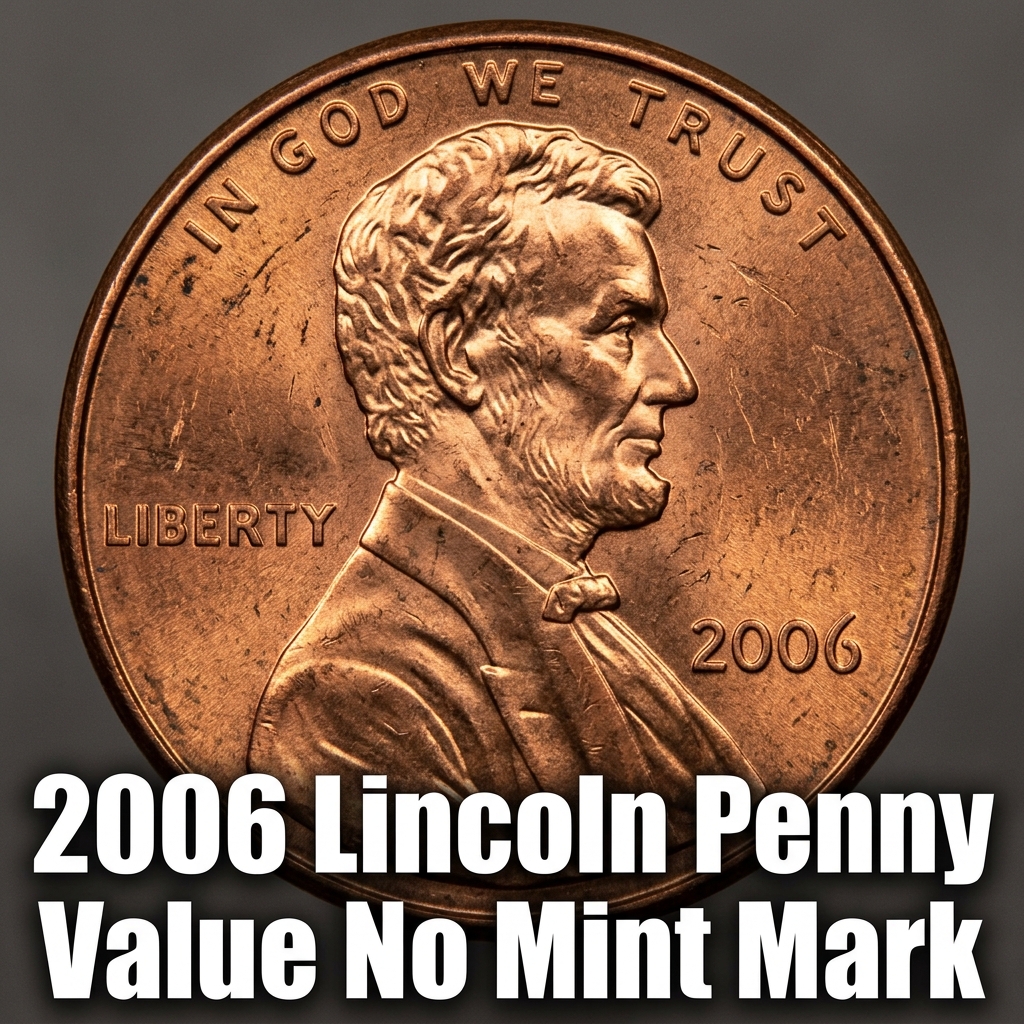
The 2006 Lincoln Penny with no mint mark is worth anywhere from 1 cent in heavily circulated condition to around $5 or more in pristine uncirculated grades, with top-condition certified examples occasionally reaching $15 to $20 at auction. If you’ve found one of these coins in your change jar or an old collection, this guide will help you figure out exactly what you’ve got.
What the No Mint Mark Means on a 2006 Penny
When you flip a Lincoln penny over and look at the obverse — that’s the front side with Abraham Lincoln’s portrait — you might notice a small letter near the date. That letter is called a mint mark, and it tells you where the coin was made. A “D” means Denver, an “S” means San Francisco, and no letter at all means it was struck at the Philadelphia Mint.
The 2006 Lincoln Penny with no mint mark came from Philadelphia, which has historically not used a mint mark on circulating cents (a tradition that went on for many years). Philadelphia produced hundreds of millions of Lincoln cents in 2006, which is one reason why these coins are so commonly found in everyday pocket change.
If you’re not sure whether your coin has a mint mark or not, it helps to look under good lighting with a magnifying glass. You can also use a free coin identification app to scan your coin and get quick details about where and when it was made — super handy for beginners who aren’t familiar with mint mark locations yet.
2006 Lincoln Penny No Mint Mark Value by Grade
Coin grades run on a scale from Poor (P-1) at the low end all the way to Perfect Mint State (MS-70) at the top. For everyday folks, the easiest way to think about it is: heavily worn coins are worth face value, lightly worn coins might be worth a small premium, and uncirculated coins — coins that never spent time in someone’s pocket — can be worth more to collectors.
Here’s a quick value reference for the 2006 Philadelphia Lincoln Penny:
| Grade | Condition Description | Approximate Value |
|---|---|---|
| Circulated (G–VF) | Worn, details visible but flat | Face value ($0.01) |
| Extremely Fine (EF-45) | Light wear, sharp details | $0.05–$0.25 |
| Uncirculated (MS-63) | No wear, some bag marks | $0.50–$2 |
| Choice Uncirculated (MS-65) | Sharp strike, minimal marks | $3–$8 |
| Gem/Superb (MS-67+) | Near perfect, full red luster | $15–$50+ |
For the most current auction results and certified coin prices, you can check out the latest 2006 Lincoln Penny MS-RD price data on CoinHix, which tracks real sales and graded coin values in detail.
What Makes a 2006 Penny More Valuable
Most 2006 Philadelphia cents are common, but a few things can bump the value significantly. First, color matters a lot. Lincoln cents are graded not just by wear but also by color designation — Red (RD), Red-Brown (RB), or Brown (BN). A fully Red coin means it has retained most of its original copper-zinc luster, and those coins command the highest prices among collectors.
Second, strike quality plays a role. A sharply struck coin with clear details on Lincoln’s hair and the Memorial building on the reverse will always be more desirable than a weakly struck example. Third, error coins from 2006 — like doubled dies, off-center strikes, or die cap errors — can be worth anywhere from a few dollars to several hundred dollars depending on the error type and severity. Always examine your coins carefully before spending them.
CoinHix is a great resource if you want to dive deeper into certified coin values and track price trends over time for coins like this one.
How to Tell If Your 2006 Penny Is Worth Holding Onto
Here’s a simple process any beginner can follow. Start by checking the coin’s color under natural light — does it look orange-red and shiny, or is it dark brown and dull? Red coins are the keepers. Next, look for any signs of doubling on the date or lettering, which could indicate a doubled die variety. Then examine the edge and surface for any unusual features that don’t look like they belong there.
If you want a quick second opinion before deciding whether to keep or spend a coin, you can look up a detailed breakdown of 2006 penny values by grade and variety to see how your coin compares across different conditions and mint marks.
And if you’re building a larger collection or just want to catalog what you’ve found, CoinHix offers detailed pricing tools that make it easy to organize and value your coins all in one place — no numismatic degree required.
FAQ About the 2006 Lincoln Penny No Mint Mark
Q: Is a 2006 penny with no mint mark rare?
A: No, it’s not rare at all. The Philadelphia Mint produced over 4 billion Lincoln cents in 2006, making this one of the most common modern pennies in circulation. That said, high-grade examples with full red luster can still be desirable to collectors.
Q: Could my 2006 penny without a mint mark be worth hundreds of dollars?
A: Only in exceptional cases. If your coin is a certified MS-67 Red or higher, or if it has a significant mint error like a major doubled die or off-center strike, it could be worth significantly more than face value. Most circulated examples, however, are worth just one cent.
Q: Where is the mint mark located on a 2006 Lincoln Penny?
A: The mint mark is found on the obverse (front) of the coin, just below the date on the right side. Philadelphia-minted cents from 2006 have no mint mark at that location, while Denver coins will show a small “D.”