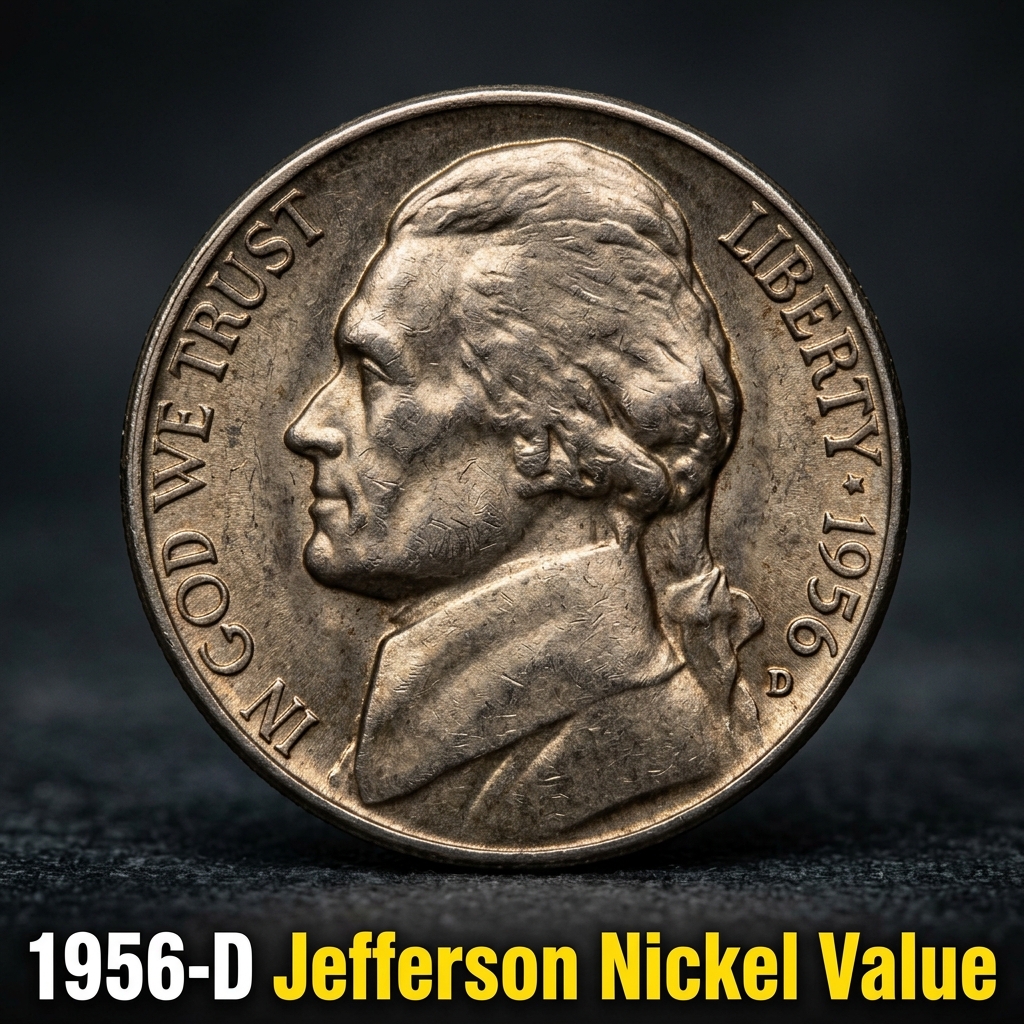
The 1956-D Jefferson Nickel is worth anywhere from about 10 cents in heavily worn condition to $25 or more in uncirculated grades — and if you’ve got a gem example with Full Steps, the price can climb even higher. If you found one of these in an old coin jar or inherited collection, you’re in the right place to find out exactly what it’s worth.
What Makes the 1956-D Jefferson Nickel Special
The 1956-D Jefferson Nickel was struck at the Denver Mint, identified by the small “D” mintmark on the reverse, just to the right of Monticello. That year, Denver produced over 67 million of these coins, making them relatively common in circulated grades. But don’t let the high mintage fool you — condition is everything in coin collecting, and even a common coin can be surprisingly valuable when preserved well.
If you’ve ever come across an old nickel and wondered what it might be, a free coin identification app can help you quickly match it to the right coin type, date, and mintmark before you dig into the value research.
The 1956-D design features Thomas Jefferson on the obverse and Monticello on the reverse — a design by Felix Schlag that debuted in 1938 and remained in use for decades. What collectors look for most is the clarity of the steps on Monticello. Coins with five or six fully defined steps are called “Full Steps” pieces and command serious premiums in the market. These are genuinely hard to find in high grades, which is what makes the 1956-D Jefferson Nickel more interesting than its mintage figures might suggest.
1956-D Jefferson Nickel Value by Grade
Coin values depend heavily on condition. Here’s a breakdown of what you can typically expect to pay or receive for a 1956-D Jefferson Nickel depending on how well it has held up over the decades:
| Grade | Description | Estimated Value |
|---|---|---|
| Good (G-4) | Heavy wear, flat design | $0.10 – $0.25 |
| Fine (F-12) | Moderate wear, details visible | $0.25 – $0.50 |
| Extremely Fine (EF-40) | Light wear on high points | $0.75 – $1.50 |
| Uncirculated (MS-63) | No wear, some contact marks | $5 – $12 |
| Gem Uncirculated (MS-65) | Sharp strike, strong luster | $15 – $30 |
| MS-65 Full Steps | Gem grade with full Monticello steps | $50 – $150+ |
For a more detailed and up-to-date look at certified auction results, you can check out the 1956-D Jefferson Nickel MS price data on CoinHix, which pulls real market information from recent sales.
How to Identify the Full Steps Designation
The Full Steps (FS) designation is the biggest value driver for the 1956-D Jefferson Nickel. To qualify, the steps of Monticello on the reverse must show clear, uninterrupted horizontal lines. Most coins — even ones that look brand new — have soft or incomplete steps because of weak strikes or contact during bagging at the mint.
To check your coin, use a good magnifying glass (at least 5x) and look at the steps directly below the columns of Monticello. Count the horizontal lines carefully. If you can see five or six clearly defined steps with no merging or breaks, your coin may be a Full Steps example.
CoinHix makes it easy to understand how Full Steps coins are graded and priced compared to standard examples — it’s a great resource for anyone learning how condition affects value in this series. If your coin looks promising, it’s worth submitting to a professional grading service like PCGS or NGC to get it officially certified.
What the 1956-D Nickel Is Worth to Collectors Today
Most 1956-D Jefferson Nickels you’ll find in circulation or old collections aren’t going to make you rich. Circulated examples are worth face value to maybe a dollar or two at most. But the story gets more interesting when you move into uncirculated territory.
Collectors who specialize in Jefferson Nickels actively seek out well-struck, original-luster examples from the 1950s. The 1956-D is considered a date with moderate availability in gem grades, but Full Steps pieces are genuinely scarce. If you have a roll of these coins from the era, it’s absolutely worth checking each one carefully.
You can also explore a broader breakdown of 1956 nickel values including the Philadelphia and Denver mint issues to see how both versions compare and what collectors are paying right now.
For anyone who’s new to coin collecting, CoinHix is a helpful tool that walks you through coin values, grades, and recent auction data in a user-friendly format — perfect for beginners and experienced collectors alike.
Tips for Selling Your 1956-D Jefferson Nickel
If you’ve confirmed you have a nice example, your next question is probably: where do I sell it? Here are a few practical options:
– eBay – Great for raw (uncertified) coins in very fine to uncirculated condition. Search recent completed sales for comps.
– Coin dealers – Local dealers will buy coins on the spot, though they typically pay 50–70% of retail value.
– Coin shows – Good for getting multiple offers and connecting with collectors who specialize in Jefferson Nickels.
– Heritage or Stack’s Bowers – For high-grade or certified Full Steps pieces, major auction houses can get the best prices.
Whatever you decide, knowing the approximate value of your coin before you sell is essential. Don’t leave money on the table.
—
FAQ
Q: Is the 1956-D Jefferson Nickel rare?
A: Not in circulated grades — over 67 million were made. But in gem uncirculated condition, especially with the Full Steps designation, it becomes genuinely scarce and collectible.
Q: How do I know if my 1956 nickel is from Denver?
A: Look on the reverse of the coin, to the right of the Monticello building. A small “D” mintmark indicates it was struck at the Denver Mint. No mintmark means it came from Philadelphia.
Q: Should I clean my 1956-D Jefferson Nickel before selling it?
A: No — never clean a coin. Cleaning removes the natural surface and significantly reduces value to collectors. Even a coin that looks dull to your eye is worth more uncleaned than one that’s been polished.