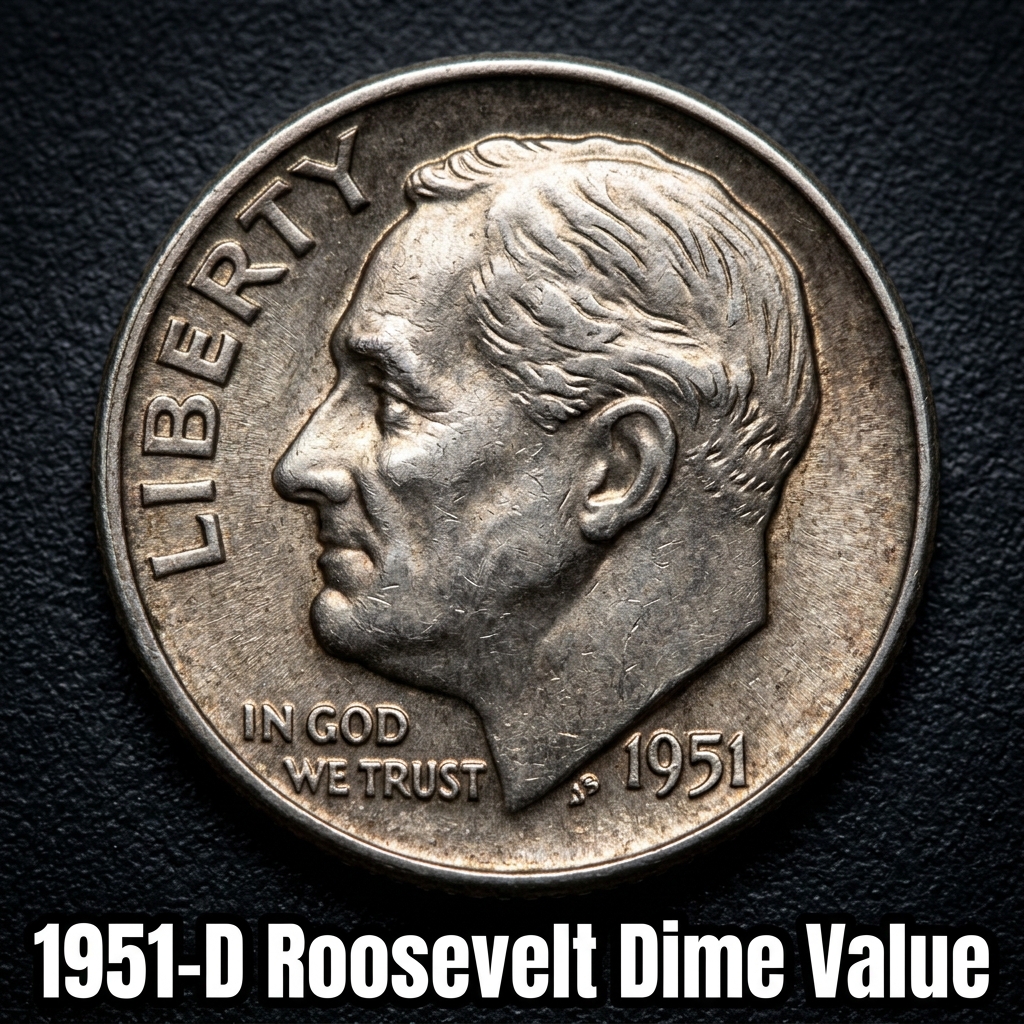
The 1951-D Roosevelt Dime is worth anywhere from $2 in heavily worn condition to over $50 or more in pristine mint state — and certain well-struck examples can fetch even higher prices at auction. If you found one of these silver dimes in a coin jar, an old drawer, or inherited collection, you may be holding onto more than you think.
What Makes the 1951-D Roosevelt Dime Special
The 1951-D Roosevelt Dime was struck at the Denver Mint and carries the small “D” mintmark on the reverse, just above the “E” in “ONE.” This was still the early era of the Roosevelt dime series, which began in 1946, and coins from this period were made with 90% silver — a major factor in their value today. Even a worn 1951-D dime contains about 0.07234 troy ounces of silver, giving it an inherent melt value tied directly to the current silver spot price.
The Denver Mint produced over 56 million of these dimes in 1951, so they’re not considered rare in circulated grades. However, high-grade examples with sharp strikes and full torch bands (known as “Full Bands” or FB coins) are considerably harder to find and much more valuable to collectors. If you’ve come across one and want to identify it quickly, a free coin identification app can help you confirm the date, mintmark, and condition right from your phone.
1951-D Roosevelt Dime Value by Grade
Condition is everything when it comes to coin values. A coin graded on the Sheldon scale from 1 (Poor) to 70 (Perfect Mint State) will see dramatically different price points. Here’s a general value guide based on typical market prices:
| Grade | Description | Estimated Value |
|---|---|---|
| G-4 (Good) | Heavy wear, outline visible | $2 – $3 |
| VF-20 (Very Fine) | Moderate wear, some detail | $3 – $5 |
| EF-40 (Extremely Fine) | Light wear, most detail sharp | $5 – $8 |
| MS-63 (Mint State) | Uncirculated, minor blemishes | $15 – $25 |
| MS-65 (Gem Mint State) | Brilliant, nearly flawless | $30 – $55+ |
| MS-65 FB (Full Bands) | Full torch bands, gem quality | $75 – $150+ |
For the most current and detailed pricing broken down by grade, you can check the 1951-D Roosevelt Dime price data across mint state grades to see how the market is trending right now.
Understanding the Full Bands Designation
One of the most important things to know about Roosevelt dime values is the “Full Bands” designation. On the reverse of the coin, the torch features horizontal bands in the middle. On many circulated — and even some uncirculated — coins, these bands are weakly struck or merged together. When both sets of bands are fully separated and clearly defined, the coin qualifies for the FB designation from grading services like PCGS or NGC.
A 1951-D Roosevelt Dime in MS-65 might sell for $35 to $55, but the same coin with Full Bands can easily command $100 or more. That jump in value is significant, so it’s worth having high-grade examples professionally graded before selling. CoinHix is a great tool to quickly check what Full Bands examples are currently selling for in the open market.
Silver Melt Value and Why It Matters
Even if your 1951-D dime is beat up beyond collector interest, it still has real silver value. With silver prices fluctuating around $25–$30 per troy ounce in recent years, the melt value of a 90% silver Roosevelt dime typically falls between $1.75 and $2.25. This creates a natural price floor — no silver dime from this era is truly “worthless,” no matter the condition.
Dealers and collectors often pay close to or slightly above melt value for heavily worn examples. If you have a roll or a bag full of these old silver dimes, their combined silver content can add up quickly. To get an accurate picture of the full value of your 1951 dime including silver content and collector premiums, it helps to use a dedicated coin value resource rather than guessing. Apps like CoinHix make it easy to pull up live silver prices alongside collector market data in one place.
Tips for Selling Your 1951-D Roosevelt Dime
If you’re thinking about selling, here are a few practical tips. First, never clean your coin — cleaning removes the natural patina and significantly reduces value in the eyes of collectors and graders. Second, store it in a protective flip or holder to prevent additional wear. Third, consider having high-grade examples authenticated and graded by a reputable third-party grading service.
For lower-grade circulated examples, local coin dealers or online platforms like eBay can get you quick sales near melt or slightly above. For nicer uncirculated pieces, coin shows and specialty auction houses tend to bring better prices. Use CoinHix to benchmark what similar coins are selling for before you accept any offer.
FAQ
Q: How do I know if my 1951-D dime is valuable?
A: Check the condition carefully. Look for sharp details in Roosevelt’s hair and the torch bands on the reverse. Uncirculated coins with no wear and fully separated torch bands are the most valuable. Even worn examples have silver melt value.
Q: Is the 1951-D Roosevelt Dime made of silver?
A: Yes. Like all Roosevelt dimes minted before 1965, the 1951-D contains 90% silver and 10% copper. This gives every example a base melt value regardless of its collector grade.
Q: What does “D” mintmark mean on a 1951 dime?
A: The “D” mintmark stands for the Denver Mint in Colorado. You’ll find it on the reverse of the coin, just above the “E” in “ONE.” Coins without a mintmark were made at the Philadelphia Mint, and those with an “S” came from San Francisco.