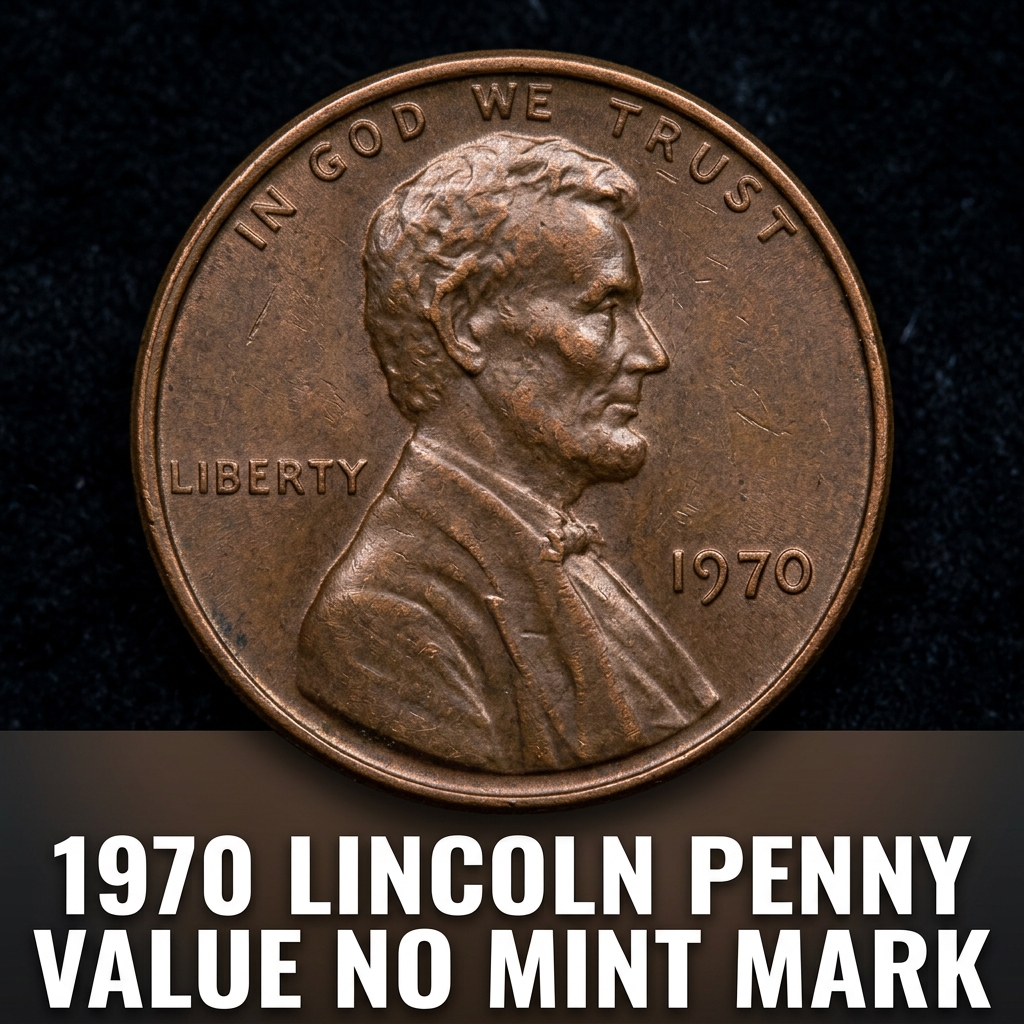
The 1970 Lincoln Penny with no mint mark is worth anywhere from a few cents in heavily worn condition to over $15 or more in uncirculated grades — and rare error coins from this year can fetch hundreds of dollars among serious collectors.
If you recently found one of these coins in a jar, drawer, or old change purse, you’re in the right place. This guide will walk you through everything you need to know about the 1970 Lincoln penny, including how much it’s worth, what to look for, and whether yours might be a hidden treasure. You can also use a free coin identification app to quickly scan and identify your coin before diving deeper into its value.
What Is the 1970 Lincoln Penny with No Mint Mark?
The 1970 Lincoln penny with no mint mark was struck at the Philadelphia Mint. During this era, Philadelphia did not place a mint mark on its coins, so the absence of a “D” (Denver) or “S” (San Francisco) letter beneath the date simply means your coin came from Philly. The Philadelphia Mint produced over 1.8 billion Lincoln cents in 1970 alone, making these coins extremely common in circulated grades. However, condition is everything when it comes to value.
The coin features the classic design by Victor David Brenner on the obverse — Abraham Lincoln’s portrait facing right — and the Lincoln Memorial on the reverse, a design introduced in 1959. These coins were made primarily of 95% copper and 5% zinc, giving them that familiar reddish-brown color. If yours still shows brilliant red luster with no visible wear, it could be worth significantly more than face value.
1970 Lincoln Penny No Mint Mark Value by Grade
Most 1970 Lincoln pennies you’ll find in pocket change or old coin jars are in circulated condition — worn down from years of use. In these grades, the coin is typically worth only face value or just a cent or two above it. The real money is in uncirculated examples that were never used in commerce.
Here’s a general value breakdown for the 1970 Lincoln penny with no mint mark:
| Grade / Condition | Description | Estimated Value |
|---|---|---|
| Good (G-4) | Heavy wear, major details visible | $0.01 – $0.05 |
| Fine (F-12) | Moderate wear, legends clear | $0.05 – $0.10 |
| Extremely Fine (EF-40) | Light wear on high points | $0.10 – $0.25 |
| Uncirculated (MS-63 RB) | No wear, some original red luster | $0.50 – $2 |
| Gem Uncirculated (MS-65 RD) | Full red luster, sharp strike | $5 – $15+ |
| Superb Gem (MS-67 RD) | Near-perfect, top-tier example | $100 – $300+ |
For more detailed pricing across all grades, you can check the 1970 Lincoln penny MS Red grade price data on CoinHix, which tracks auction records and current market values in real time. CoinHix is a fantastic tool for anyone who wants to stay updated on coin valuations without digging through old price guides.
1970 Lincoln Penny Errors Worth Looking For
Here’s where things get exciting. While the standard 1970 Lincoln penny with no mint mark is common, certain error coins from this year are worth serious money. One of the most notable is the 1970-S Small Date vs. Large Date variety — but even among Philadelphia-struck coins, doubling errors and die cracks can add significant premiums.
The most important error to look for is a doubled die obverse (DDO). On these coins, you’ll notice slight doubling on Lincoln’s portrait, the date, or the lettering — most visible under a loupe or magnifying glass. Confirmed doubled die examples from 1970 have sold for anywhere from $25 to several hundred dollars depending on the strength of the doubling and the coin’s overall grade.
Also check for off-center strikes (where the design is shifted), broadstrikes, and die cracks running through the design. Even a small off-center error of 10–15% can push the value of an otherwise common 1970 penny to $10–$50 or more.
How to Check Your 1970 Penny’s Value at Home
You don’t need to visit a coin shop right away. Start by examining your coin under good lighting and a 5x or 10x magnifying glass. Look at the surfaces — is the coin shiny and red, or dull and brown? Check the date and lettering for any signs of doubling. Feel the edges and look for anything that seems “off” about the design placement.
For quick identification and value estimates, CoinHix offers a convenient mobile experience that lets you look up your coin’s specs and recent sale prices in seconds. You can also check out a detailed breakdown of 1970 penny values by mint mark and grade to compare your coin against known examples and price benchmarks. The more information you gather before heading to a dealer, the better prepared you’ll be.
Is the 1970 Lincoln Penny No Mint Mark Worth Keeping?
For most people, the everyday circulated 1970 Lincoln penny isn’t going to pay your rent. But it’s absolutely worth setting aside any coins that still show strong red color, sharp detail, or unusual features. Uncirculated rolls of 1970 pennies saved from that era can contain true gems worth $15–$300+ each.
Error coins are the wild cards — always worth a second look. And even if your coin turns out to be common, learning to identify and grade coins is a rewarding hobby that can lead to real finds over time.
Frequently Asked Questions
Q: Why does my 1970 penny have no mint mark?
A: A 1970 penny with no mint mark was made at the Philadelphia Mint. Philadelphia did not add a “P” mint mark to cents during this period — that practice didn’t begin until 1982. So no mint mark simply means Philadelphia, not a mistake or rare variety.
Q: Is a 1970 penny with no mint mark worth anything?
A: In circulated condition, most are worth face value to a few cents. However, uncirculated examples in gem condition (MS-65 Red or higher) can be worth $5–$15 or more. Rare error varieties or top-graded coins have sold for over $100 at auction.
Q: How can I tell if my 1970 penny is uncirculated?
A: An uncirculated coin will have no visible wear on the high points of the design — Lincoln’s cheekbone, hair details, and the lettering should all be sharp and crisp. The coin should also show original mint luster, ideally with a bright red or red-brown color. If it looks dull and flat, it has likely been circulated.