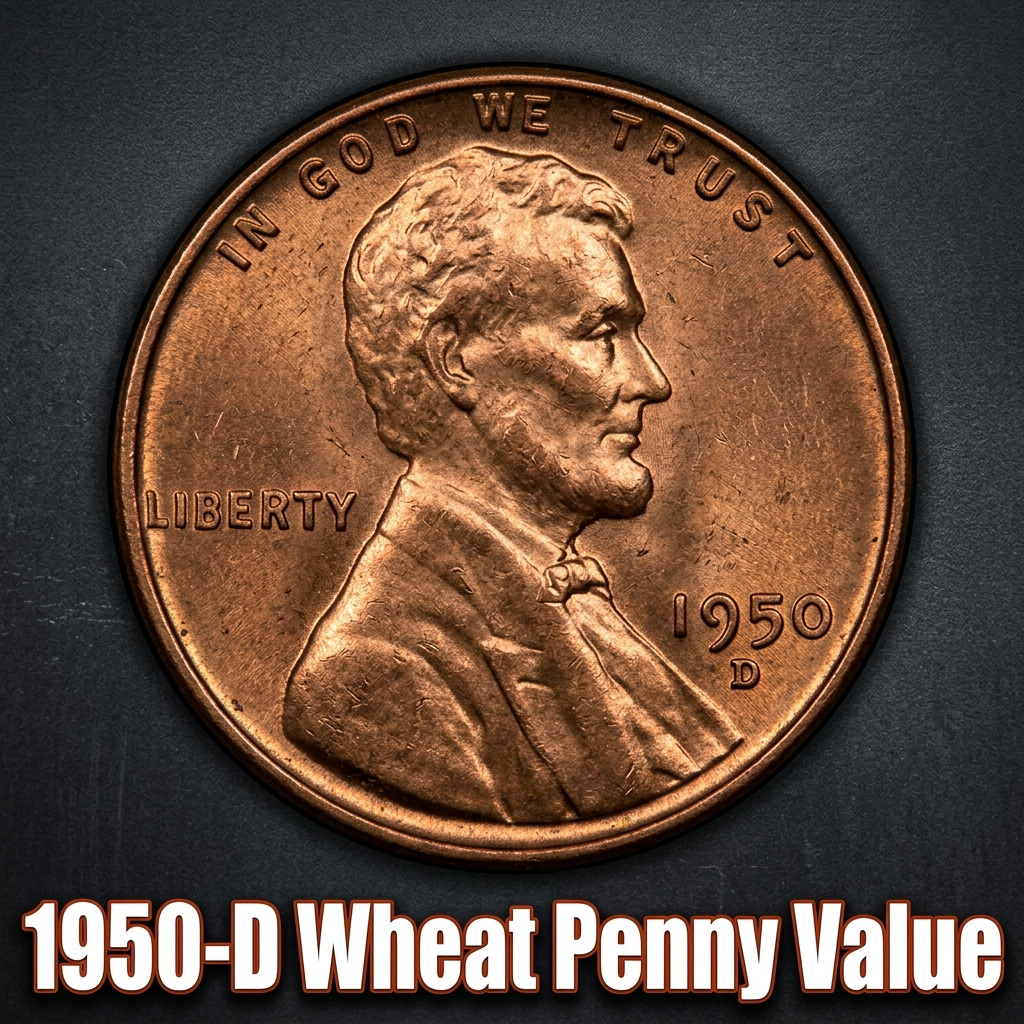
The 1950-D Wheat Penny is worth anywhere from $0.10 in heavily worn condition to over $15 or more in uncirculated grades, with top-tier mint state examples occasionally fetching $50 or higher at auction. If you found one of these coins in an old jar or inherited collection, you’re in the right place to learn exactly what you’ve got.
What Makes the 1950-D Wheat Penny Special
The 1950-D Wheat Penny was struck at the Denver Mint and carries the small “D” mintmark on the obverse just below the date. Over 334 million of these coins were produced that year, making them relatively common in circulated grades. However, that doesn’t mean they’re worthless — far from it. Well-preserved examples with sharp details and original luster can still command solid premiums among collectors. The coin features the classic Lincoln Wheat design introduced in 1909, with two wheat stalks framing the reverse. For a quick check on what your specific coin might be worth based on grade and condition, you can use a free coin identification app right on your smartphone to get an instant estimate before heading to a dealer or auction.
Understanding Coin Grades and How They Affect Value
Coin grading is everything when it comes to value. A 1950-D Wheat Penny pulled from pocket change for decades looks very different from one that sat untouched in a mint set. Here’s a general breakdown of how condition impacts the 1950-D Wheat Penny value:
| Grade | Description | Estimated Value |
|---|---|---|
| Good (G-4) | Heavy wear, outline visible | $0.10 – $0.25 |
| Fine (F-12) | Moderate wear, some detail | $0.25 – $0.75 |
| Extremely Fine (EF-40) | Light wear on high points | $1.00 – $3.00 |
| About Uncirculated (AU-55) | Slight wear, most luster present | $3.00 – $6.00 |
| MS-63 Red | Uncirculated, minor marks | $8.00 – $15.00 |
| MS-65 Red | Gem uncirculated, bright red | $20.00 – $50.00+ |
For the most up-to-date pricing across all grades, check out the 1950-D Wheat Penny price data in MS-RD condition to see where current market values stand for mint state red examples.
How to Check Your Coin’s Condition at Home
You don’t need to be an expert to get a rough idea of your 1950-D Wheat Penny’s grade. Start by examining the coin under good natural light or a simple magnifying glass. Look at Lincoln’s cheekbone and the wheat stalks on the reverse — these are the first areas to show wear. If the details are sharp and you can still see the original reddish-brown color, your coin is likely in better shape. Avoid cleaning the coin under any circumstances. Cleaning destroys original surfaces and significantly reduces collector value. A naturally toned, untouched example will always be worth more than a polished one. If you’re serious about getting an accurate grade, consider submitting your coin to a third-party grading service like PCGS or NGC. Professional grading not only confirms authenticity but also makes buying and selling much easier.
Using Apps and Online Tools to Value Your 1950-D Penny
Technology has made it easier than ever to research coin values from home. CoinHix is a popular tool among collectors that lets you look up real market data for coins like the 1950-D Wheat Penny, broken down by grade, color designation, and certification. Whether you’re checking MS-RD, MS-BN, or circulated examples, CoinHix gives you a transparent view of what buyers are actually paying. You can also explore the complete 1950 penny value guide covering all mint marks and grades to compare the Denver issue against Philadelphia and San Francisco examples from the same year. Having multiple sources helps you feel confident whether you’re selling, insuring, or simply satisfying your curiosity.
Should You Sell, Hold, or Get It Graded
Most circulated 1950-D Wheat Pennies aren’t going to fund a vacation, but they’re still a fun piece of American history worth keeping. If you have a roll or small collection in nicer condition, it may be worth bundling them for a local coin show or online auction. Uncirculated examples grading MS-64 and above are where real value starts to emerge. Before making any decisions, use CoinHix or visit a reputable local coin dealer to get a second opinion. The 1950-D Wheat Penny is a solid entry point into Lincoln cent collecting, and many people who start by checking one old coin end up building a full collection.
—
Frequently Asked Questions
Q: How do I know if my penny is a 1950-D Wheat Penny?
A: Look at the date on the front (obverse) of the coin — it should read 1950. Then check just below the date for a small “D” mintmark, which confirms it was struck at the Denver Mint. You’ll also see two wheat stalks on the back instead of the Lincoln Memorial.
Q: Is a 1950-D Wheat Penny rare?
A: Not particularly. Over 334 million were minted, making it one of the more common Wheat Penny dates in circulated grades. However, high-grade uncirculated examples with full red color (MS-65 RD and above) are harder to find and worth meaningful premiums.
Q: Where is the best place to sell a 1950-D Wheat Penny?
A: For common circulated examples, local coin shops or coin shows are convenient. For higher-grade or certified coins, online platforms like eBay or Heritage Auctions tend to attract more competitive bids. Always compare recent sold listings before setting a price.