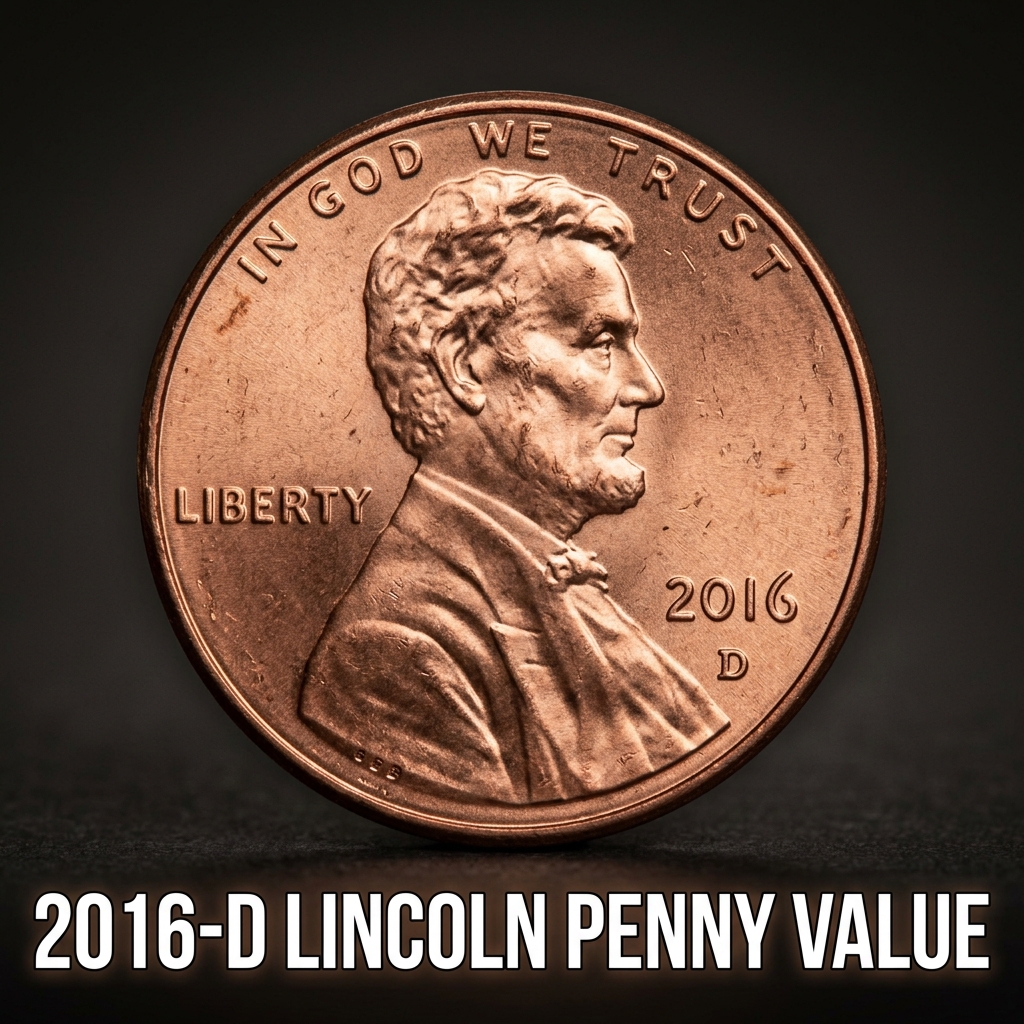
The 2016-D Lincoln Penny is worth anywhere from face value to around $5 or more in pristine, uncirculated condition. Most of these coins you’ll find in pocket change are worth exactly one cent, but certain high-grade examples can surprise you — especially if you know what to look for.
If you’ve just dug one of these out of a jar or found it at a coin show, you’re in the right place. Using a free coin identification app is a great starting point to quickly figure out what you’ve got before diving deeper into grading and valuation.
What Is the 2016-D Lincoln Penny?
The 2016-D Lincoln Penny was struck at the Denver Mint, which is indicated by the small “D” mintmark you’ll find on the obverse (front) of the coin, just below the date. In 2016, the Denver Mint produced over 4.3 billion Lincoln cents — yes, billion with a “B.” That massive mintage is one of the main reasons most 2016-D pennies aren’t worth a fortune. When billions of something exist, rarity goes out the window.
The coin features the classic Victor David Brenner portrait of Abraham Lincoln on the front, which has been on American pennies since 1909. On the reverse, you’ll see the Union Shield design, which was introduced in 2010 and is still used today. The coin is made of copper-plated zinc — 97.5% zinc and 2.5% copper — a composition that’s been standard since 1982.
Understanding the basics of your coin is the first step. Once you know what you’re holding, tools like CoinHix can help you quickly look up current market values based on grade and condition.
2016-D Lincoln Penny Value by Grade
The value of a 2016-D penny depends almost entirely on its condition, also known as its grade. Coins in worn, everyday circulated condition are worth exactly one cent — their face value. The magic happens when coins are uncirculated, meaning they were never used in commerce and still have their original mint luster.
Here’s a simple breakdown of typical 2016-D Lincoln Penny values:
| Grade | Condition Description | Estimated Value |
|---|---|---|
| Good (G-4) | Heavily worn, design visible | $0.01 |
| Fine (F-12) | Moderate wear, clear details | $0.01 |
| Uncirculated (MS-63) | No wear, minor contact marks | $0.25 – $0.50 |
| Choice Uncirculated (MS-65) | Strong luster, few marks | $1 – $3 |
| Gem Uncirculated (MS-67+) | Near perfect, full red luster | $5 – $20+ |
For the most up-to-date auction results and retail pricing on higher-grade specimens, you can browse live 2016-D Lincoln Penny price data across multiple grades to see exactly what collectors are paying right now.
Are There Any Valuable 2016-D Penny Errors?
Here’s where things get interesting for everyday coin hunters. While the standard 2016-D penny isn’t worth much, error coins from this year can be a completely different story. Mint errors occur when something goes wrong during the striking process, and collectors love them.
Some errors to look for on 2016-D pennies include:
– Doubled Die Obverse (DDO): Look for doubling in the lettering “IN GOD WE TRUST” or Lincoln’s eye. These can sell for $25 to $100 or more depending on how dramatic the doubling is.
– Off-Center Strikes: When the blank isn’t properly lined up, you get a coin struck off-center. A 10–20% off-center 2016-D penny might fetch $10–$30.
– Die Cap Errors and Cuds: Rare but highly collectible, these can sell for $50 to several hundred dollars.
Always examine your coins under magnification. If you think you’ve found an error, CoinHix is a handy tool to cross-reference what others have sold similar coins for, giving you a realistic idea of market value before you list it anywhere.
How to Determine If Your 2016-D Penny Is Worth More
Before you toss that penny back into a jar, take a few minutes to evaluate it properly. Start by checking the mintmark — that small “D” just below the year confirms it was made in Denver. Then look at the overall appearance. Is the coin shiny with visible luster? Or is it dull, scratched, or dark? Luster equals value in the world of uncirculated coins.
Next, check the coin’s color. The Lincoln cent is graded in three color categories: Red (RD), Red-Brown (RB), and Brown (BN). A full red 2016-D penny in high grade will almost always command a premium over a brown or red-brown example.
If you want a more detailed breakdown of what your specific coin might be worth depending on its condition and color designation, check out this comprehensive guide to 2016 penny values including circulated and uncirculated examples — it’s a great reference for newer collectors.
Finally, consider getting high-grade coins certified by PCGS or NGC. Professional grading adds credibility and can significantly increase resale value for MS-65 and above examples.
Should You Keep or Spend Your 2016-D Lincoln Penny?
Honestly, if the coin looks like every other penny in your change, go ahead and spend it. The odds of a random circulated 2016-D being worth more than face value are slim. However, if you’ve pulled one out of mint packaging, a bank roll, or notice something unusual about it — hold onto it.
Coin collecting doesn’t have to be expensive or complicated. Apps like CoinHix make it easy for beginners to get quick valuations on any coin in their collection without needing to visit a coin shop or hire a professional appraiser. It’s a smart starting point for anyone just getting into the hobby.
The 2016-D Lincoln Penny may not make you rich, but it’s a fun gateway into American numismatics — and every great collection starts somewhere.
—
Frequently Asked Questions
Q: How much is a 2016-D penny worth in circulated condition?
A: In circulated condition, a 2016-D Lincoln Penny is worth its face value — one cent. Because over 4 billion were minted, circulated examples have no numismatic premium unless they feature a notable error.
Q: What makes a 2016-D penny valuable to collectors?
A: High-grade uncirculated examples (MS-65 and above) in full red condition are the most desirable. Additionally, error coins such as doubled dies or off-center strikes can command significant premiums ranging from $20 to over $100 depending on the severity and type of error.
Q: Is it worth getting a 2016-D penny professionally graded?
A: Only if the coin appears to be in MS-65 or higher condition, or if it has a visible error. Grading fees typically run $20–$40 per coin, so it only makes financial sense when the coin’s potential value clearly exceeds that cost.