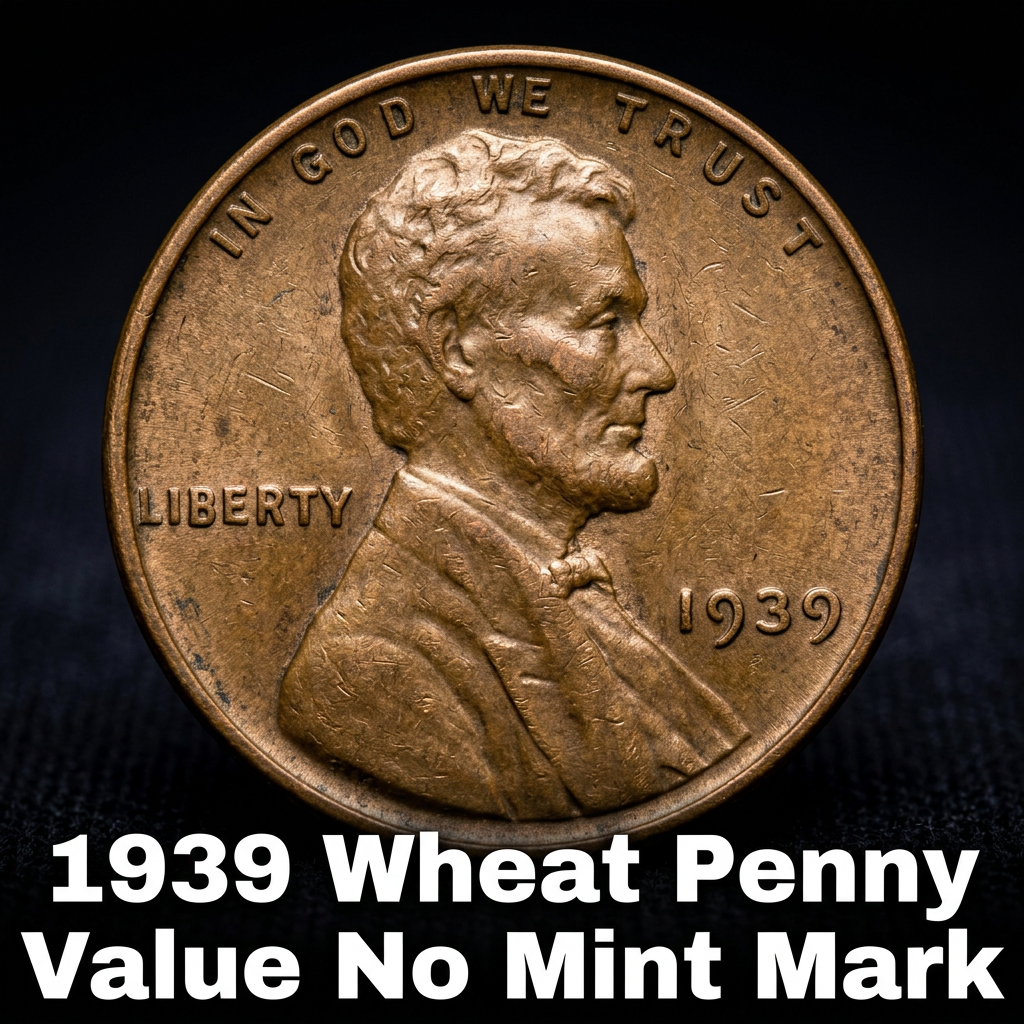
The 1939 Wheat Penny with no mint mark is worth anywhere from $0.10 in heavily worn condition to over $10 in well-preserved circulated grades — and certified mint state examples can fetch $20 to $50 or more. If you found one in a jar or old collection, you’re in the right place to find out exactly what it’s worth.
What Is a 1939 Wheat Penny With No Mint Mark?
The “no mint mark” on a 1939 Lincoln Wheat Penny simply means it was struck at the Philadelphia Mint — which was standard practice at the time. Philadelphia didn’t add a mint mark to cents during this era, so the absence of a letter beneath the date is actually a sign of origin, not an error.
In 1939, the Philadelphia Mint produced over 316 million Lincoln cents, making this one of the more common dates in the Wheat Penny series. That high mintage keeps values relatively modest for circulated coins, but it also means surviving examples in top condition are surprisingly scarce in true gem grades. The coin was designed by Victor David Brenner and features Abraham Lincoln on the obverse and two stalks of wheat on the reverse — a design that ran from 1909 to 1958.
If you’re not sure whether your coin has a mint mark or want help identifying it, a free coin identification app can help you quickly scan and confirm the details right from your phone. This is especially handy if you have a handful of old coins and want fast answers without visiting a dealer.
1939 Wheat Penny Value by Grade
The condition of your coin — what collectors call its “grade” — has the biggest impact on what it’s worth. A well-worn penny that’s been through decades of circulation is worth just a few cents over face value, while a coin that looks nearly new can be worth real money.
Here’s a general value guide for the 1939 Lincoln Wheat Penny (no mint mark):
| Grade | Condition Description | Estimated Value |
|---|---|---|
| Good (G-4) | Heavy wear, outline visible | $0.10 – $0.25 |
| Fine (F-12) | Moderate wear, legends clear | $0.25 – $0.75 |
| Extremely Fine (EF-40) | Light wear on high points | $1.50 – $3.00 |
| About Uncirculated (AU-55) | Slight wear, most luster remains | $4.00 – $8.00 |
| MS-63 (Uncirculated) | No wear, some marks | $10 – $20 |
| MS-65 Red (Gem) | Full original red luster | $30 – $55+ |
For the most up-to-date auction results and certified sale prices, you can check the 1939 Wheat Penny MS-RD price data on CoinHix, which tracks real market transactions to give you a realistic picture of current values.
What Makes a 1939 Penny Worth More?
Not all 1939 Wheat Pennies are created equal. Several factors can significantly increase the value beyond the standard ranges listed above.
Color designation matters a lot in uncirculated coins. Copper cents are graded as Red (RD), Red-Brown (RB), or Brown (BN). A Red example holds its original copper shine and commands the highest prices — sometimes double or triple what a Brown coin of the same grade would bring.
Strike quality is another factor. Coins with sharp, well-defined details on Lincoln’s hair and the wheat stalks are more desirable. Strike doubling or other die varieties can also attract collector interest.
Errors on 1939 cents are uncommon but worth looking for. Off-center strikes, die cracks, and repunched dates (RPD) can all add a premium. If you spot anything unusual about your coin’s lettering or design, it’s worth having it examined more closely. CoinHix makes it easy to compare your coin against certified examples so you can spot the difference.
How to Check Your 1939 Wheat Penny’s Value Today
The fastest way to get a ballpark value is to examine the coin in good lighting and compare it to graded examples online. Look for the date and confirm there’s no mint mark below it — if you see a “D,” that’s Denver, and if you see an “S,” that’s San Francisco, both of which have different values.
For a broader look at how all 1939 Lincoln cent varieties compare, including circulated and mint state pricing across mint marks, the complete 1939 penny value breakdown at CoinValueApp is a helpful resource that covers the full picture in one place.
If you want to go even further, CoinHix offers a detailed price tracking tool where you can monitor real sale prices over time — useful if you’re deciding whether to sell now or hold onto a nicer example.
FAQ
Q: Is a 1939 Wheat Penny with no mint mark rare?
A: No, it’s actually one of the most common Wheat Pennies. Over 316 million were minted in Philadelphia that year. Most circulated examples are worth well under a dollar, though high-grade uncirculated coins with full red color are harder to find and worth more.
Q: How can I tell if my 1939 penny is uncirculated?
A: An uncirculated coin shows no wear on the highest points of the design — Lincoln’s cheekbone and hair, and the tops of the wheat stalks. It should also have some original luster. If the coin looks flat and dull with smoothed details, it’s circulated.
Q: Where is the best place to sell a 1939 Wheat Penny?
A: For common circulated examples, online marketplaces like eBay work well. For higher-grade or certified coins, auction houses or coin dealers will get you better results. Before selling, use CoinHix to check recent sale prices so you know what your coin is actually worth in today’s market.