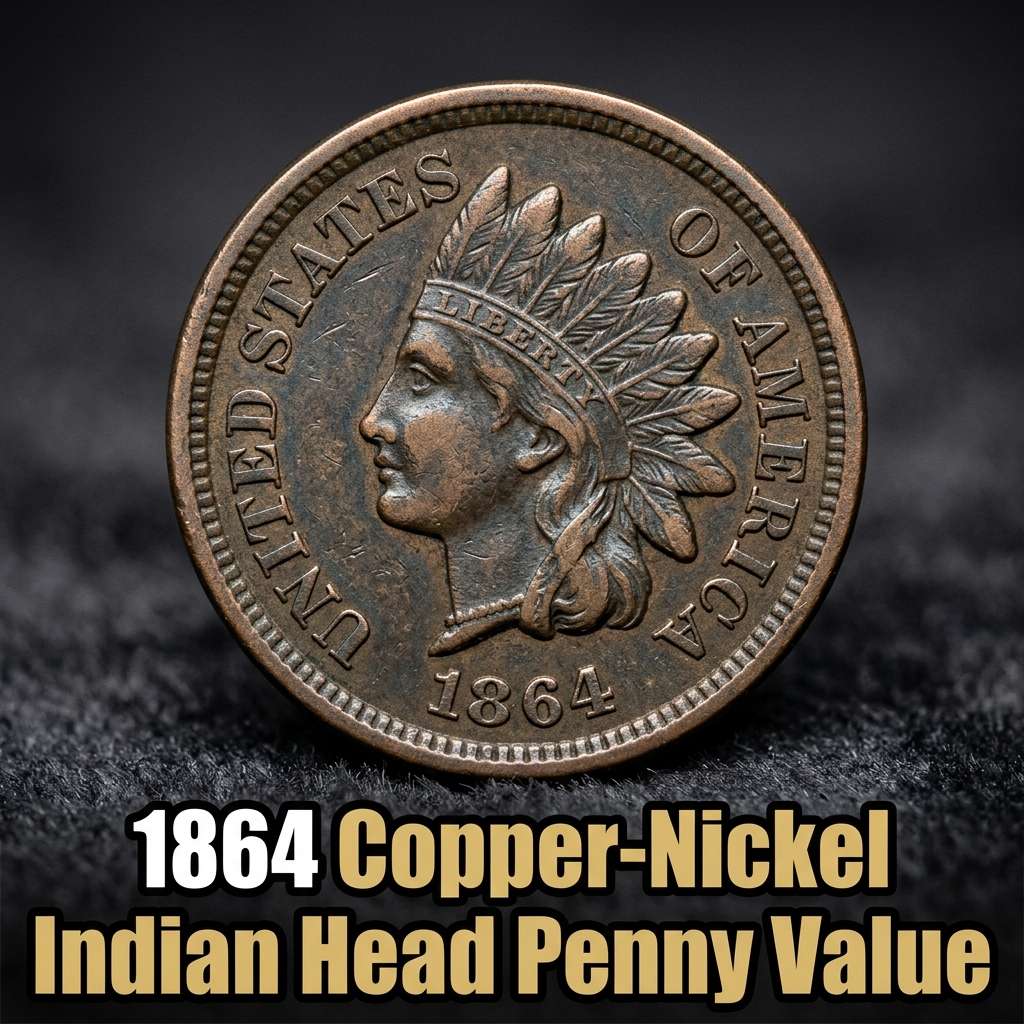
The 1864 Copper-Nickel Indian Head Penny is worth anywhere from $10 in heavily worn condition to over $300 or more in mint state. If you recently found one of these coins in an old jar or inherited collection, you’re in luck — this is one of the more interesting and collectible early Lincoln-era pennies out there.
What Makes the 1864 Indian Head Penny Special
The year 1864 is actually a landmark year in Indian Head Penny history. The U.S. Mint produced two distinct varieties that year: one made from copper-nickel (the same alloy used since 1859) and one made from bronze. The copper-nickel version was struck early in the year before the composition changed, making it slightly rarer and more historically significant than you might think.
If you’re holding a coin and wondering whether it’s copper-nickel or bronze, try the color test — copper-nickel coins tend to have a lighter, almost grayish tone compared to the warmer reddish-brown of bronze. Better yet, use a free coin identification app to scan the coin right from your phone. These tools can often help you distinguish varieties and get a rough value estimate within seconds, which is a great starting point before you dig deeper.
The 1864 copper-nickel penny was part of a transitional moment in American coinage, making it a favorite among collectors who specialize in Civil War-era coins.
1864 Copper-Nickel Indian Head Penny Value by Grade
The condition of your coin plays the biggest role in determining what it’s worth. Here’s a general value breakdown based on grade:
| Grade | Description | Estimated Value |
|---|---|---|
| Good (G-4) | Heavy wear, design visible | $10 – $15 |
| Fine (F-12) | Moderate wear, details clear | $25 – $40 |
| Extremely Fine (EF-40) | Light wear on high points | $75 – $100 |
| About Uncirculated (AU-50) | Slight wear, mostly sharp | $120 – $160 |
| Mint State (MS-63) | No wear, some minor marks | $250 – $350+ |
For the most up-to-date auction prices and certified coin data, you can check out the 1864 Indian Head Penny price data across mint state grades to see exactly what these coins have sold for recently at major auctions. Real market data always beats generic estimates.
How to Grade Your 1864 Copper-Nickel Indian Head Penny at Home
You don’t need to be a professional numismatist to get a rough sense of your coin’s condition. Start by looking at the headband on Miss Liberty’s portrait — in well-worn coins, the letters in “LIBERTY” will be faint or missing entirely. In finer grades, all seven letters are bold and visible.
Next, examine the feathers on the headdress. On lower-grade coins, the feather details merge together. In higher grades, each feather is individually defined with crisp lines.
Use a magnifying glass or jeweler’s loupe if you have one, and look at the coin under good natural light. Avoid cleaning the coin — even gentle cleaning can dramatically reduce its value by removing original surface texture that collectors prize.
CoinHix is a great tool to have in your corner here. The CoinHix app lets you look up your exact coin by year and type, then compare it against graded examples with photos. This makes it much easier to estimate where your coin falls on the grading scale before sending it off to a professional service like PCGS or NGC.
Where to Sell Your 1864 Indian Head Penny
Once you have a rough idea of your coin’s grade and value, you have several options. Online auction platforms like eBay are popular for circulated examples, while higher-grade coins often do better at specialized coin auction houses. Local coin dealers are another option, though keep in mind they typically offer 50–70% of retail value since they need room to profit on resale.
If you want to compare Indian Head series values more broadly before selling — for example, to understand how dateless or undated varieties affect pricing — reviewing detailed Indian Head coin value information for different date scenarios can give you helpful context for the whole series.
Getting your coin officially graded and slabbed by PCGS or NGC can also significantly increase buyer confidence and potentially your sale price, especially for mint state examples worth $200 or more.
Is My 1864 Copper-Nickel Penny Rare
The 1864 copper-nickel Indian Head Penny had a mintage of around 13.7 million coins — not rare in an absolute sense, but far fewer survive in high grades compared to later issues. The real scarcity shows up at the MS-65 level and above, where prices can climb well past $500. In problem-free, original mint state, these coins command serious collector attention.
To keep track of your coin’s value over time and compare it against other pieces in your collection, CoinHix makes it simple to build a digital inventory and monitor market trends in real time.
FAQ
Q: How do I tell if my 1864 penny is copper-nickel or bronze?
A: Copper-nickel 1864 pennies have a lighter, grayish color and are slightly thicker and harder. Bronze examples have a warmer reddish-brown hue. You can also weigh the coin — copper-nickel pennies weigh about 4.67 grams, while bronze ones weigh 3.11 grams. A digital postal scale works fine for this.
Q: Can I clean my 1864 Indian Head Penny to make it look better?
A: No — please don’t. Cleaning a coin almost always reduces its collector value, sometimes dramatically. Even light polishing removes the original patina and surface texture that experienced collectors look for. A naturally worn coin is almost always worth more than a cleaned one of the same grade.
Q: Where can I get my 1864 copper-nickel penny officially graded?
A: The two most trusted grading services are PCGS (Professional Coin Grading Service) and NGC (Numismatic Guaranty Company). Both offer submission services through their websites or via authorized dealers. For coins potentially worth over $100, professional grading is usually worth the cost.