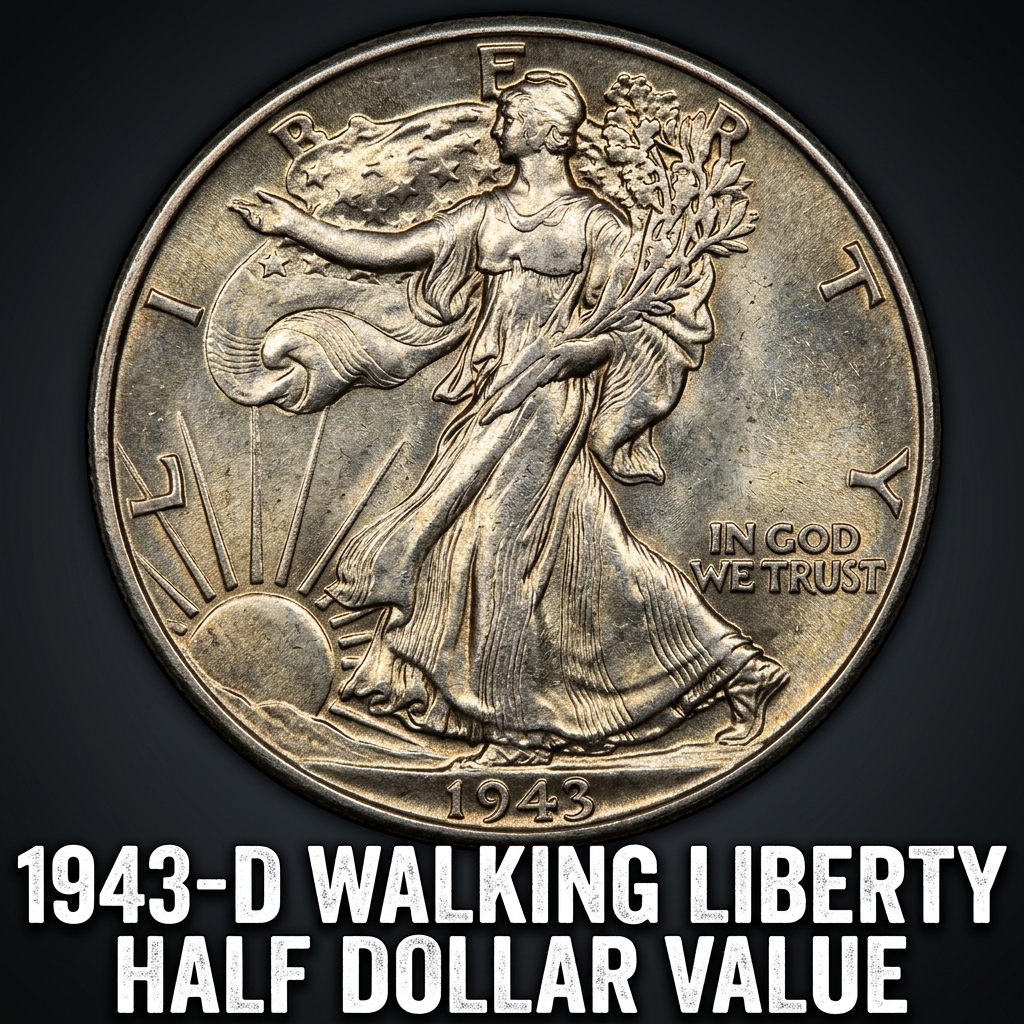
The 1943-D Walking Liberty Half Dollar is worth anywhere from $15 in heavily worn condition to well over $500 or more in high-grade mint state — and collectors absolutely love this coin for its iconic design and wartime history. If you found one in an old jar or inherited a collection, you may be sitting on a nice little treasure.
free coin identification app tools have made it easier than ever for everyday people to identify coins like this one and get a quick sense of their value before heading to a dealer.
—
What Makes the 1943-D Walking Liberty Half Dollar Special
The Walking Liberty Half Dollar is widely considered one of the most beautiful coins ever struck by the U.S. Mint. Designed by Adolph A. Weinman, the obverse features Lady Liberty draped in the American flag, striding confidently toward the sunrise. The reverse shows a bold eagle perched on a rock. These coins were minted from 1916 to 1947, and the 1943-D was produced at the Denver Mint — hence the small “D” mintmark you’ll find on the reverse, just below the branch.
During 1943, the United States was deep in World War II, and the Mint was under enormous production pressure. The Denver Mint struck over 11 million of these half dollars that year, making the 1943-D a relatively common issue compared to some other dates in the series. But “common” doesn’t mean worthless — quite the opposite. Because these coins are 90% silver, they have real intrinsic metal value regardless of their condition.
CoinHix is a great resource if you want to track the latest silver melt values and market prices for coins like this one.
—
1943-D Walking Liberty Half Dollar Value by Grade
The value of your 1943-D half dollar depends heavily on its condition, which coin collectors call “grade.” A coin that’s been jingling around in someone’s pocket for decades will look very different — and be worth much less — than one that spent 80 years in a cabinet drawer untouched.
Here’s a general value table to give you a quick idea of what your coin might be worth:
| Grade / Condition | Description | Estimated Value |
|---|---|---|
| Good (G-4) | Heavy wear, design visible but flat | $15 – $18 |
| Fine (F-12) | Moderate wear, major details clear | $18 – $22 |
| Extremely Fine (EF-40) | Light wear on high points | $25 – $35 |
| About Uncirculated (AU-55) | Slight wear, most luster remains | $40 – $65 |
| Mint State (MS-63) | Uncirculated, minor blemishes | $80 – $150 |
| Mint State (MS-65) | Gem uncirculated, sharp strike | $300 – $600+ |
For the most up-to-date pricing data from recent auction records, you can check the 1943-D Walking Liberty Half Dollar price history and MS grade values on CoinHix — it’s updated regularly and easy to use.
—
How to Check Your Coin’s Condition at Home
You don’t need to be a professional numismatist to get a basic idea of your coin’s grade. Start by holding it under a good light and tilting it slightly. Look at the high points of the design — on the obverse, that’s Liberty’s hand and the flag folds across her chest; on the reverse, it’s the eagle’s breast and wing feathers. If these areas look flat and worn smooth, you’re likely looking at a Good to Fine grade coin.
If the coin still has some shine (called “mint luster”) visible in the recesses of the design, it may grade AU or even Mint State. Avoid cleaning the coin — even a gentle wipe can scratch the surface and dramatically reduce its value. Collectors and dealers strongly prefer original, uncleaned coins.
CoinHix makes it easy to compare your coin to graded examples, so you can get a ballpark estimate before visiting a coin shop.
—
Silver Melt Value and Why It Matters
Even if your 1943-D Walking Liberty Half Dollar is well-worn and grades only Good or Fine, it’s still worth more than face value because it’s made of 90% silver. Each coin contains about 0.3617 troy ounces of pure silver. When silver is trading around $30 per ounce (as it has been recently), the melt value alone is roughly $10–$11.
That means even the most battered example still holds real-world value. And in better grades, collector demand pushes the price well above melt. For a complete breakdown of the 1943 half dollar’s value across all mint marks and conditions, that resource lays out everything clearly and in plain language.
—
FAQ
Q: How many 1943-D Walking Liberty Half Dollars were made?
A: The Denver Mint produced approximately 11,346,000 Walking Liberty Half Dollars in 1943. This relatively high mintage makes the coin more common than many other dates in the series, but it’s still a desirable and silver-rich collectible.
Q: Should I clean my 1943-D Walking Liberty Half Dollar before selling it?
A: No — please don’t. Cleaning a coin, even with something mild like soap or a soft cloth, can leave tiny scratches that destroy the original surface. Dealers and collectors will pay significantly less for a cleaned coin than for one in original, unaltered condition.
Q: Where is the mintmark on a 1943-D Walking Liberty Half Dollar?
A: On 1943 Walking Liberty Half Dollars, the “D” mintmark for Denver is located on the reverse (tail side) of the coin, just below the tip of the branch that the eagle is perched on. Earlier issues in the series (1916–1917) had the mintmark on the obverse, but from 1917 onward it moved to the reverse.