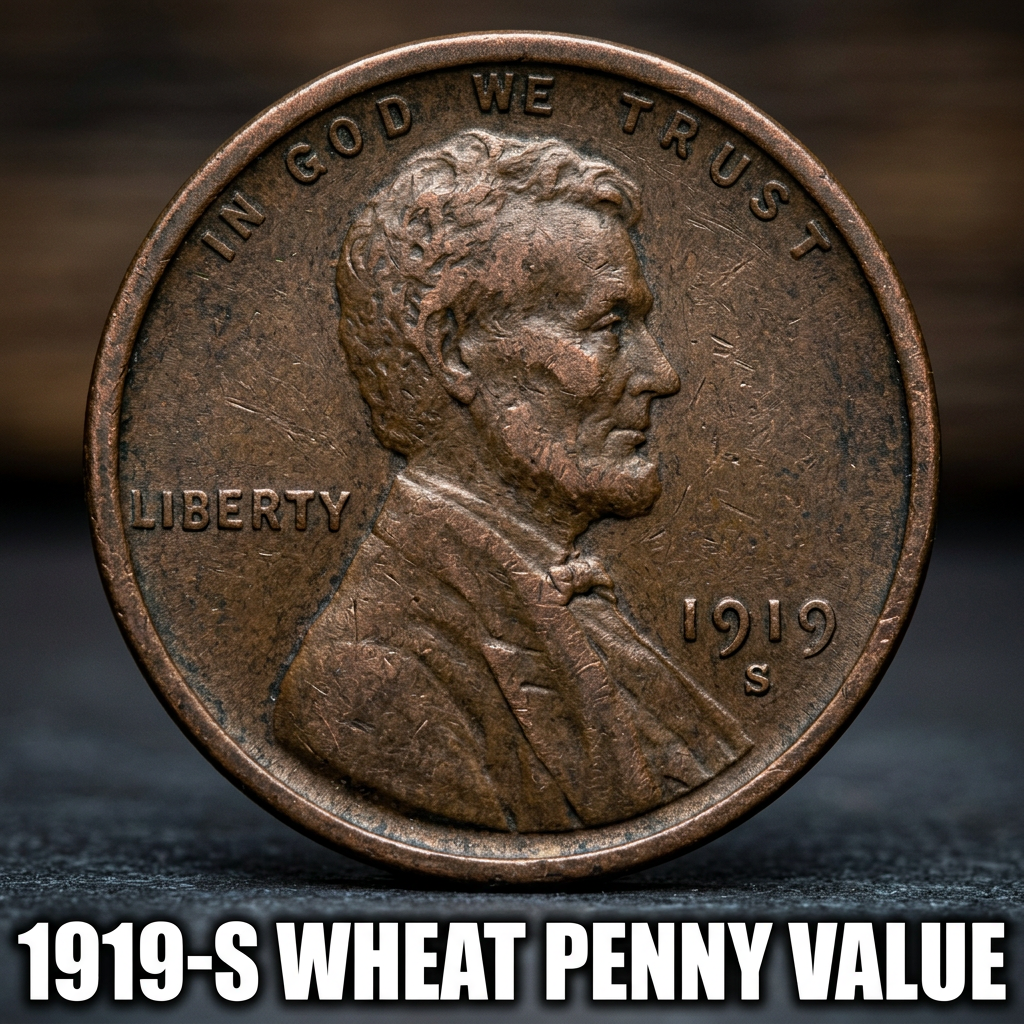
The 1919-S Wheat Penny is worth anywhere from around $0.50 in heavily worn condition to well over $100 or more in high mint state grades. If you found one of these old Lincoln cents in a jar, a drawer, or an old collection, you may be sitting on something genuinely valuable — and this guide will help you figure out exactly what you’ve got.
What Makes the 1919-S Wheat Penny Special
The “S” in 1919-S stands for San Francisco, which is where this coin was minted. During this era, the United States Mint operated three facilities — Philadelphia, Denver, and San Francisco — and each location produced coins with distinct mint marks. The San Francisco Mint struck just over 139 million of these pennies in 1919, which sounds like a lot, but many have been lost, heavily worn, or removed from circulation over the decades.
If you’re new to coin collecting, a free coin identification app can help you quickly identify your coin and its mint mark before you even start looking up values. Just snap a photo, and the app does the rest — no experience required.
The 1919-S cent is part of the famous Wheat Penny series, designed by Victor David Brenner and minted from 1909 to 1958. These coins feature Abraham Lincoln on the obverse and two wheat stalks on the reverse, making them instantly recognizable. Collectors have been chasing complete sets of these coins for generations, which keeps demand — and value — consistently strong.
1919-S Wheat Penny Value by Grade
Coin value is almost entirely determined by condition, also called “grade.” A coin that looks crisp and nearly untouched will always be worth far more than one that’s been rattling around in a pocket for 50 years. Here’s a general breakdown of 1919-S Wheat Penny price data across different grades:
| Grade | Description | Estimated Value |
|---|---|---|
| Good (G-4) | Heavily worn, design visible | $0.50 – $1.50 |
| Very Good (VG-8) | Moderate wear, details clear | $2 – $5 |
| Fine (F-12) | Light to moderate wear | $5 – $10 |
| Extremely Fine (EF-40) | Light wear on high points | $15 – $35 |
| About Uncirculated (AU-55) | Slight wear, mostly lustrous | $40 – $75 |
| Mint State (MS-63+) | No wear, strong luster | $100 – $300+ |
Keep in mind these are estimates based on recent market trends. Actual sale prices can vary depending on color designation (Red, Red-Brown, or Brown), eye appeal, and demand at any given auction.
How to Check Your Coin’s Condition at Home
You don’t need to be an expert to get a rough idea of your 1919-S Wheat Penny’s grade. Start by looking at Lincoln’s cheekbone and the wheat stalks on the reverse — these are the highest points and wear down first. If those areas look flat and smooth, the coin is likely in Good or Very Good condition. If you can still see fine hair lines and sharp details, you’re looking at a Fine or better grade.
Use a magnifying glass and look under good natural light. Avoid cleaning the coin — this is one of the biggest mistakes new collectors make. A cleaned coin loses significant value in the eyes of dealers and collectors, even if it looks shinier to you. For a deeper look at what your 1919 penny could be worth based on its condition, it’s always smart to cross-reference multiple sources before making any decisions.
The CoinHix app is a great tool for beginners who want a fast and reliable way to get coin values on the go. Just pull it up, search for your coin, and you’ll see graded price data updated regularly.
Where to Sell Your 1919-S Wheat Penny
Once you know what you have, you’ll want to think about where to sell. Your best options include:
– eBay – Great for reaching a wide audience. Search completed listings to see what similar coins have actually sold for.
– Local coin shops – Convenient but expect offers below retail, since dealers need room for profit.
– Coin shows – A great way to get multiple opinions and offers in one place.
– Online auction platforms – Heritage Auctions and Stack’s Bowers are trusted for higher-grade coins.
For everyday tracking of coin prices across different grades, CoinHix makes it simple to monitor market movements so you always know when to buy or sell. Many collectors use it as their go-to reference before making any transaction.
Frequently Asked Questions
Q: How do I know if my penny is the 1919-S and not a regular 1919?
A: Flip the coin over and look just below the date. If you see a small “S” mint mark, it was made in San Francisco. No letter means it came from Philadelphia, and a “D” means Denver.
Q: Is a worn 1919-S Wheat Penny still worth keeping?
A: Yes, even heavily worn examples are worth more than face value and are collectible. A coin in Good condition might only bring $1–$2, but it’s still a 100-year-old piece of American history worth holding onto.
Q: Should I get my 1919-S penny professionally graded?
A: If your coin appears to be in Extremely Fine or better condition, professional grading by PCGS or NGC can significantly increase buyer confidence — and your selling price. For lower-grade coins, the grading fee may not be worth it. Use CoinHix to compare raw vs. graded values before deciding.