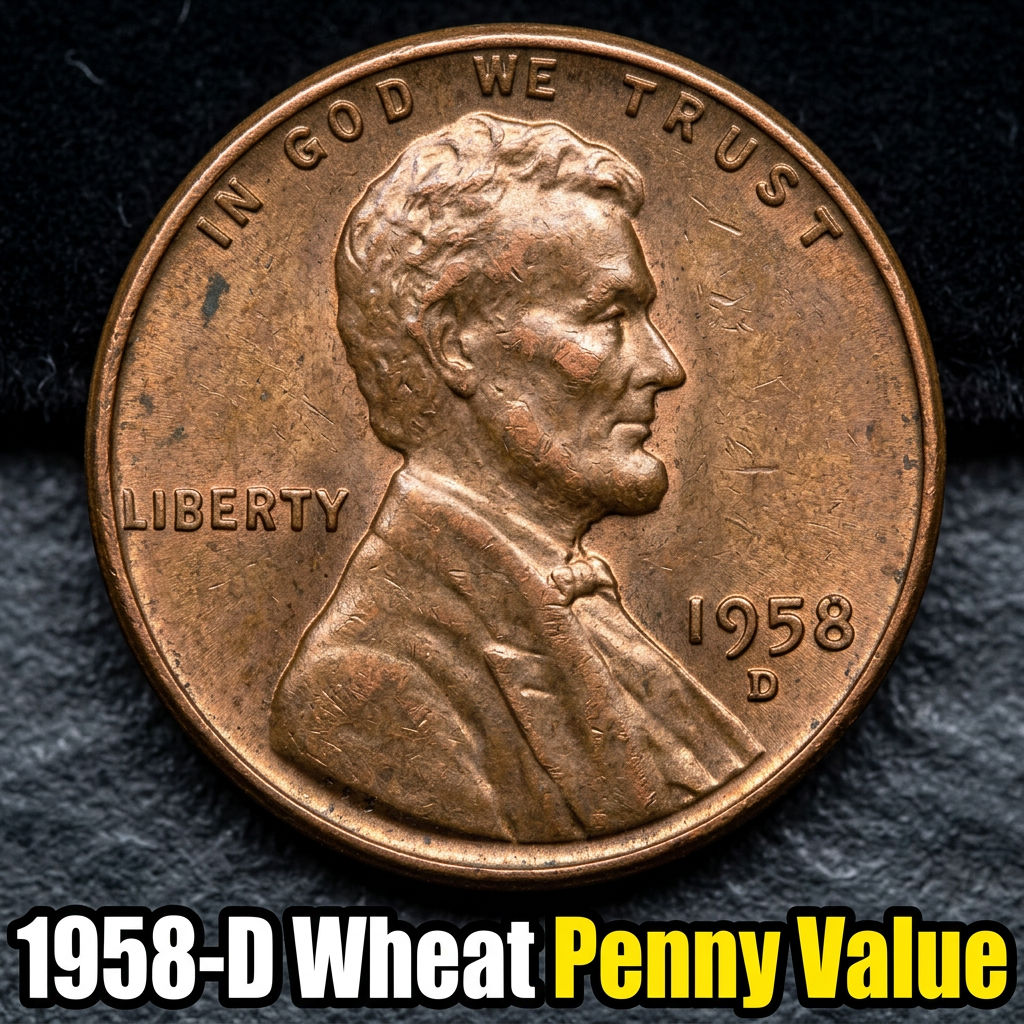
The 1958-D Wheat Penny is worth anywhere from $0.10 in heavily worn condition to over $25 or more in mint state — and high-grade examples have sold for hundreds at auction. If you just found one of these coins in an old jar or inherited collection, you’re in the right place to find out exactly what it’s worth.
What Makes the 1958-D Wheat Penny Special
The 1958-D Wheat Penny was minted at the Denver Mint — that’s what the “D” mintmark stands for — and it was one of the very last Lincoln Wheat Pennies ever made. The U.S. Mint switched to the Memorial reverse design in 1959, so the 1958-D holds a special place in history as part of the final year of production for this beloved series. Over 800 million of these coins were struck, which means they’re relatively common in circulated grades. However, finding one in truly uncirculated condition with sharp details and original red luster is a different story entirely. Collectors prize those high-end examples, and that’s where real value starts to climb. If you’re not sure what you have, you can use a free coin identification app to get a quick read on your coin’s grade and condition before spending money on a professional appraisal.
How Much Is a 1958-D Wheat Penny Worth by Grade
Coin values depend heavily on condition, and the 1958-D is no exception. A coin that’s been jingling around in someone’s pocket for decades will show heavy wear on Lincoln’s cheek, the wheat stalks, and the lettering — and that wear directly reduces value. Here’s a simple breakdown of what you can expect at different grade levels:
| Grade / Condition | Description | Estimated Value |
|---|---|---|
| Good (G-4) | Heavy wear, design visible | $0.10 – $0.25 |
| Fine (F-12) | Moderate wear, details clear | $0.25 – $0.50 |
| Extremely Fine (EF-40) | Light wear on high points | $1 – $3 |
| Uncirculated (MS-63) | No wear, minor marks | $5 – $12 |
| Gem Uncirculated (MS-65 RD) | Brilliant red luster, sharp strike | $20 – $50+ |
For a deeper look at 1958-D Wheat Penny prices across mint state grades, it’s worth checking current auction records, since the market for gem red examples can shift quickly.
Error Coins and Key Varieties Worth More Money
Not every 1958-D Wheat Penny is created equal. Some coins from this era came out of the Mint with striking errors or die varieties that make them significantly more valuable than standard examples. Doubled die errors, where the design appears slightly doubled due to a misaligned hub, are among the most sought-after. Off-center strikes — where the design is shifted away from the center — can also add serious value depending on how dramatic the shift is. Repunched mintmarks, where the “D” was stamped more than once at a slightly different angle, are another variety collectors look for. If your 1958-D looks slightly unusual under magnification, it could be worth having it examined by a professional grading service like PCGS or NGC. A certified error coin can sell for many times the value of a typical example, sometimes reaching into the hundreds of dollars depending on rarity and eye appeal.
Using CoinHix to Track Your 1958-D Wheat Penny Value
One of the easiest ways to stay on top of what your coins are worth is to use CoinHix, a tool built specifically for coin collectors and everyday people who find old coins and want real-time market data. Instead of guessing or relying on outdated price guides, CoinHix gives you access to current sold prices and auction results so you know exactly what buyers are actually paying right now. This is especially useful for the 1958-D Wheat Penny, where values can vary dramatically from one grade to the next. Whether you have a circulated example worth a few cents or a gem red coin worth $50 or more, CoinHix helps you figure out where your coin fits in the market — and whether it might be time to sell.
Full 1958 Penny Value Including Philadelphia and Proof Issues
It’s worth noting that the 1958 penny was produced at two facilities. The Philadelphia Mint struck coins with no mintmark, while Denver produced the 1958-D. The Philadelphia coins are slightly less common in circulated grades, though both are affordable finds for most collectors. There were also 1958 Proof pennies struck for collectors, and those can carry higher values depending on cameo contrast and condition. If you want a complete picture of what every 1958 Lincoln cent is worth, including the Philadelphia and Proof issues, it’s a good idea to look at all the varieties together before deciding what to do with your collection.
—
FAQ
Q: Is a 1958-D Wheat Penny rare?
A: Not really — over 800 million were minted, making them common in circulated grades. However, finding one with full red luster in gem uncirculated condition (MS-65 RD or better) is genuinely rare and can be worth $30 to $50 or more.
Q: What does the D mintmark mean on a 1958 Wheat Penny?
A: The “D” stands for the Denver Mint, one of two facilities that produced Lincoln Wheat Pennies in 1958. Philadelphia also made cents that year, but those have no mintmark. Denver coins are generally worth similar amounts across most grades.
Q: Should I clean my 1958-D Wheat Penny before selling it?
A: No — never clean a coin. Cleaning removes the original surface and actually reduces value significantly. Even a lightly polished coin can be downgraded by professional graders, which could cost you money. Leave it exactly as you found it.