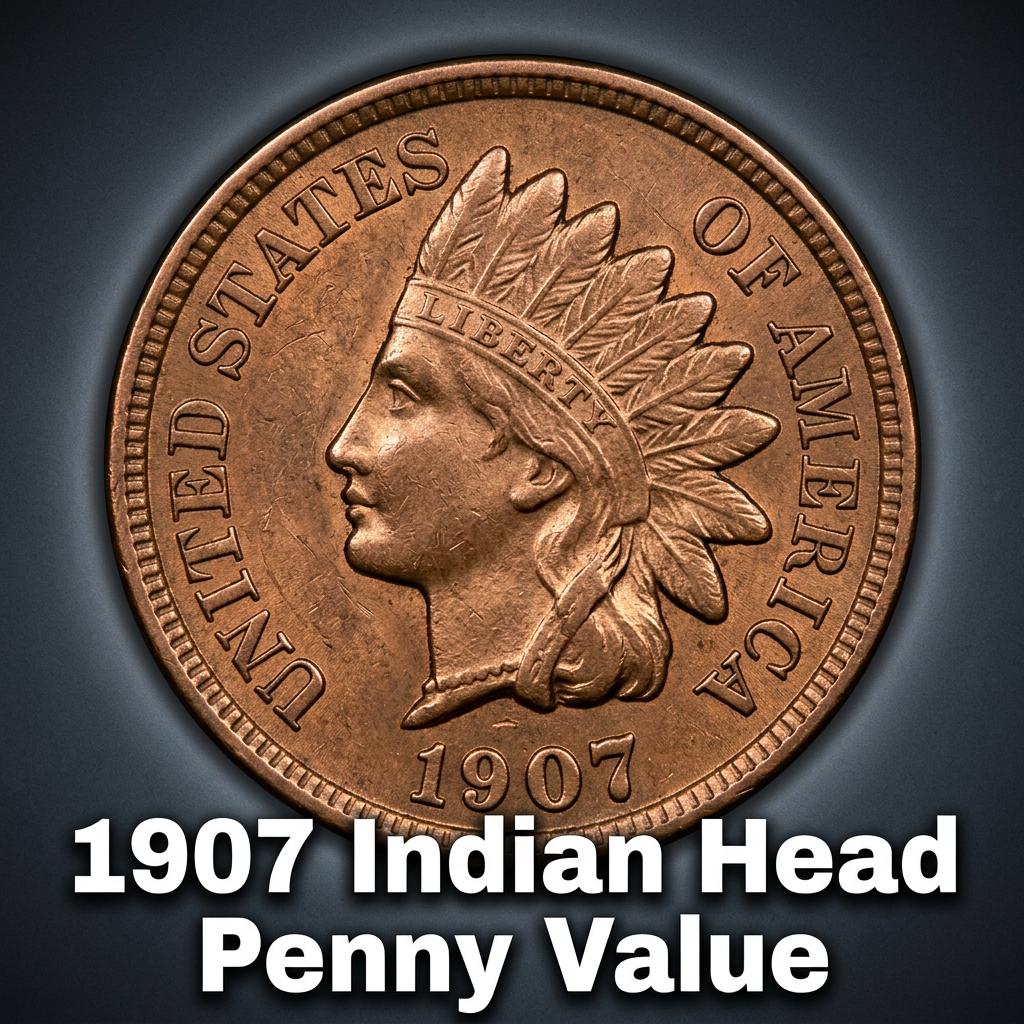
The 1907 Indian Head Penny is worth anywhere from $2 in heavily worn condition to over $100 or more in mint state. Most circulated examples fall in the $3–$15 range, making this a surprisingly valuable old cent that could easily be sitting in a drawer or jar of old coins right now.
What Makes the 1907 Indian Head Penny Special
The 1907 Indian Head Penny was one of the last coins of its kind. The Indian Head cent series ran from 1859 to 1909, and by 1907, the U.S. Mint was producing tens of millions of these coins each year. That year’s mintage came in at around 108 million pieces — a huge number, which is why so many have survived to this day. Still, finding one in nice condition is far from easy.
If you’ve recently discovered one of these coins in an old collection, a family heirloom box, or even a pile of loose change from an estate sale, you’re in the right place. A free coin identification app can help you quickly figure out exactly what you’re holding before you start researching value. These tools use your phone’s camera to scan and identify coins in seconds, which is perfect for everyday people who aren’t coin experts.
The coin features Lady Liberty wearing a Native American headdress on the front, with “UNITED STATES OF AMERICA” and the denomination on the reverse inside a wreath. It’s a classic American design that collectors have loved for over a century.
1907 Indian Head Penny Value by Grade
Coin value is all about condition. The better preserved your coin is, the more it’s worth — sometimes dramatically more. Here’s a quick look at what you can expect to pay or receive based on grade:
| Grade | Description | Estimated Value |
|---|---|---|
| Good (G-4) | Heavy wear, design visible but flat | $2 – $3 |
| Fine (F-12) | Moderate wear, some detail remains | $4 – $8 |
| Extremely Fine (EF-40) | Light wear on high points only | $15 – $25 |
| Uncirculated (MS-63) | No wear, original mint luster | $60 – $90 |
| Gem Uncirculated (MS-65+) | Exceptional luster and eye appeal | $150 – $300+ |
For the most up-to-date auction results and certified sale prices, you can check out the 1907 Indian Head Penny price data in mint red condition on CoinHix, which tracks real market values across different grades and surface designations.
How to Tell What Grade Your 1907 Penny Is
Grading coins takes practice, but there are a few things you can check at home. Start by looking at the feathers in Liberty’s headdress. On a well-worn coin, those feathers will be nearly flat and indistinct. On a higher-grade coin, you’ll see individual feather strands, and the ribbon on the headband will show “LIBERTY” clearly. On truly uncirculated coins, the original reddish-brown copper luster will still be visible.
Check for any cleaning or damage. A coin that’s been polished or cleaned with a chemical is worth significantly less than one that hasn’t been touched — even if the cleaned coin looks shinier. Collectors call this “environmental damage,” and professional graders at companies like PCGS or NGC will note it on a certified holder.
The CoinHix app makes this process easier for beginners. It provides grading guides, price comparisons, and a searchable coin database so you can make sense of what you’re looking at without needing years of collecting experience. It’s one of the best free tools available for identifying and valuing old U.S. coins.
Where to Sell Your 1907 Indian Head Penny
Once you know what your coin is worth, you have several good options for selling. Online platforms like eBay and Heritage Auctions attract serious buyers who will pay fair market prices for quality coins. For lower-grade examples worth just a few dollars, a local coin dealer is often the quickest and most straightforward option.
If you want a full breakdown of current values across all conditions before approaching a buyer, the detailed 1907 penny value information at CoinValueApp is a great resource to bookmark. It includes comparisons by grade and color designation, helping you walk into any negotiation with confidence.
You can also list your coin on collector forums like the Coin Community Forum or Reddit’s r/coins community, where knowledgeable hobbyists can offer second opinions on grade and value. Always photograph your coin in good natural light before selling — both sides, at full resolution.
Is It Worth Getting Your 1907 Indian Head Penny Certified?
Professional certification through PCGS or NGC is typically worth it if your coin grades EF-40 or higher. The cost of grading usually runs between $20 and $50 per coin depending on the service tier, so it only makes financial sense when your potential return is significantly higher than that. For a nice uncirculated 1907 Indian Head Penny worth $80 or more, professional grading adds both credibility and buyer confidence — and often results in a higher final sale price.
CoinHix is a great companion tool throughout this process. Whether you’re figuring out if your coin is worth grading or just trying to understand what the market looks like, it gives you the kind of transparent, real-time data that used to be available only to professional dealers.
—
Frequently Asked Questions
Q: How much is a 1907 Indian Head Penny worth in average circulated condition?
A: Most circulated 1907 Indian Head Pennies in Good to Fine condition are worth between $2 and $8. Examples with more detail showing — grading Fine to Extremely Fine — can bring $10 to $25 depending on eye appeal and the specific buyer.
Q: Does the color of my 1907 penny affect its value?
A: Yes, significantly. Uncirculated coins are graded by their surface color: Red (RD), Red-Brown (RB), and Brown (BN). A Red example retains most of its original copper color and is the most desirable, often worth two to three times more than a Brown example in the same numeric grade.
Q: Is there a rare variety of the 1907 Indian Head Penny I should look for?
A: The 1907 Indian Head Penny doesn’t have major dramatic varieties like some other dates in the series, but collectors do look for strong strikes, original red luster, and coins free of post-mint damage. There are no known mint mark varieties since all 1907 Indian Head Pennies were struck at the Philadelphia Mint, which didn’t use a mint mark at the time.