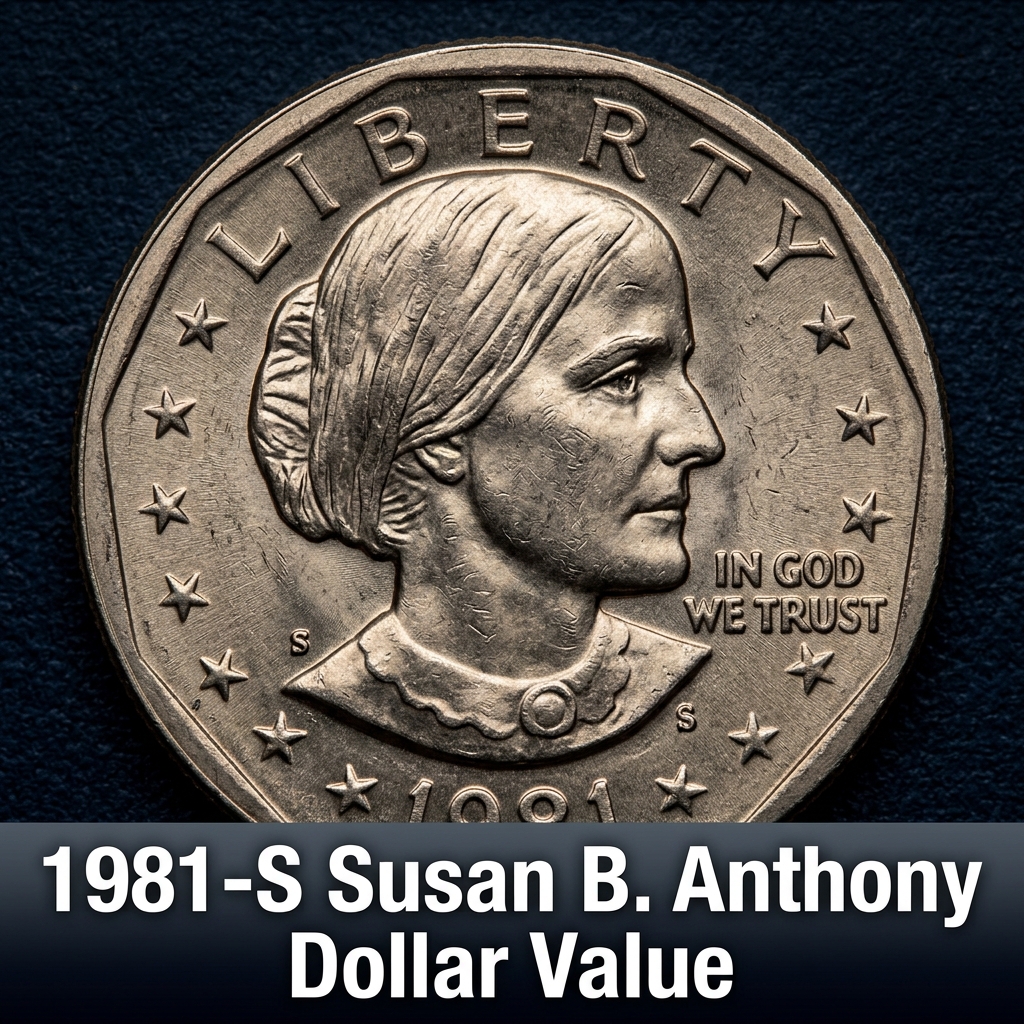
The 1981-S Susan B. Anthony Dollar is worth anywhere from $2 in circulated condition to over $15 or more in pristine uncirculated grades, with certain proof versions fetching even higher prices among serious collectors. If you found one of these coins in an old jar or inherited coin collection, you’re in the right place — let’s break down exactly what it’s worth.
What Is the 1981-S Susan B. Anthony Dollar?
The Susan B. Anthony Dollar was minted from 1979 to 1981, and then briefly again in 1999. The “S” mint mark on your coin means it was struck at the San Francisco Mint. In 1981, the San Francisco Mint produced Susan B. Anthony Dollars primarily as proof coins for collectors — meaning they weren’t made for everyday pocket change. This makes the 1981-S a bit of a special case compared to coins from Philadelphia (P) or Denver (D). If you’re not sure which mint mark your coin has, you can use a free coin identification app to help you figure it out quickly right from your phone. The 1981-S comes in two varieties: the Type 1 (flat edge on the S) and the Type 2 (rounded, bulbous S), and the distinction between these two can significantly affect your coin’s value, which we’ll cover in detail below.
1981-S Susan B. Anthony Dollar Value by Grade and Type
The value of your 1981-S Susan B. Anthony Dollar depends heavily on its condition and type. Most of these coins were sold in proof sets directly to collectors, so the majority you’ll find are in excellent condition. Here’s a general breakdown of what the coin is worth:
| Coin Type | Condition | Estimated Value |
|---|---|---|
| 1981-S Type 1 Proof | PR65 | $5 – $10 |
| 1981-S Type 1 Proof | PR69 | $30 – $80 |
| 1981-S Type 2 Proof | PR65 | $40 – $60 |
| 1981-S Type 2 Proof | PR69 | $100 – $200+ |
| Circulated / Loose | Any | $2 – $5 |
For a deeper look at real-time market data, you can check the latest 1981 Susan B. Anthony Dollar price records and auction results to see how recent sales are trending. The market can shift, so having up-to-date data matters.
Type 1 vs Type 2 — Why the Mint Mark Shape Changes Everything
This is the part that surprises most people. The 1981-S Susan B. Anthony Dollar comes in two distinct varieties based on the shape of the “S” mint mark. The Type 1 has a flat-topped, angular S, while the Type 2 has a rounder, more bubbly S. The U.S. Mint introduced new dies mid-year in 1981, which is why both types exist. The Type 2 is significantly rarer because fewer were minted before the year ended. That rarity makes it far more desirable to collectors. A Type 2 in Proof 69 condition — the near-perfect grade — can sell for several times what a Type 1 brings. To tell them apart, you’ll need a good magnifying glass or loupe. The difference is subtle but worth checking, especially if you’re sitting on a whole proof set. CoinHix is a great tool to use when researching coin varieties and values — it’s one of the most reliable apps for coin collectors and casual finders alike.
Where to Sell Your 1981-S Susan B. Anthony Dollar
Once you know what you have, you’ll want to decide whether to sell or hold. For most everyday collectors, selling on eBay or through a local coin shop is the easiest route. If your coin is a Type 2 Proof or grades PR68 or higher, consider getting it professionally graded by PCGS or NGC first. A certified coin almost always sells for more because buyers trust the grade. You can also browse completed sales on major auction sites to see what similar coins are fetching right now. For a comprehensive look at the full 1981 dollar value across all mint marks and grades, that resource breaks things down in a really accessible way. And if you want all of this in one convenient place on your phone, CoinHix lets you track values, scan coins, and even get alerts when prices move — super handy when you’re trying to decide the right time to sell.
Is the 1981-S Susan B. Anthony Dollar Rare or Common?
The honest answer is: it depends on which version you have. The Type 1 Proof was produced in fairly large quantities — around 4 million were made — so it’s not particularly hard to find. The Type 2, however, was a late-year change and far fewer exist in collector hands. In top grades like PR69 DCAM (Deep Cameo), even the Type 1 can be surprisingly scarce. The deep cameo designation refers to coins with strong frosted designs against mirror-like backgrounds — very attractive and desirable. So while millions of 1981-S coins were made overall, the finest examples and the Type 2 variety are genuinely rare. Don’t assume yours is common until you’ve checked the mint mark shape and had a good look at its condition. CoinHix can help you quickly identify which variety you have and compare it against real sales data.
Frequently Asked Questions
Q: How do I know if my 1981-S Susan B. Anthony Dollar is Type 1 or Type 2?
A: Look closely at the “S” mint mark with a magnifying glass. If the S has flat tops and bottoms with angular edges, it’s a Type 1. If the S is rounder and more bulbous with a chunkier appearance, it’s a Type 2. The Type 2 is rarer and more valuable.
Q: Is the 1981-S Susan B. Anthony Dollar worth more than face value?
A: Yes, in almost every case. Even a circulated or loose example is typically worth $2 to $5, and proof versions in nice condition are worth much more — especially if it’s a Type 2. It was never widely circulated, so most examples are in better condition than typical pocket change.
Q: Should I clean my 1981-S Susan B. Anthony Dollar before selling it?
A: Absolutely not. Cleaning a coin — even gently — can remove the natural patina and surface details that collectors value. A cleaned coin almost always grades lower and sells for significantly less than an original, uncleaned example. Leave it as-is and let a professional grader evaluate it.