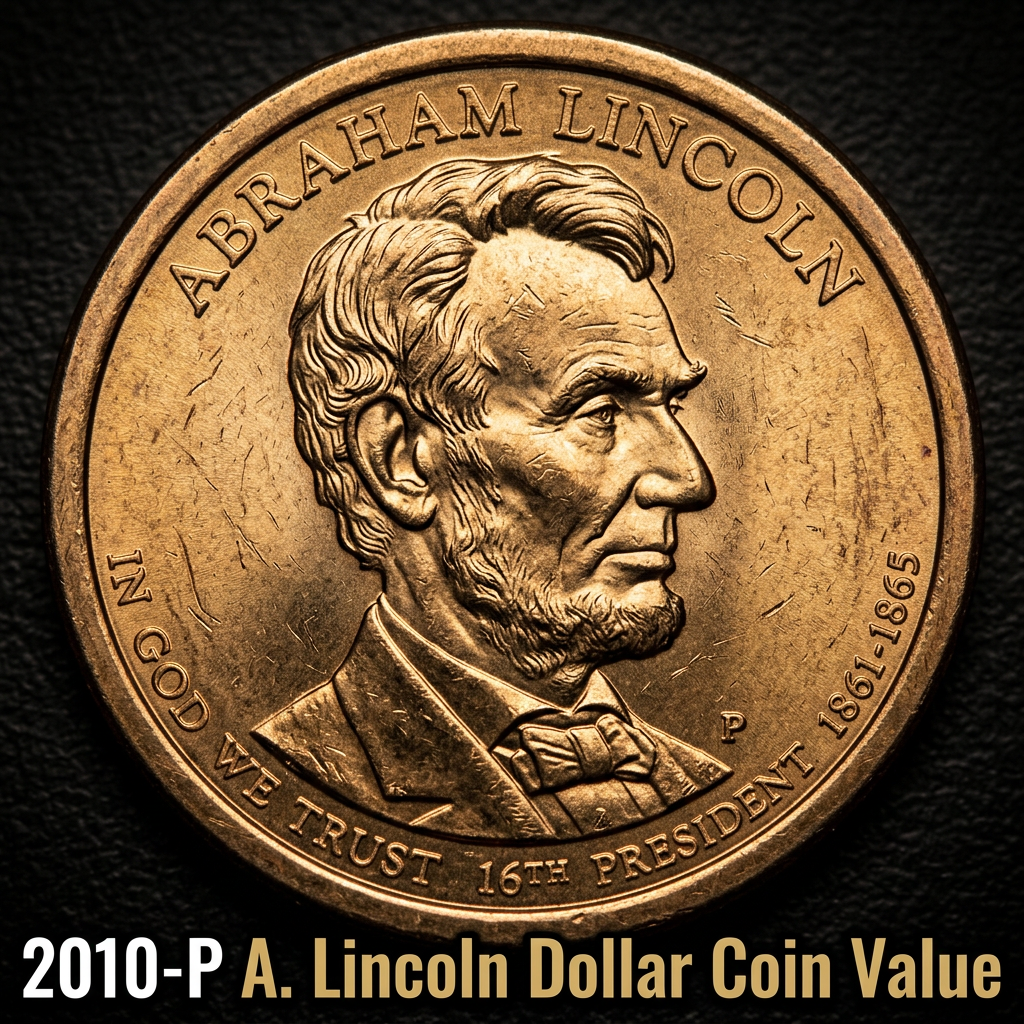
The 2010-P Abraham Lincoln Presidential Dollar is worth between $1.25 and $5 in typical circulated condition, but uncirculated specimens can fetch $10 to $30 or more depending on grade and eye appeal. If you stumbled across one of these golden-colored coins in a drawer or old collection, you’re in the right place to find out exactly what it’s worth.
What Is the 2010-P Abraham Lincoln Dollar?
The 2010-P Abraham Lincoln Dollar is part of the United States Presidential Dollar series, a program launched in 2007 to honor former U.S. presidents on dollar coins. Abraham Lincoln was featured in the fifth release of 2010, struck at the Philadelphia Mint — hence the “P” mintmark. These coins are large, golden-toned dollars made from a manganese-brass clad composition, giving them that distinctive color that often surprises people who aren’t familiar with modern dollar coins.
If you’re not sure exactly which coin you’re holding, a free coin identification app can help you quickly identify it just by snapping a photo. Once you confirm it’s the Lincoln dollar, you can start looking into its value more seriously. The coins were released into circulation, but many Americans never really used them as everyday money — which means a surprising number have survived in excellent shape. That’s good news if you’re hoping yours might be worth something above face value.
How Much Is the 2010-P Lincoln Dollar Worth Today?
For most people who find a 2010-P Lincoln Dollar, the honest answer is: not a fortune, but potentially a few dollars above face value. Circulated examples in average condition are usually worth $1.25 to $2.50. Coins that show little to no wear — often called “uncirculated” — can be worth $5 to $15 in typical mint state grades like MS63 or MS64.
The real excitement starts with high-grade specimens. Coins graded MS65 or above by professional grading services like PCGS or NGC can be worth $20 to $40 or more. For the most up-to-date 2010 Lincoln dollar price data across multiple grades, coin price databases are your best resource. Keep in mind that eye appeal matters — coins with strong luster, sharp details, and no distracting marks tend to grade and sell better than dull or spotted examples.
| Condition / Grade | Estimated Value |
|---|---|
| Circulated (Average) | $1.25 – $2.50 |
| Uncirculated (MS60–MS62) | $3 – $7 |
| Choice Uncirculated (MS63–MS64) | $8 – $15 |
| Gem Uncirculated (MS65) | $18 – $30 |
| Superb Gem (MS66+) | $35 – $60+ |
| Proof Version (San Francisco) | $5 – $15 |
How Mintage Numbers Affect the Value
The 2010-P Abraham Lincoln Dollar had a mintage of approximately 74.4 million coins — a fairly large number compared to some earlier Presidential Dollars. High mintage generally means lower collector demand and lower values across the board. That said, numbers don’t tell the whole story. Even common coins can be valuable when found in exceptional condition, because most of those millions of coins were either spent, damaged, or improperly stored.
The Denver Mint (2010-D) also produced Lincoln dollars the same year, with a similar mintage. Both versions are widely collected as part of the Presidential Dollar series. Collectors who are assembling complete sets often look for both mintmarks, which creates consistent demand even for high-mintage issues. If you want to see how your coin compares to current market prices for the full Presidential Dollar series, CoinHix is a great tool to check — it tracks live coin prices across grades and helps you understand real-world values quickly.
Edge Lettering and Error Coins to Watch For
One unique feature of the 2010-P Lincoln Dollar — and all Presidential Dollars — is the inscriptions on the edge of the coin. “IN GOD WE TRUST,” the date, and the mintmark are all incused (pressed into) the edge rather than appearing on the face. This was a design choice that freed up more room for the portrait and eagle on the reverse.
This edge lettering also created an interesting category of error coins. Some Presidential Dollars were released without the edge lettering at all — these are called “Godless Dollars” because they’re missing “IN GOD WE TRUST.” If you look at your coin’s edge and find it completely blank or missing inscriptions, you may have a significant error coin worth hundreds of dollars. Similarly, coins with doubled or misaligned edge lettering are worth examining closely. Using CoinHix to look up known error varieties can help you determine whether your coin falls into one of these valuable categories.
Where to Sell Your 2010-P Lincoln Dollar
If you’ve decided you want to sell your 2010-P Abraham Lincoln Dollar, you have several good options. Online platforms like eBay are popular for selling common-date coins, especially if yours is in mint state condition. Coin dealers — either local shops or online dealers — are another route, though they’ll typically pay wholesale prices below retail value.
For coins you believe might be graded MS65 or higher, it’s worth considering professional grading through PCGS or NGC. The cost of grading (usually $20–$40 per coin) only makes sense if your coin is likely to grade high enough to justify the expense. You can also explore current market values for related golden dollar coins to get a broader sense of how the Presidential and Native American dollar market is performing right now. Coin shows are also great places to get free appraisals and connect with buyers who specialize in modern coins.
Frequently Asked Questions
Q: Is my 2010-P Lincoln Dollar made of gold?
A: No, the 2010-P Abraham Lincoln Dollar is not made of real gold. It’s a manganese-brass clad coin with a golden appearance. The core is made of pure copper, and the outer layers give it that warm yellow color that resembles gold.
Q: How do I know if my coin is uncirculated?
A: An uncirculated coin shows no signs of wear on the high points of the design — Lincoln’s cheek, hair, and the raised details on the reverse. It should also have original mint luster. If the coin looks dull, scratched, or worn down in any areas, it’s considered circulated. For a quick check, the CoinHix app can guide you through grading basics using your coin photos.
Q: Are there any rare versions of the 2010-P Lincoln Dollar I should look for?
A: Yes! Look for “Godless Dollar” errors where the edge lettering is missing entirely, doubled-edge lettering errors, and coins with edge lettering applied upside-down. These error coins can be worth far more than the standard version and are actively sought by collectors. Always examine the edge of your coin carefully before assuming it’s just a common example.