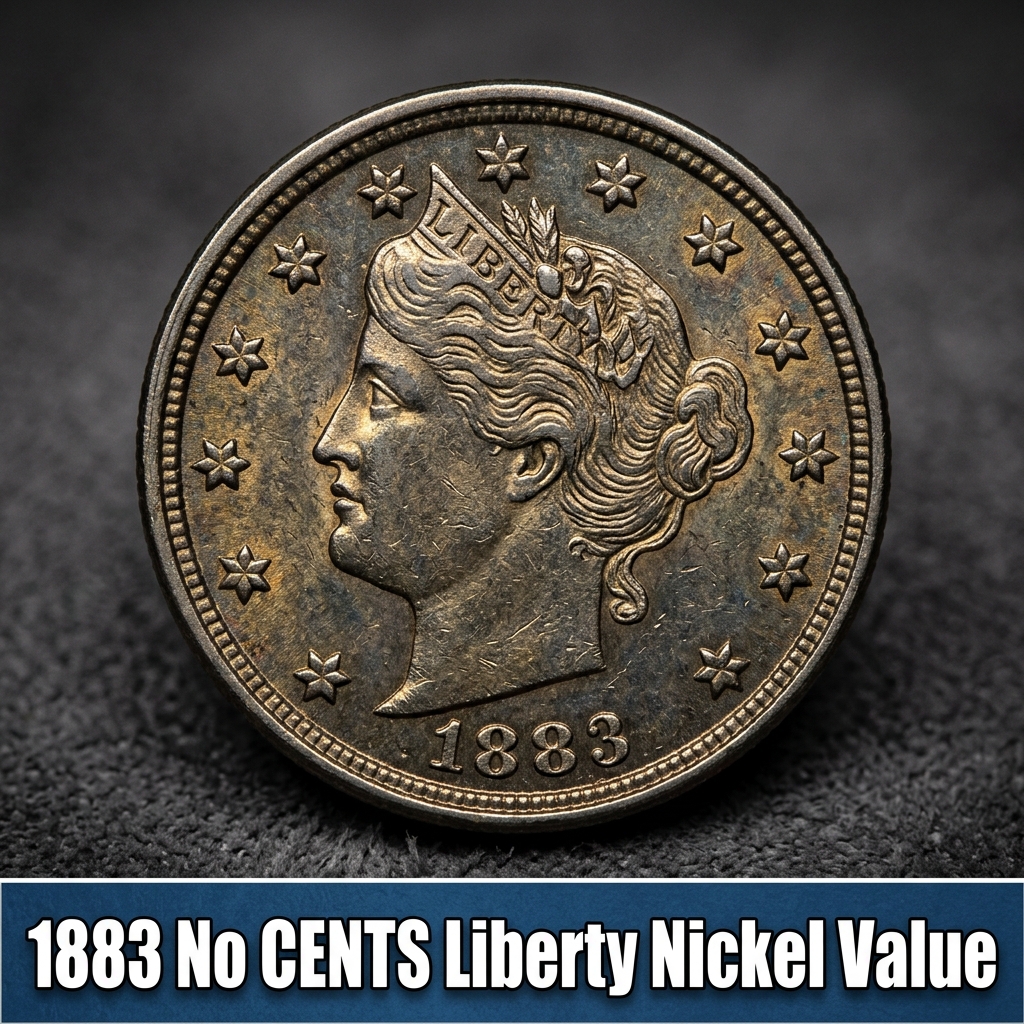
The 1883 No CENTS Liberty Nickel is worth anywhere from $10 in heavily worn condition to over $500 or more in uncirculated grades — and pristine examples have sold for thousands at auction. If you just found one of these coins, you’re holding a genuine piece of American numismatic history, and it might be more valuable than you think.
What Makes the 1883 No CENTS Liberty Nickel So Special
The 1883 Liberty Nickel — also called the “V Nickel” — was the first year of issue for this design, created by Charles Barber. The coin features Lady Liberty on the obverse and a large Roman numeral “V” on the reverse. Here’s the catch: the first version struck in 1883 did not include the word “CENTS” below the V. This design flaw led to a famous scam where clever con artists gold-plated these coins and passed them off as $5 gold pieces.
Because of that story, the 1883 No CENTS Liberty Nickel became one of the most collected coins in American history. Millions were saved by the public the moment they heard about this novelty coin, which means they’re actually more common than many people expect — but the value is still solid, especially in better condition. If you want to identify your coin quickly, you can use a free coin identification app right from your phone to confirm what you have before heading to a dealer.
How Much Is the 1883 No CENTS Liberty Nickel Worth by Grade
Condition is everything in coin collecting. A coin that looks shiny and detailed is worth significantly more than one that’s worn flat. Here’s a general value breakdown for the 1883 No CENTS Liberty Nickel:
| Grade | Description | Estimated Value |
|---|---|---|
| Good (G-4) | Heavy wear, design visible | $10 – $15 |
| Fine (F-12) | Moderate wear, details clear | $20 – $35 |
| Extremely Fine (EF-40) | Light wear on high points | $60 – $100 |
| About Uncirculated (AU-55) | Slight friction, nearly full luster | $125 – $175 |
| Mint State (MS-63) | Uncirculated, some marks | $300 – $500+ |
| Gem Uncirculated (MS-65+) | Exceptional quality, full luster | $1,000 – $4,000+ |
You can also check up-to-date 1883 Liberty Nickel price data by grade on this detailed pricing chart to see where recent sales have landed. Prices shift with the market, so it’s always smart to check current figures before buying or selling.
Proof Versions and the Gold-Plated “Racketeer” Variety
Two special varieties of the 1883 No CENTS nickel are worth knowing about. First, there are Proof coins — specially struck for collectors with mirror-like surfaces. Proof examples are rare and valuable, often selling for $300 to $1,500 or more depending on quality. Only around 5,000 proofs were made.
Second, you may come across gold-plated examples. These are the famous “Racketeer Nickels” — coins that were gold-plated back in 1883 to deceive merchants. Today, an original gold-plated Racketeer Nickel can actually carry a small premium if it’s authenticated as a period piece rather than a modern novelty plating. However, most gold-plated examples you find today are just novelty coins with little added value. CoinHix can help you quickly compare similar sales to determine whether your coin fits the premium category.
Where and How to Sell Your 1883 No CENTS Liberty Nickel
Once you know what you have, the next step is deciding where to sell. Your options include local coin dealers, online auction platforms like eBay, or coin shows. For coins in Fine or better condition, having the coin professionally graded by PCGS or NGC can significantly increase buyer confidence and sale price.
For everyday collectors and sellers, CoinHix is a great tool to scan recent auction results and understand what the real market looks like right now. It takes the guesswork out of pricing. If you’re also curious about other old nickels in your collection, check out this helpful guide on understanding the value of Indian Head nickels with no visible date — you might have more than one hidden gem.
Tips for Evaluating Your Coin Before You Sell
Before you rush to sell, take a few minutes to do some homework. Look at the coin under good lighting and check for any cleaning — cleaned coins lose significant value. Natural toning is fine, but harsh polishing or wiping drops a coin into the “details grade” category, which means lower prices. Never clean your coin.
Snap a few clear photos in natural light, then fire up CoinHix to compare your coin against graded examples. The app’s visual database makes it surprisingly easy to match your coin to known grades. Also double-check that your coin says “1883” on the obverse and has NO word “CENTS” on the reverse — that’s what makes this specific variety so collectible.
Frequently Asked Questions
Q: How do I know if my 1883 nickel is the No CENTS variety?
A: Flip the coin over and look at the reverse. If you see the large Roman numeral “V” without the word “CENTS” written beneath it, you have the No CENTS variety. The 1883 With CENTS version was released later in the same year and says “CENTS” clearly below the V.
Q: Is a gold-plated 1883 Liberty Nickel worth more money?
A: It depends. A coin that was authentically gold-plated in the 1883 era as part of the original “Racketeer Nickel” scheme can carry some collector interest. However, most gold-plated examples you’ll find today are modern novelty pieces and don’t command a significant premium. Have it authenticated if you think it’s original.
Q: Should I get my 1883 No CENTS Liberty Nickel graded by PCGS or NGC?
A: If your coin appears to be in Extremely Fine or better condition, professional grading is usually worth the cost. A certified MS-63 or MS-65 example can sell for significantly more than a raw ungraded coin. For lower-grade or heavily worn examples, the grading fee may outweigh the benefit — in that case, selling raw is typically fine.