The 1937 Washington Quarter (no mint mark) is worth anywhere from $5 to $10 in heavily worn condition, up to $25–$60 in fine to extremely fine grades, and can fetch $100 or more in mint state — making it a surprisingly rewarding find for anyone digging through old change jars or estate collections.
If you just stumbled across an old silver quarter and want to know whether it’s worth keeping, you’re in the right place. This guide breaks down everything you need to know about the 1937 no mint mark Washington Quarter — what it’s made of, how to grade it, and what collectors are actually paying today.
What Is the 1937 No Mint Mark Washington Quarter?
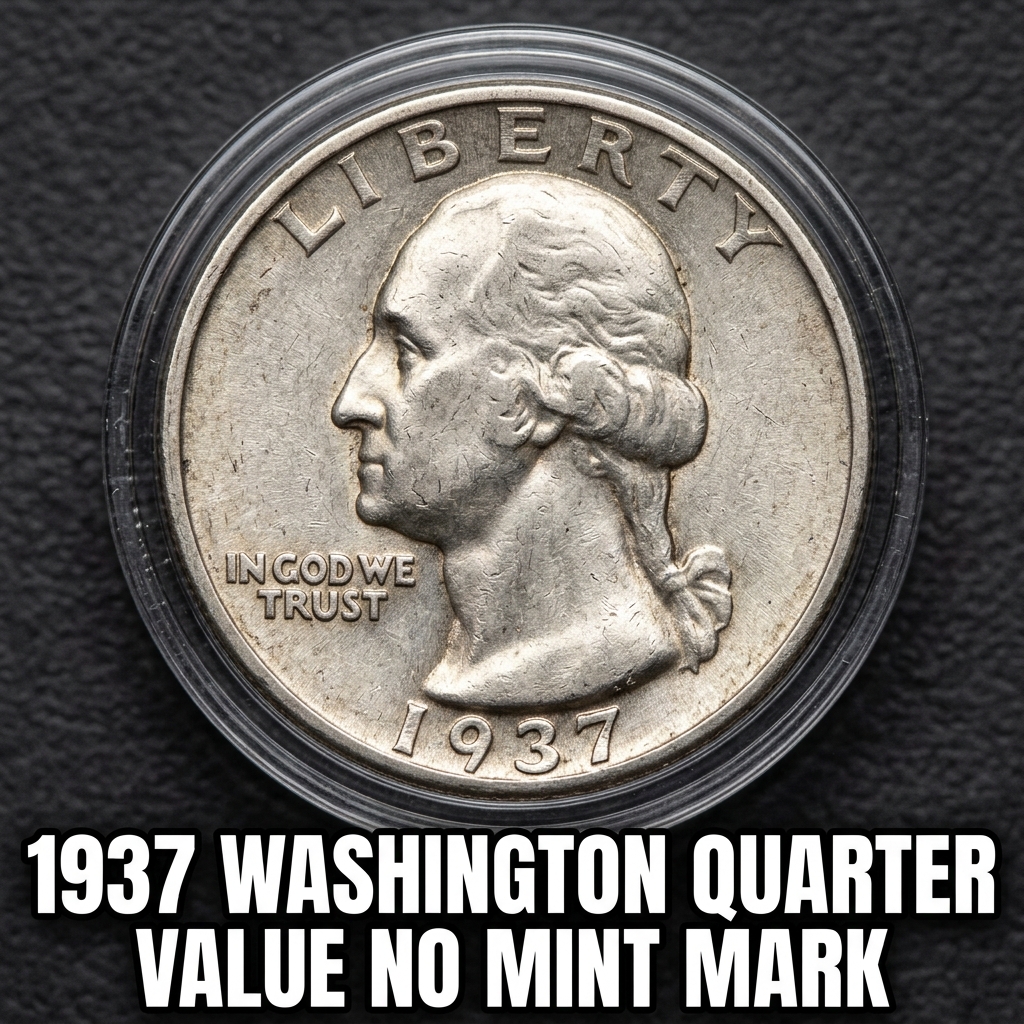
The 1937 Washington Quarter with no mint mark was struck at the Philadelphia Mint, which was standard practice at the time — Philadelphia coins didn’t carry a mint mark until much later. Over 19 million of these quarters were produced in 1937, making them relatively common in lower grades but still desirable in high condition.
The coin features the familiar left-facing portrait of George Washington designed by John Flanagan, along with an eagle on the reverse. It’s composed of 90% silver and 10% copper, which means even a worn example has some intrinsic metal value based on silver spot prices.
If you’re not sure what you’re holding, a free coin identification app can help you confirm the date, mint mark (or lack thereof), and coin type in seconds — no coin expertise required.
How to Grade Your 1937 Washington Quarter
Grading is the single biggest factor in determining your coin’s value. Here’s a simple breakdown of what to look for:
– Good (G-4): Heavy wear. Washington’s hair is mostly flat, and the design details are faint. Worth around $5–$7.
– Fine (F-12): Moderate wear. Some hair detail visible, lettering sharp. Worth $8–$12.
– Extremely Fine (EF-40): Light wear on high points only. Clear detail on hair and eagle. Worth $18–$30.
– About Uncirculated (AU-50/55): Slight friction. Mostly original luster. Worth $35–$60.
– Mint State (MS-60 to MS-65+): No wear at all. Full luster. Worth $75–$300+, depending on strike quality and eye appeal.
The difference between a Good and a Mint State coin can be hundreds of dollars, so take a close look before deciding what to do with yours.
1937 Washington Quarter Value Chart
| Grade | Description | Estimated Value |
|---|---|---|
| Good (G-4) | Heavy wear, flat design | $5 – $7 |
| Fine (F-12) | Moderate wear, visible detail | $8 – $12 |
| Extremely Fine (EF-40) | Light wear, sharp lettering | $18 – $30 |
| About Uncirculated (AU-55) | Minimal wear, near full luster | $35 – $60 |
| Mint State (MS-63) | No wear, strong luster | $75 – $150 |
| Mint State (MS-65+) | Gem quality, exceptional strike | $200 – $300+ |
For the most up-to-date auction results and dealer prices, you can check live 1937 Washington Quarter price data across MS grades — the numbers move with market demand, so it’s worth checking before you sell.
Silver Value and Why It Matters
Even if your 1937 quarter is worn down to Good grade, it’s still made of 90% silver. Each coin contains about 0.1808 troy ounces of pure silver. With silver trading in the $28–$30 per ounce range (as of 2024–2025), that gives your coin a base melt value of roughly $5.00–$5.50.
That means even the most beat-up 1937 quarter is worth more than face value — just for the silver alone. This is why you should never spend these coins as regular change! If you want a detailed breakdown of the silver melt value plus collector premium for your specific coin, CoinHix makes it easy to look up current values by grade and year.
Should You Get It Graded or Sell As-Is?
If your coin looks uncirculated — full luster, no visible wear — it may be worth sending to a professional grading service like PCGS or NGC. A certified MS-65 example can sell for significantly more than a raw coin of similar quality, because buyers trust the grade.
For circulated coins in EF or lower, professional grading usually isn’t cost-effective. You’re better off selling to a local dealer, listing on eBay, or using a coin app. CoinHix is a great tool for quickly comparing what your coin is selling for right now in the current marketplace.
If you want a full overview of the 1937 quarter value across all grades and conditions, this detailed 1937 Washington Quarter value guide covers everything from circulated to gem mint state examples with real price benchmarks.
FAQ About the 1937 Washington Quarter Value
Q: How do I know if my 1937 quarter has no mint mark?
A: Flip the coin over to the reverse side and look just above the word “QUARTER” at the bottom. If there’s no small letter there (no D or S), it was made in Philadelphia and has no mint mark. That’s actually normal and doesn’t reduce the value.
Q: Is the 1937 no mint mark quarter rare?
A: Not particularly — over 19.7 million were minted. However, finding one in Mint State is much harder. High-grade examples (MS-65 and above) are genuinely scarce and command strong collector premiums. CoinHix can show you exactly how rare certain grades are based on population reports.
Q: Where’s the best place to sell my 1937 Washington Quarter?
A: For circulated coins, local coin shops, coin shows, and eBay are all solid options. For high-grade or uncirculated examples, consider having it certified first — then sell through a major auction house or a reputable online dealer to get the best price.