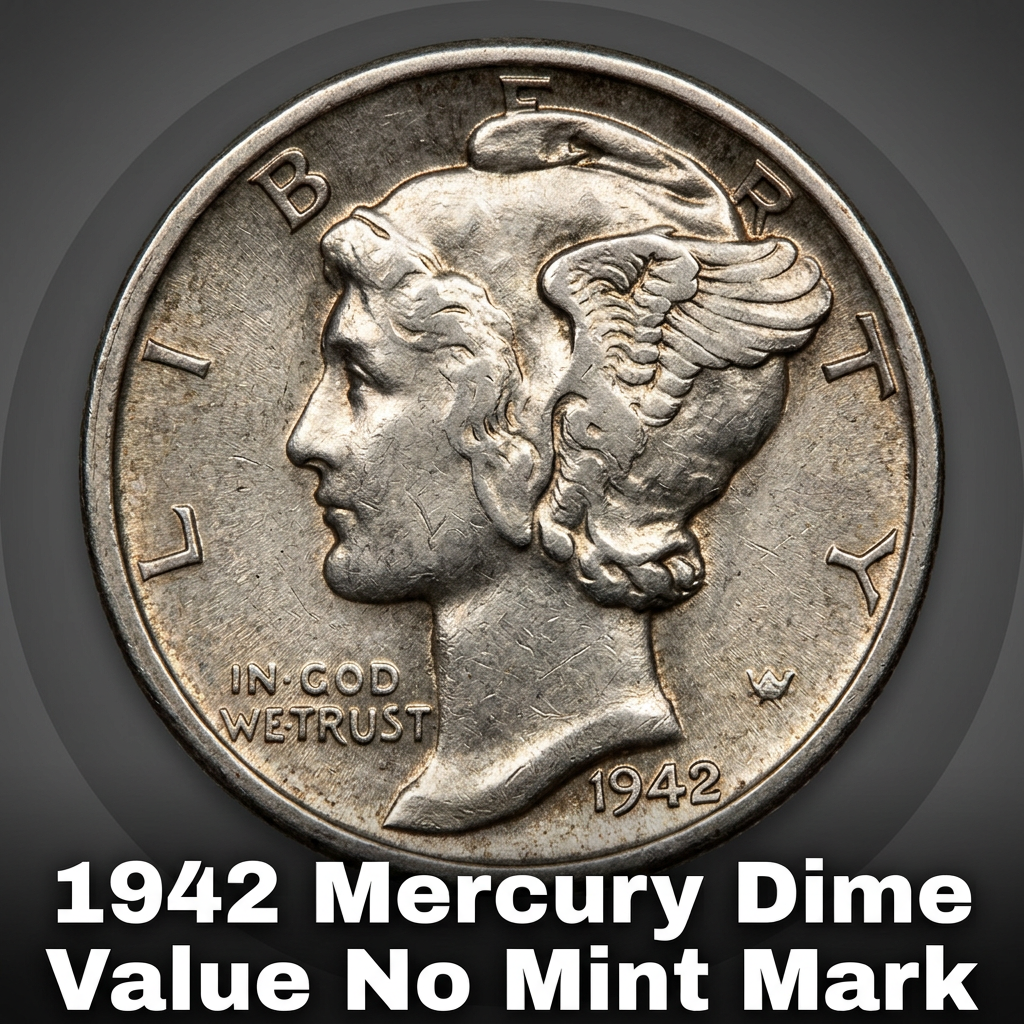
The 1942 Mercury Dime with no mint mark is worth anywhere from $3 in heavily worn condition to over $50 in uncirculated grades — and certain high-grade examples have sold for hundreds of dollars at auction. If you found one of these silver coins in an old jar, a wallet, or a family collection, you’re holding something genuinely worth knowing about.
Before we get into the numbers, it helps to know what you’re looking at. The Mercury Dime — officially called the Winged Liberty Head Dime — was minted from 1916 to 1945. The “no mint mark” version of the 1942 dime was struck at the Philadelphia Mint, which traditionally did not stamp a mint mark on its coins. You can use a free coin identification app to confirm what you have if you’re not sure. Apps like CoinHix make it easy to scan and identify old coins right from your phone, which is a great starting point for any beginner collector.
What Makes the 1942 No Mint Mark Dime Special
The Philadelphia Mint produced over 205 million Mercury Dimes in 1942, making it one of the most common dates in the series. But “common” doesn’t mean worthless — especially when condition matters this much. These coins are 90% silver, which alone gives them a base melt value tied to the current silver spot price. As of recent silver prices, each coin contains roughly 0.0723 troy ounces of silver, putting the melt value somewhere around $1.50 to $2.00 depending on the market. Even in poor condition, most 1942 dimes are worth more than face value just for the silver content.
What makes collectors pay more is the detail. Mercury Dimes are known for their beautiful design by Adolph Weinman. On the obverse, Lady Liberty wears a winged cap — often mistaken for the Roman god Mercury, hence the nickname. The reverse features a fasces (a bundle of rods with an ax) wrapped in olive branches, symbolizing strength and peace. Coins that still show sharp band separation on the reverse fasces — called “Full Bands” — command significant premiums.
1942 Mercury Dime Value Chart by Grade
Coin grading is the biggest factor that determines what your dime is worth. Here’s a breakdown of typical values:
| Grade | Description | Estimated Value |
|---|---|---|
| Good (G-4) | Heavy wear, major details visible | $3 – $4 |
| Fine (F-12) | Moderate wear, lettering clear | $4 – $6 |
| Extremely Fine (EF-40) | Light wear on high points | $7 – $12 |
| About Uncirculated (AU-58) | Slight wear, strong luster | $15 – $25 |
| MS-63 (Uncirculated) | No wear, some minor marks | $30 – $50 |
| MS-65 Full Bands (FB) | Gem quality, sharp band detail | $100 – $300+ |
For a deeper look at current auction results and price trends, you can browse live 1942 Mercury Dime price data in Mint State grades directly on the Coinhix platform. It’s updated regularly and shows real sales from major coin dealers and auction houses.
How to Grade Your 1942 Mercury Dime at Home
You don’t need to be an expert to get a rough sense of your coin’s grade. Start by checking the high points of the design. On the obverse, look at the hair above Liberty’s ear and the bands on her cap. On the reverse, examine the horizontal bands crossing the center of the fasces. If those bands show a clear separation with no blurring, you may have a Full Bands coin, which can be worth several times more than a regular uncirculated example.
Use good lighting and a magnifying glass of at least 5x to 10x. Avoid rubbing or cleaning the coin — cleaned coins lose significant collector value, even if they look shinier. If you want a professional opinion, tools like CoinHix can give you a starting estimate before you decide whether to send the coin to a grading service like PCGS or NGC. A certified grade gives buyers and sellers more confidence in the coin’s authenticity and condition.
Is the 1942 No Mint Mark Dime Rare
With over 205 million struck, the 1942 Philadelphia Mercury Dime is not rare by mintage numbers. However, most of those coins circulated heavily and show significant wear today. Finding one in mint state — especially with Full Bands — is genuinely uncommon. The 1942/1 overdate variety is far rarer, but that’s a different coin entirely with a different mint mark situation. For the standard no-mint-mark issue, the value comes not from scarcity but from condition and silver content.
If you want a thorough breakdown of the full 1942 dime value across all mint marks and grades, that resource walks through each version in detail and is a helpful complement to what you’re reading here.
Should You Sell, Keep, or Grade Your Coin
If your coin grades below Extremely Fine, the silver melt value is probably close to its market value anyway. In that case, you might sell it to a local coin dealer or through an online platform like eBay. If it looks uncirculated or close to it, consider getting a professional appraisal first — a small investment in grading could significantly increase your selling price.
For beginners just getting started, downloading CoinHix is one of the smartest first steps. It lets you track your collection, check current values, and identify coins with ease, all from one app. Whether you have a single old dime or a full collection, having the right tools makes a real difference.
—
FAQ
Q: How do I know if my 1942 dime is from Philadelphia or another mint?
A: The Philadelphia Mint did not use a mint mark in 1942. If there is no letter below the “ONE DIME” on the reverse, it was made in Philadelphia. A “D” means Denver, and an “S” means San Francisco.
Q: What does Full Bands mean on a Mercury Dime, and why does it matter?
A: Full Bands (FB) refers to the horizontal bands crossing the fasces on the reverse being completely separated and sharply struck. These coins are harder to find and can be worth many times more than a regular uncirculated example of the same date.
Q: Is it worth cleaning my 1942 Mercury Dime before selling it?
A: No. Cleaning a coin — even gently — damages the surface and almost always reduces its collector value. Buyers and grading services can easily detect cleaning, and a cleaned coin will sell for significantly less than an original, untouched one.