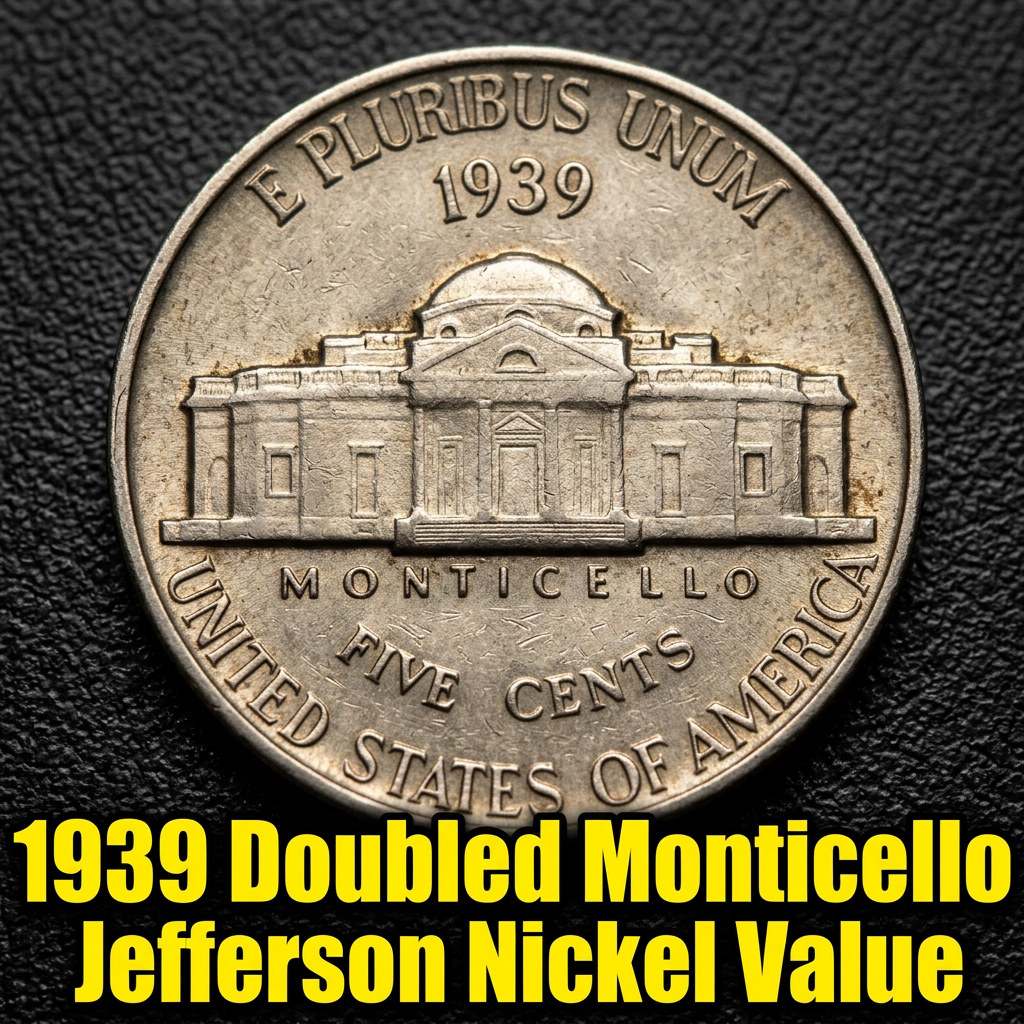
The 1939 Doubled Monticello Jefferson Nickel is worth anywhere from $10 in circulated condition to well over $100 in higher mint state grades — and certain sharp examples have sold for several hundred dollars at major auctions. If you found one of these interesting coins in an old jar or inherited collection, you may be sitting on a surprisingly valuable piece of American history.
free coin identification app tools can help you quickly identify whether the doubling on your coin is genuine before you decide what to do with it. The 1939 Doubled Monticello variety is one of the more recognized doubled die errors from the early Jefferson Nickel series, and knowing exactly what you have makes a real difference when it comes to selling or insuring your collection.
What Makes the 1939 Doubled Monticello Jefferson Nickel Special
The Jefferson Nickel series launched in 1938, replacing the Buffalo Nickel design. By 1939, the Philadelphia Mint was still working out production details, and a small number of coins were struck with a hub that had been doubled during the die preparation process. The result is a clearly visible doubling on the reverse of the coin — most noticeably on the image of Monticello, Thomas Jefferson’s famous Virginia estate. The columns, steps, and lettering around the building show a distinct second impression slightly offset from the first. This isn’t wear or damage — it’s a genuine mint error that happened before the coin ever left the press. Collectors who specialize in Jefferson Nickels actively seek out this variety, and its relative scarcity in high grades keeps demand steady year after year.
How to Spot the Doubling on Your 1939 Jefferson Nickel
Identifying the 1939 Doubled Monticello Jefferson Nickel requires a decent magnifying glass or a jeweler’s loupe of 5x to 10x magnification. Look at the reverse side of the coin — the side showing Monticello. Pay close attention to the columns on the building and the words “MONTICELLO” and “FIVE CENTS” below it. On a genuine doubled die example, you’ll see two distinct outlines rather than one clean, sharp image. The doubling should be consistent and mechanical-looking, not the kind of blurring caused by a worn die or post-mint damage. CoinHix is a great resource to cross-reference your coin’s details against confirmed examples in their database. If the doubling appears only on Monticello and not randomly across the whole coin, that’s a strong sign you have the real variety.
1939 Doubled Monticello Jefferson Nickel Value by Grade
Condition is everything in coin collecting, and that’s especially true for error varieties like this one. A coin that has been heavily circulated will show smooth high points, loss of detail on Monticello’s columns, and general wear across the surfaces. Higher grades preserve the original luster and make the doubling much easier to see — which is exactly what serious collectors want.
| Grade | Description | Estimated Value |
|---|---|---|
| Good (G-4) | Heavy wear, outline visible | $10 – $18 |
| Very Fine (VF-20) | Moderate wear, most details clear | $25 – $50 |
| Extremely Fine (EF-40) | Light wear on high points | $55 – $90 |
| MS-63 | Mint state, minor blemishes | $100 – $175 |
| MS-65 | Gem mint state, strong luster | $200 – $400+ |
You can check the most current 1939 Jefferson Nickel mint state price data and auction records directly on CoinHix to see how recent sales compare to these estimates.
Getting Your 1939 Jefferson Nickel Appraised and Sold
Once you believe you have the genuine 1939 Doubled Monticello variety, the smartest next step is third-party certification. Services like PCGS and NGC will authenticate and grade your coin, and a certified coin almost always sells for more than a raw, ungraded example. Dealers and online buyers trust slabbed coins because they come with an expert opinion. If you want a quick ballpark before spending money on grading, CoinHix offers an easy lookup tool where you can see how coins in similar grades have sold at recent auctions. For a full breakdown of what your coin could be worth across all conditions, the complete 1939 Nickel value guide covering all grades and mint marks is an excellent starting point for any coin found in circulation or an old family collection.
FAQ About the 1939 Doubled Monticello Jefferson Nickel
Q: How do I know if my 1939 nickel has the doubled Monticello variety?
A: Use a 5x to 10x magnifying loupe and examine the reverse carefully. Look for a clearly doubled outline on the Monticello building, particularly the columns and the word “MONTICELLO.” Machine doubling or die deterioration will look irregular, while a true doubled die error shows a consistent, sharp second image.
Q: Is the 1939 Doubled Monticello nickel rare?
A: It is considered scarce, especially in mint state grades. While enough examples exist to be regularly traded among collectors, finding one in a well-preserved condition with strong, visible doubling is genuinely uncommon. That scarcity is what drives the premium over a regular 1939 Jefferson Nickel.
Q: Where is the best place to sell a 1939 Doubled Monticello Jefferson Nickel?
A: Major auction houses like Heritage Auctions and Stack’s Bowers are good options for high-grade examples. For mid-range coins, eBay, coin shows, and local dealers all work well. Having your coin certified by PCGS or NGC before selling will typically get you a better price regardless of the venue you choose. CoinHix can also help you track recent sale prices so you enter any negotiation well informed.