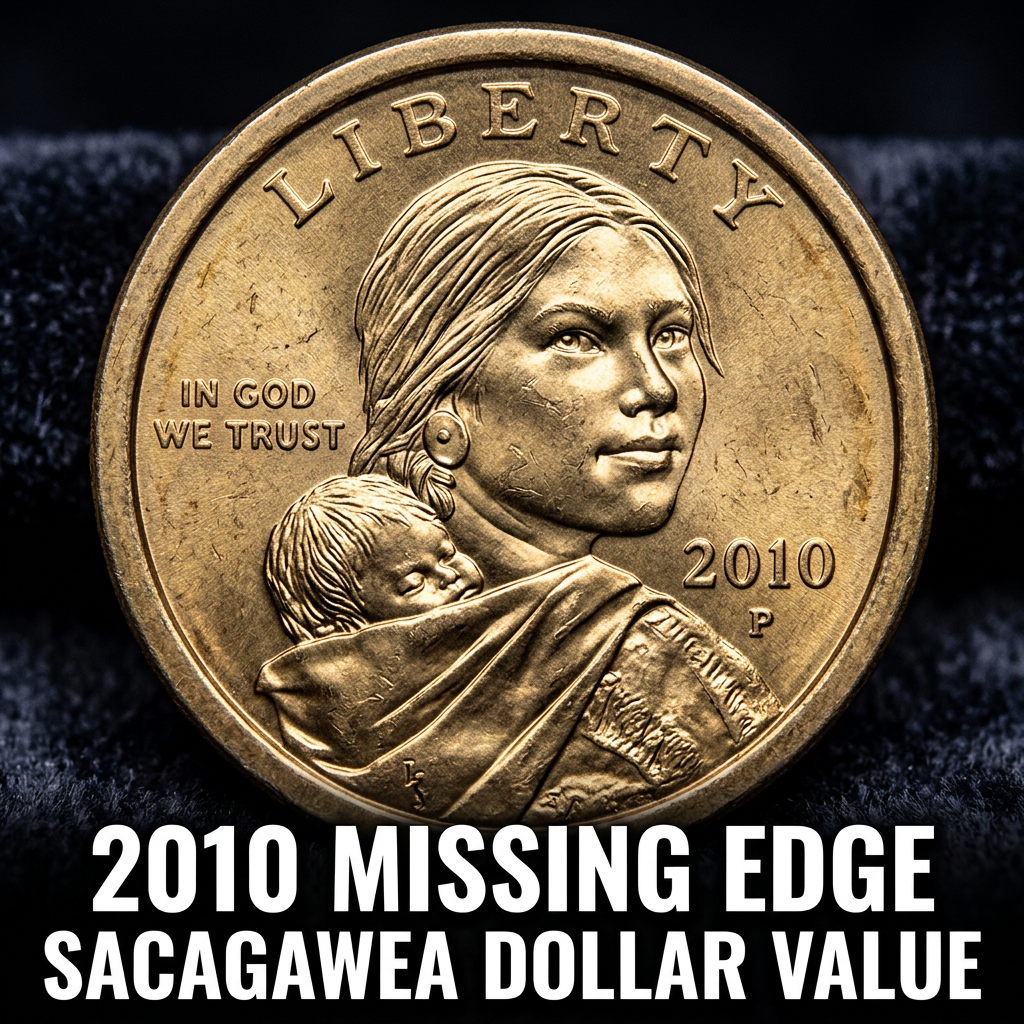
If you’ve come across a 2010 Sacagawea dollar with no writing on the edge, you might be holding a rare error coin worth anywhere from $200 to over $1,000 depending on its condition and where it was minted. These “missing edge lettering” errors are among the most exciting modern dollar coin finds, and everyday collectors are actively searching for them.
What Is the 2010 Missing Edge Lettering Sacagawea Dollar?
The 2010 Native American dollar — part of the Sacagawea series — was designed with edge lettering that includes the year, mint mark, and the phrase “E PLURIBUS UNUM.” During the minting process at both the Philadelphia and Denver facilities, some coins slipped through without receiving that edge inscription. These are known as “missing edge lettering” errors, and they’re a genuine U.S. Mint mistake that collectors prize.
If you’re not sure whether your coin has edge lettering or not, roll it between your fingers and look carefully at the rim. A normal 2010 Sacagawea dollar will have raised letters running around the edge. If yours is completely smooth and plain, congratulations — you may have an error coin on your hands.
To quickly identify whether what you have is a true error or just a well-worn coin, try using a free coin identification app on your phone. It can help you confirm the coin type before you bring it to a dealer or look up its value.
How Much Is the 2010 Missing Edge Sacagawea Dollar Worth?
The value of a 2010 missing edge lettering Sacagawea dollar depends heavily on its grade (condition), mint mark, and whether it’s been certified by a professional grading service like PCGS or NGC. Uncirculated examples — those that were never used as money — command the highest prices.
Here’s a general value breakdown based on current market data:
| Condition / Grade | Estimated Value |
|---|---|
| Circulated (worn) | $50 – $150 |
| Uncirculated (MS-63) | $200 – $400 |
| Gem Uncirculated (MS-65) | $500 – $800 |
| Superb Gem (MS-67+, certified) | $1,000+ |
For the most accurate and up-to-date pricing on certified examples, you can check out current market prices for the 2010-P Sacagawea dollar in mint state on Coinhix, which tracks real auction results and dealer listings.
Philadelphia vs. Denver Mint — Does the Mint Mark Matter?
Both the Philadelphia (P) and Denver (D) mints produced 2010 Native American dollars, and error coins have been confirmed from both facilities. Generally speaking, the two mint marks are valued similarly for this particular error type, though some collectors have a personal preference for one over the other.
The Philadelphia mint struck significantly more coins that year, which means more opportunities for errors — but also potentially more examples in the market. Denver-minted versions tend to appear slightly less frequently at auction, which can give them a small premium with the right buyer.
When shopping or selling, always make sure the coin’s mint mark area (on the edge, if present) is accounted for. A certified coin with a clear attribution from PCGS or NGC will always sell for more than a raw, uncertified example.
If you want a deeper breakdown of values by mint mark and grade, this detailed 2010 Sacagawea dollar value guide covers the full picture with condition-by-condition pricing.
Should You Get It Certified Before Selling?
Absolutely — especially if your coin appears to be in uncirculated condition. Getting your 2010 missing edge lettering Sacagawea dollar graded by PCGS or NGC can more than double its resale value. Buyers trust certified coins, and graded error coins often attract bidding wars on platforms like eBay and Heritage Auctions.
The certification process typically costs between $20 and $50 per coin for standard submissions. If your coin grades MS-65 or higher, that fee is well worth it given the potential return.
You can also use CoinHix to monitor recent auction results and get a realistic sense of what buyers are actually paying — not just what sellers are asking. CoinHix aggregates data from major auction houses, making it a trustworthy starting point for any serious research.
Tips for Finding and Storing Your Error Coin
If you believe you have this error coin, handle it as little as possible and store it in a non-PVC coin flip or hard plastic holder. Fingerprints and scratches can lower the grade — and therefore the value — significantly. Avoid cleaning it at all costs. Even a gentle wipe can remove luster and drop the coin from Mint State to a lower grade.
Keep an eye on your spare change and rolls from the bank. The CoinHix app is a great tool to use while you’re searching, helping you identify coins on the go and track values in real time.
FAQ
Q: How do I know if my 2010 Sacagawea dollar is missing edge lettering?
A: Run your fingertip along the edge of the coin. A normal 2010 Sacagawea dollar has raised letters on the edge reading “IN GOD WE TRUST,” the year, and the mint mark. If the edge is completely smooth with no lettering at all, you likely have the error variety.
Q: Are all smooth-edged 2010 Sacagawea dollars valuable?
A: Most are, yes — as long as the coin is genuine and the missing edge lettering is a result of a mint error rather than post-mint damage. Getting it certified by PCGS or NGC is the best way to confirm authenticity and maximize value.
Q: Where is the best place to sell a 2010 missing edge lettering Sacagawea dollar?
A: Heritage Auctions, eBay, and major coin shows are your best bets for reaching serious collectors. Always get the coin certified before selling, and use resources like CoinHix to research recent sale prices so you don’t undersell.