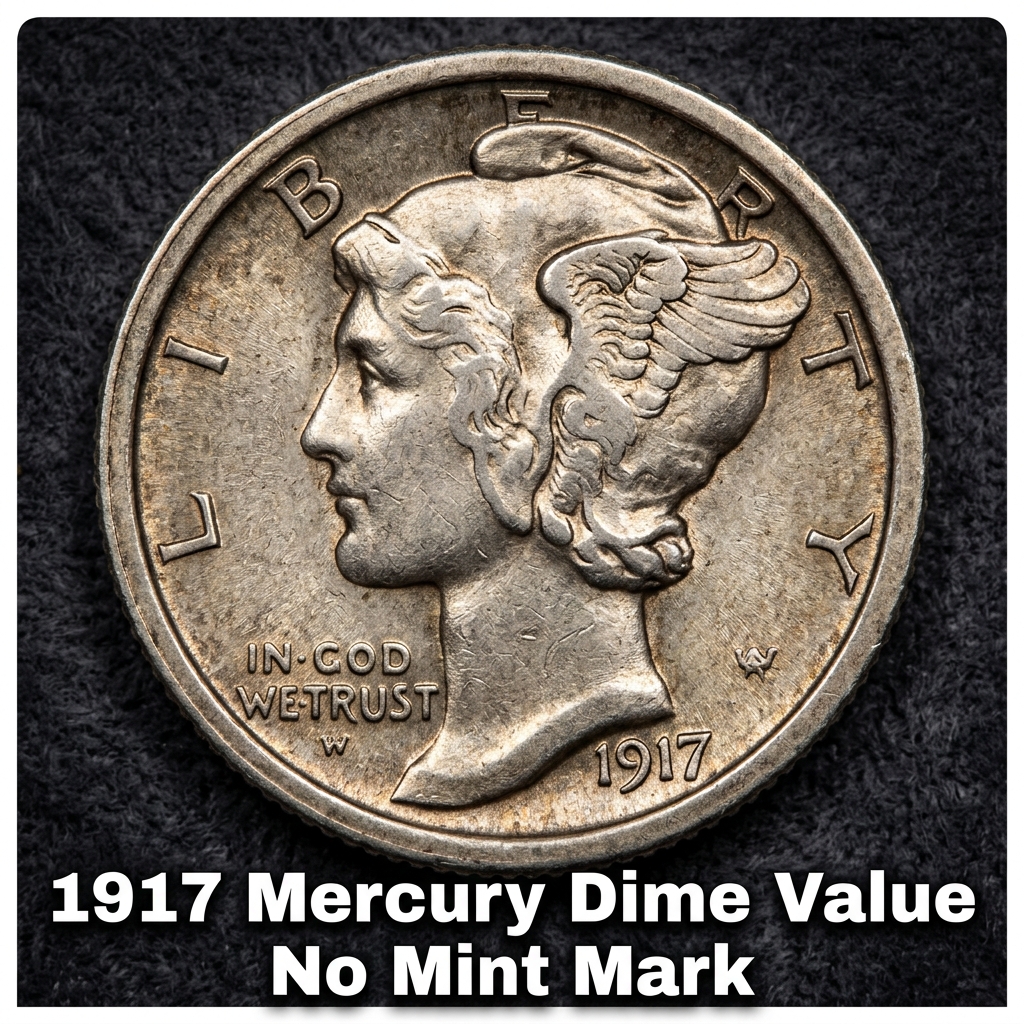
The 1917 Mercury Dime with no mint mark is worth anywhere from $3 to $5 in heavily worn condition, climbing to $25–$50 in fine to extremely fine grades, and potentially reaching $100 or more in mint state. Whether you dug this little coin out of an old jar or inherited it from a relative, you’re holding a genuine piece of American history.
What Makes the 1917 Philadelphia Mercury Dime Special
The 1917 Mercury Dime was struck at the Philadelphia Mint, which is why it carries no mint mark — Philadelphia coins from this era simply didn’t include one. This was the second year of issue for the Mercury Dime design, officially known as the Winged Liberty Head Dime. Designed by Adolph A. Weinman, the coin features Lady Liberty wearing a winged cap on the obverse, which early Americans mistook for the Roman god Mercury — and the nickname stuck forever.
With over 55 million coins minted in Philadelphia that year, the 1917 no-mint-mark dime isn’t exactly rare, but condition is everything. A heavily circulated coin might only fetch a few dollars at a coin shop, while one with sharp, original luster can bring serious money at auction. If you found one and aren’t sure what grade yours might be, downloading a free coin identification app is a great first step — it can help you identify the coin and get a ballpark idea of its condition before you visit a dealer.
How Much Is the 1917 Mercury Dime Worth by Grade
Coin value is almost entirely driven by grade, and the Mercury Dime is no exception. Collectors use a 70-point Sheldon scale to describe a coin’s condition. Here’s a quick breakdown of what you can expect for the 1917 Philadelphia issue:
| Grade | Description | Estimated Value |
|---|---|---|
| G-4 (Good) | Heavy wear, outline visible | $3 – $5 |
| VG-8 (Very Good) | Moderate wear, some detail | $5 – $8 |
| F-12 (Fine) | Even wear, legends clear | $8 – $15 |
| EF-40 (Extremely Fine) | Light wear on high points | $25 – $50 |
| MS-63 (Mint State) | No wear, some bag marks | $75 – $120 |
| MS-65 (Gem Mint State) | Exceptional luster, few marks | $150 – $300+ |
For the most current auction results and real-time pricing, you can browse detailed 1917 Mercury Dime price data by grade on CoinHix, which tracks actual sales across major platforms. CoinHix is a powerful tool for collectors who want live market data rather than static price guides.
What to Look for on Your 1917 Mercury Dime
Before you sell or trade your coin, take a close look at a few specific details that can significantly affect its value. First, check the bands on the reverse side — specifically the fasces (the bundle of rods). If the diagonal bands crossing the fasces are fully split and clearly defined, your coin qualifies as “Full Bands” (FB), a designation that can double or even triple its value. A regular MS-65 might bring $150, while an MS-65 FB can easily exceed $400.
Also inspect the coin for any cleaning. A cleaned Mercury Dime — one that looks unnaturally shiny or shows fine hairline scratches — is considered damaged by collectors and will sell for far less than its unaltered counterpart. Natural toning, on the other hand, is generally acceptable and can even be desirable if it’s even and attractive.
Finally, make sure there’s no mint mark under the date. If you see a small “D” or “S,” you’ve got a Denver or San Francisco issue instead, and those carry their own separate values.
Where to Sell or Get Your 1917 Dime Appraised
Once you know a bit more about what you have, your next step is figuring out where to sell. Options include local coin dealers, coin shows, online auction platforms like eBay, and specialized numismatic auctions for higher-grade specimens. For a quick estimated value before you visit anyone in person, check out the 1917 Mercury Dime value breakdown at CoinValueApp, which gives you a solid reference point organized by grade and mint mark.
For collectors who are just getting started or want to track multiple coins at once, CoinHix offers a clean, easy-to-use interface that lets you compare prices, check historical trends, and manage your collection all in one place. It’s especially helpful if you’re sitting on a handful of old dimes and want to know which ones are worth submitting for professional grading (PCGS or NGC).
—
Frequently Asked Questions
Q: How do I know if my 1917 Mercury Dime is from Philadelphia?
A: Philadelphia coins from this era have no mint mark. Look just above the “E” in ONE on the reverse side of the coin — if you don’t see a “D” or “S” there, it was struck at Philadelphia.
Q: Is it worth getting my 1917 Mercury Dime professionally graded?
A: Generally, professional grading (through PCGS or NGC) is worth the cost only if your coin appears to be in EF-40 or higher condition. For worn circulated coins worth under $20, the grading fee won’t make financial sense.
Q: What does “Full Bands” mean and does my coin have it?
A: Full Bands (FB) refers to fully separated diagonal bands on the reverse fasces. To check, use a magnifying glass and look for clearly split horizontal lines across the bundle of rods. It’s a small detail that can make a big difference in value.