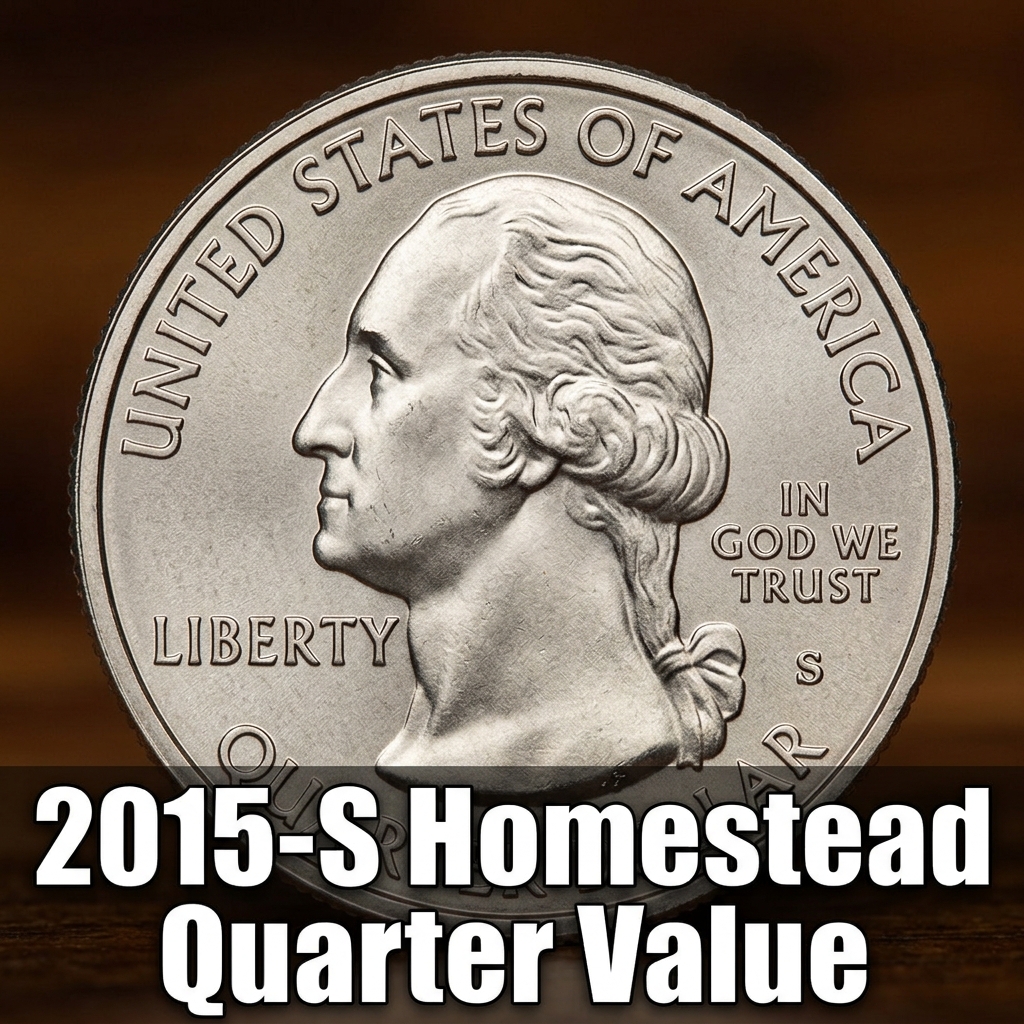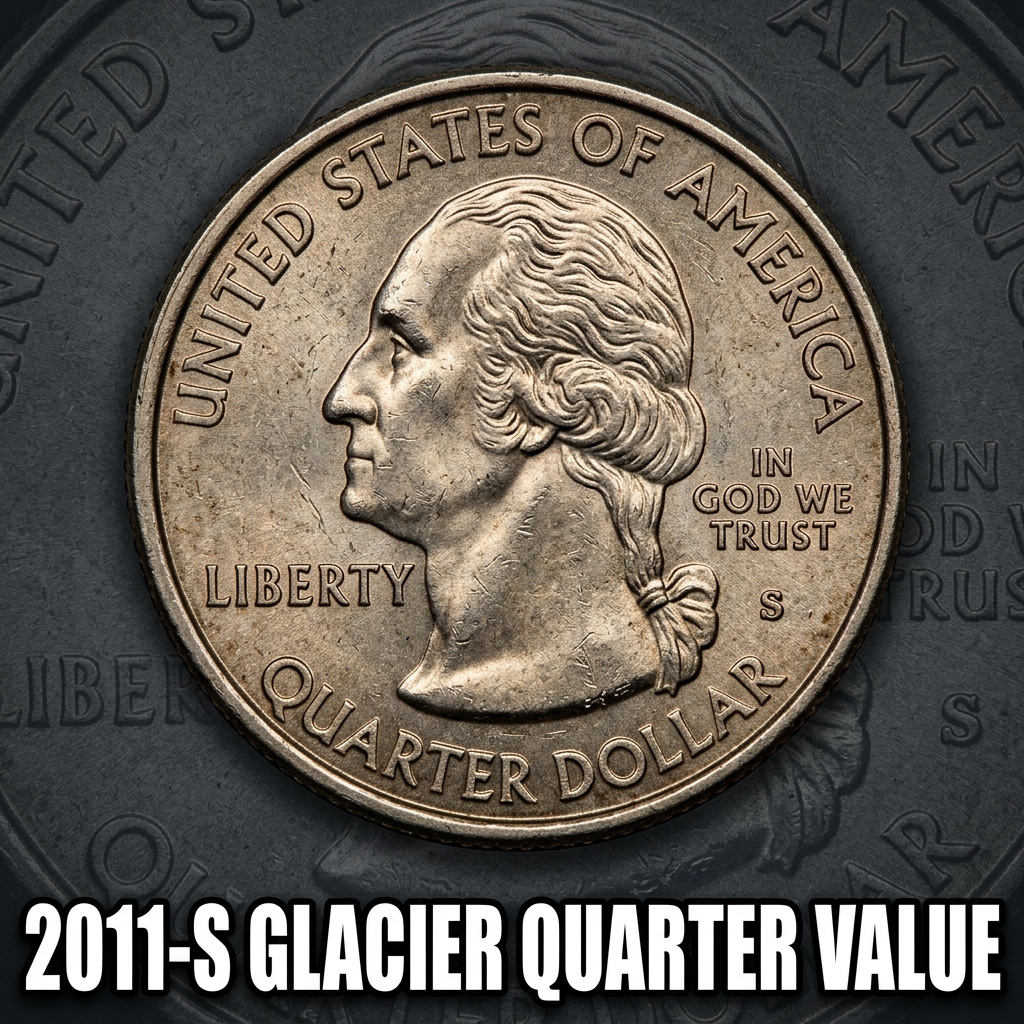
The 2011-S Glacier National Park Quarter is worth anywhere from $2 to $5 in typical proof condition, but well-preserved Deep Cameo examples can fetch $10 or more from the right collector. If you pulled one of these silver proof versions, you might be looking at $15–$25 or even higher. Let’s break it all down so you know exactly what you’ve got.
What Is the 2011-S Glacier Quarter and Why Does It Have an “S” Mintmark?
The “S” mintmark tells you this coin was struck at the San Francisco Mint, which has been producing proof coins for collectors since the 1960s. Unlike the circulating “P” and “D” quarters you find in your change, the 2011-S Glacier Quarter was never meant to land in your pocket. It was made exclusively for proof sets sold directly to collectors by the U.S. Mint.
Glacier National Park, located in Montana, was the featured design for this coin as part of the America the Beautiful Quarters Program launched in 2010. The reverse shows a stunning mountain goat standing on a rocky ledge with the rugged peaks of Glacier behind it — one of the more visually striking designs in the series.
Because these coins are proof strikes, they feature sharp, frosted designs against mirror-like fields. That contrast is what collectors call “cameo” or “deep cameo,” and it significantly affects value. If you’re trying to figure out whether yours is a standard clad proof or the rarer 90% silver version, a free coin identification app can help you sort that out quickly using just your phone’s camera — no coin expertise required.
2011-S Glacier Quarter Value by Type and Grade
There are two major versions of the 2011-S Glacier Quarter: the standard clad proof (made of copper-nickel) and the silver proof (90% silver). Both are collectible, but silver proofs command a clear premium. Here’s a breakdown of what you can expect to pay or receive for each:
| Version | Condition | Estimated Value |
|---|---|---|
| Clad Proof | PR65 to PR68 | $2 – $5 |
| Clad Proof | PR69 Deep Cameo | $8 – $12 |
| Clad Proof | PR70 Deep Cameo | $15 – $25+ |
| Silver Proof | PR65 to PR68 | $10 – $18 |
| Silver Proof | PR69 Deep Cameo | $18 – $28 |
| Silver Proof | PR70 Deep Cameo | $35 – $60+ |
For a deeper look at graded sales data across the full America the Beautiful series, you can explore detailed America the Beautiful quarter price records including certified grades and recent auction results to see how similar coins have performed at major sales.
How to Tell If You Have the Silver Proof Version
This is one of the most common questions people have about the 2011-S Glacier Quarter, and it’s a fair one. The clad and silver versions look nearly identical at a glance. Here’s the easiest way to check:
Look at the coin’s edge. A clad proof will show a thin copper-colored stripe running around the rim. A silver proof will have a completely uniform silver-white edge with no orange or copper layer visible at all.
You can also check the original packaging. Silver proof quarters were sold as part of the America’s Beautiful National Parks Quarter Dollar Coin Proof Set (Silver Edition), while clad versions came in the standard proof set. If you still have the original mint box or certificate, that’ll confirm it immediately.
Weight can help too — a silver proof quarter weighs about 6.25 grams compared to the clad version’s 5.67 grams. A digital jewelry scale works perfectly for this test.
If you want a quick and reliable identification without any tools, CoinHix is a well-regarded app among collectors that can help you identify coin varieties and pull up current market pricing in seconds.
What Affects the Value of Your 2011-S Glacier Quarter
Even within proof coins, condition matters. Proof coins are graded on a scale from PR60 to PR70, with 70 being perfect and essentially impossible to find with the naked eye. Most 2011-S Glacier Quarters from original mint sets will grade PR68 or PR69, which are still very nice coins but won’t break the bank.
The real value jumps come at PR69 Deep Cameo and PR70 Deep Cameo designations, which are assigned by professional grading services like PCGS or NGC. Getting a coin graded costs money (usually $20–$40 per coin for basic service), so it only makes sense if you believe your coin is truly flawless.
Collector demand for the Glacier design specifically is moderate — it’s not the most sought-after in the series, but Montana collectors and national park enthusiasts do seek it out. If you’re trying to sell, platforms like eBay, local coin shows, or dealer buyback programs are all solid options.
For a broader look at how 2011 quarters across mintmarks compare in value today, this complete 2011 quarter value breakdown covering all mintmarks and conditions is a helpful resource worth bookmarking.
Should You Get Your Coin Graded or Just Sell It Raw?
Grading makes sense only when the potential grade-bump payoff outweighs the grading cost. For a typical 2011-S Glacier clad proof worth $3–$5, professional grading doesn’t pencil out. But if you suspect yours is a pristine PR70 silver proof, the math changes quickly — a slabbed PR70 deep cameo silver proof can easily bring $40–$60, making the grading fee worthwhile.
Before you spend money on grading, use CoinHix to research recent sales of graded examples and see whether it’s actually worth submitting. It’s free to browse and gives you real market data, not just catalog estimates.
—
FAQ
Q: Is the 2011-S Glacier Quarter rare?
A: Not especially. The U.S. Mint produced millions of these coins for proof sets sold to the public. However, high-grade certified examples — particularly silver PR70 Deep Cameo coins — are scarce and do carry real collector premiums.
Q: How do I know if my 2011-S quarter is silver?
A: Check the edge of the coin. A silver proof will have a completely uniform silver-white edge with no copper layer visible. You can also weigh it — a silver proof weighs 6.25 grams versus 5.67 grams for the clad version.
Q: Where is the best place to sell my 2011-S Glacier Quarter?
A: eBay is your widest audience for raw proof coins. For graded examples, Heritage Auctions or Stack’s Bowers will get you the best results. Local coin dealers are convenient but typically offer lower buyback prices. Apps like CoinHix can help you benchmark a fair price before you commit to any sale.